Queen Square Brain Bank, UCL Institute of Neurology, London, UK.
Acta Neuropathol. 2013 May;125(5):753-69. doi: 10.1007/s00401-013-1096-7. Epub 2013 Feb 12.
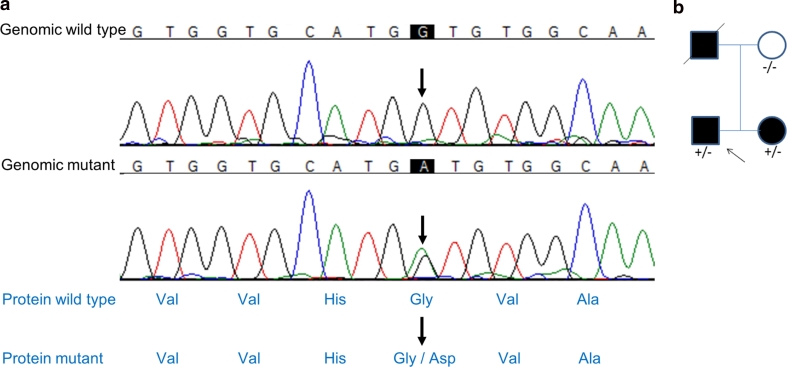
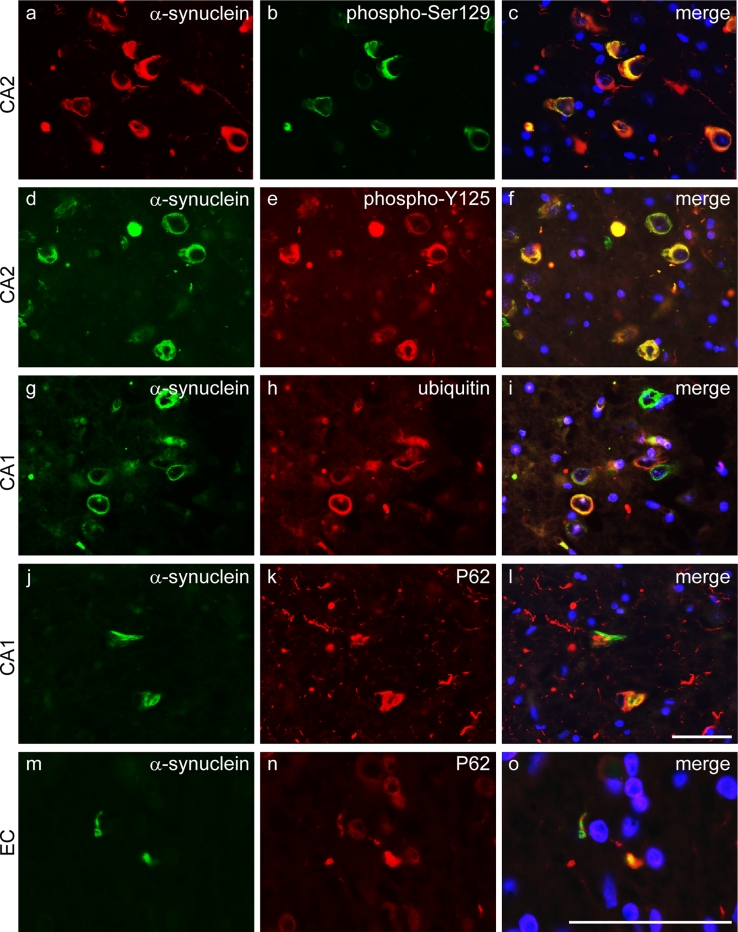
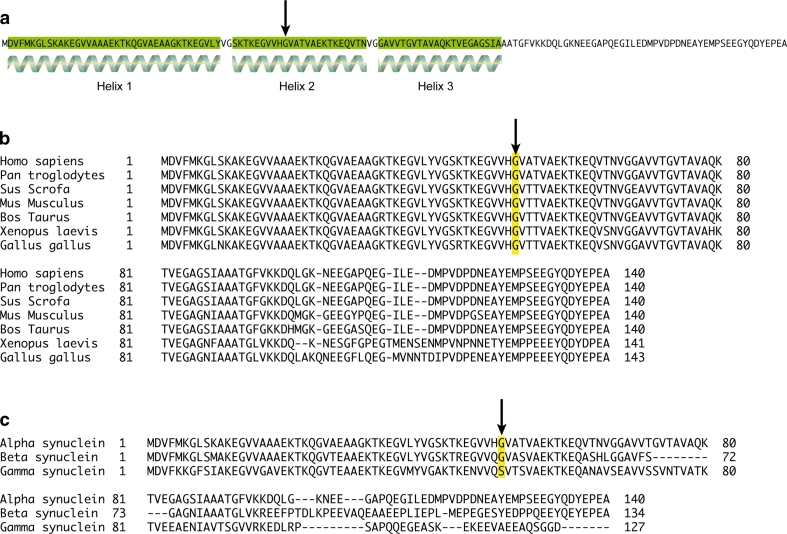
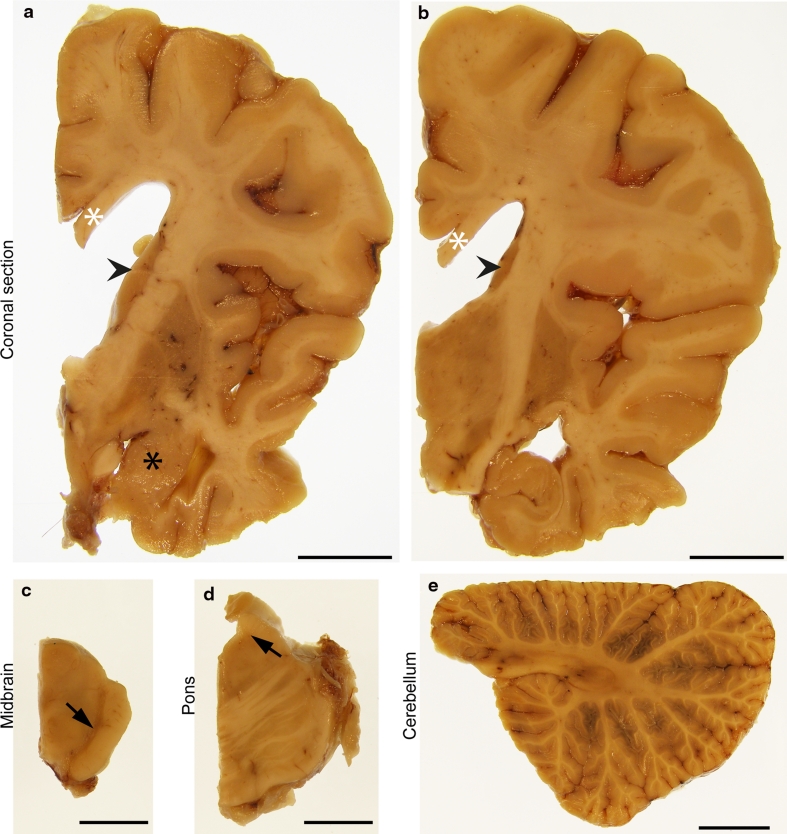
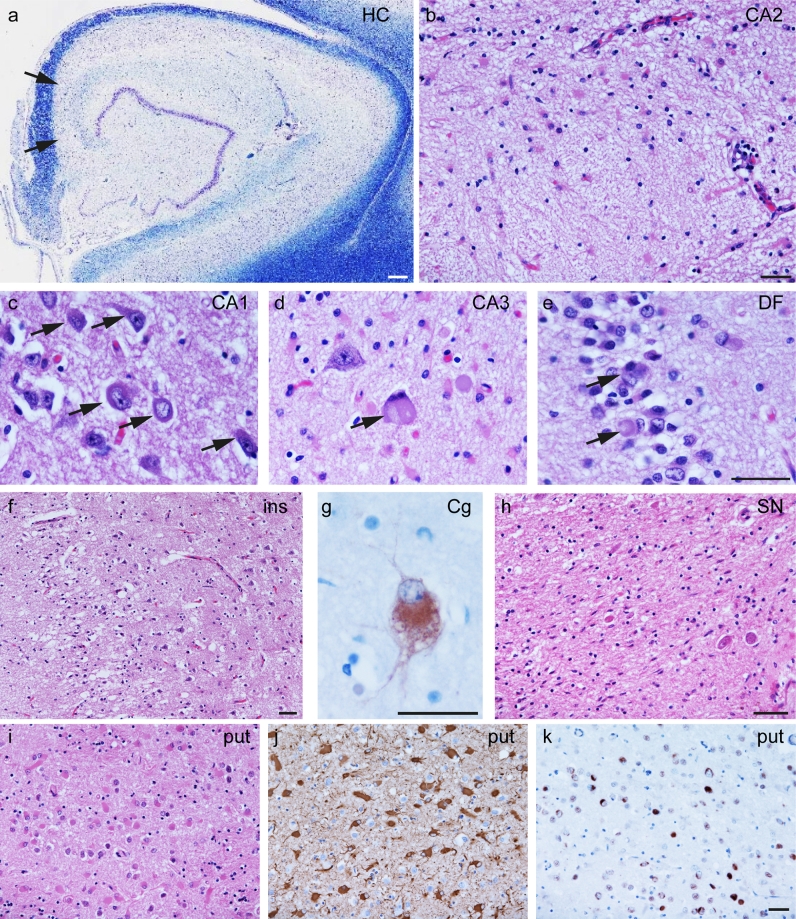
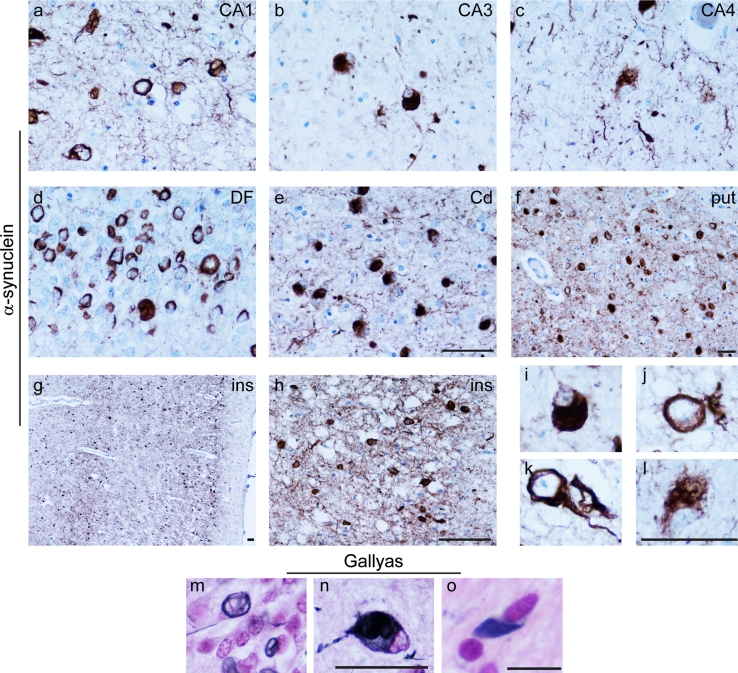
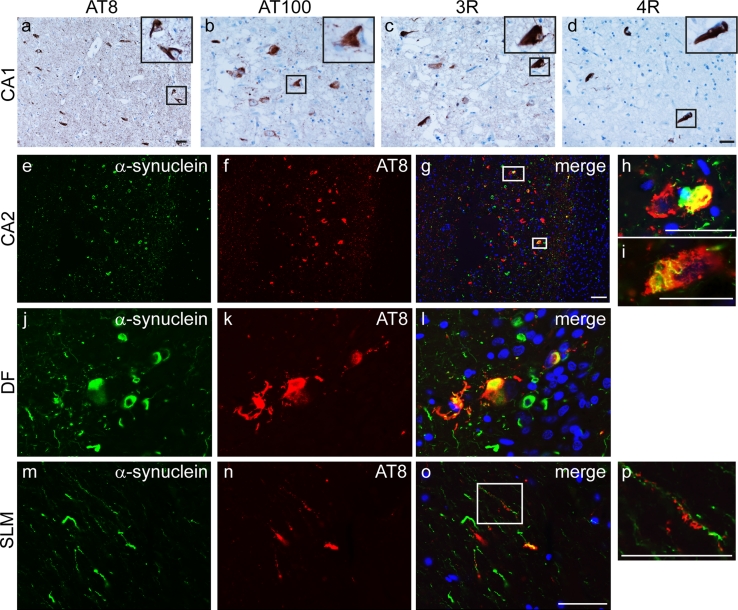
We report a British family with young-onset Parkinson's disease (PD) and a G51D SNCA mutation that segregates with the disease. Family history was consistent with autosomal dominant inheritance as both the father and sister of the proband developed levodopa-responsive parkinsonism with onset in their late thirties. Clinical features show similarity to those seen in families with SNCA triplication and to cases of A53T SNCA mutation. Post-mortem brain examination of the proband revealed atrophy affecting frontal and temporal lobes in addition to the caudate, putamen, globus pallidus and amygdala. There was severe loss of pigmentation in the substantia nigra and pallor of the locus coeruleus. Neuronal loss was most marked in frontal and temporal cortices, hippocampal CA2/3 subregions, substantia nigra, locus coeruleus and dorsal motor nucleus of the vagus. The cellular pathology included widespread and frequent neuronal α-synuclein immunoreactive inclusions of variable morphology and oligodendroglial inclusions similar to the glial cytoplasmic inclusions of multiple system atrophy (MSA). Both inclusion types were ubiquitin and p62 positive and were labelled with phosphorylation-dependent anti-α-synuclein antibodies In addition, TDP-43 immunoreactive inclusions were observed in limbic regions and in the striatum. Together the data show clinical and neuropathological similarities to both the A53T SNCA mutation and multiplication cases. The cellular neuropathological features of this case share some characteristics of both PD and MSA with additional unique striatal and neocortical pathology. Greater understanding of the disease mechanism underlying the G51D mutation could aid in understanding of α-synuclein biology and its impact on disease phenotype.
我们报告了一个英国家庭,该家庭的帕金森病(PD)患者具有早发性,并且存在 G51D SNCA 突变,该突变与疾病共分离。家族史符合常染色体显性遗传,因为先证者的父亲和姐姐均在三十多岁时出现了对左旋多巴有反应的帕金森病。临床特征与 SNCA 三倍体和 A53T SNCA 突变病例相似。先证者的死后大脑检查显示除了尾状核、壳核、苍白球和杏仁核外,额叶和颞叶也受到影响,出现萎缩。黑质中的色素沉着严重丧失,蓝斑苍白。神经元丢失在额叶和颞叶皮质、海马 CA2/3 亚区、黑质、蓝斑和迷走神经背核中最为明显。细胞病理学包括广泛而频繁的神经元α-突触核蛋白免疫反应性包涵体,形态多样,少突胶质细胞包涵体类似于多系统萎缩(MSA)的胶质细胞质包涵体。两种包涵体类型均为泛素和 p62 阳性,并被磷酸化依赖性抗α-突触核蛋白抗体标记。此外,在边缘区和纹状体中观察到 TDP-43 免疫反应性包涵体。数据显示,该病例的临床和神经病理学与 A53T SNCA 突变和倍增病例均具有相似性。该病例的细胞神经病理学特征与 PD 和 MSA 均具有一些相似性,另外还具有独特的纹状体和新皮质病理学。对 G51D 突变背后的疾病机制的更深入了解,可能有助于理解α-突触核蛋白生物学及其对疾病表型的影响。