Department of Cancer Research and Molecular Medicine, Norwegian University of Science and Technology (NTNU), Trondheim, Norway.
PLoS One. 2013;8(2):e55493. doi: 10.1371/journal.pone.0055493. Epub 2013 Feb 6.
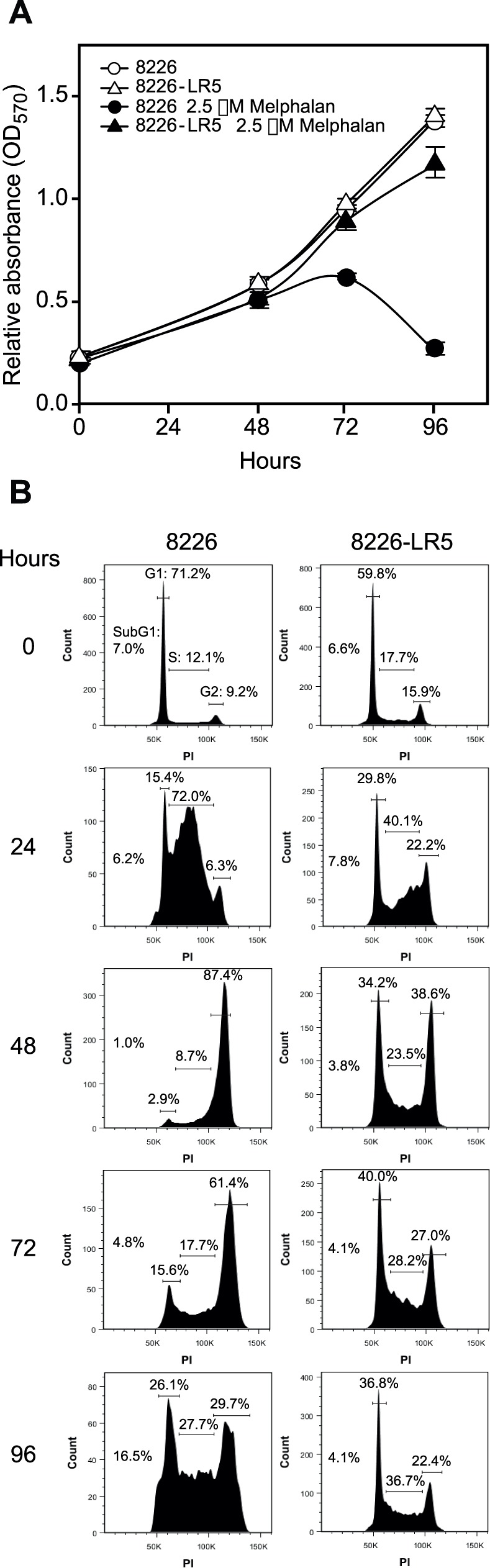
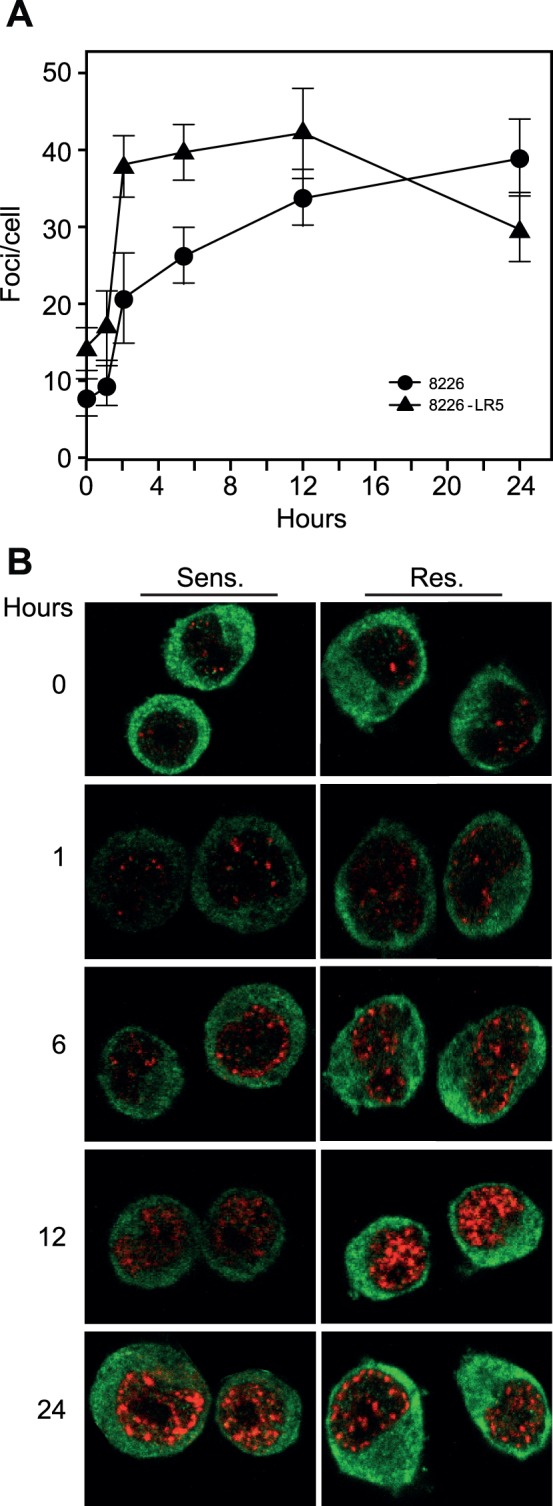
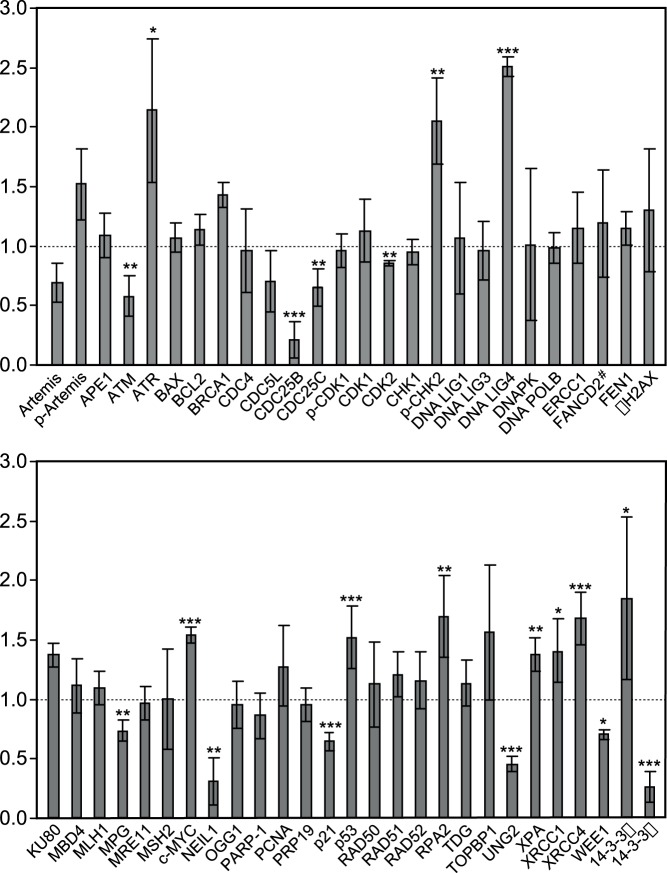
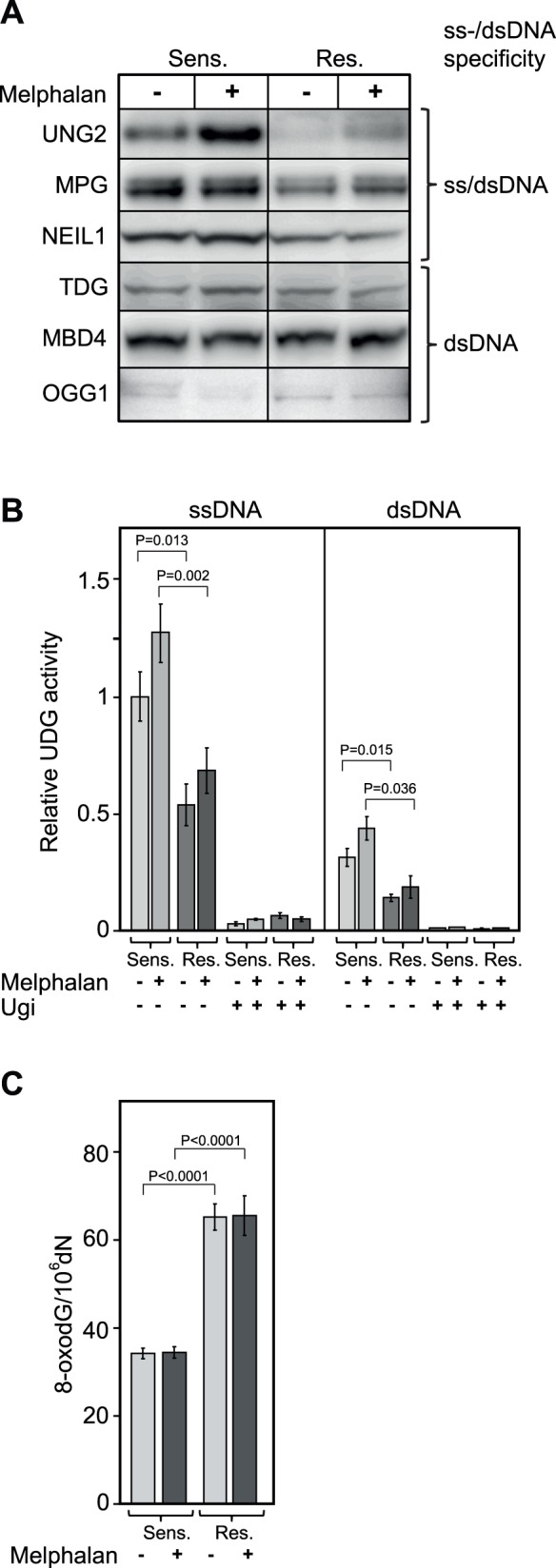
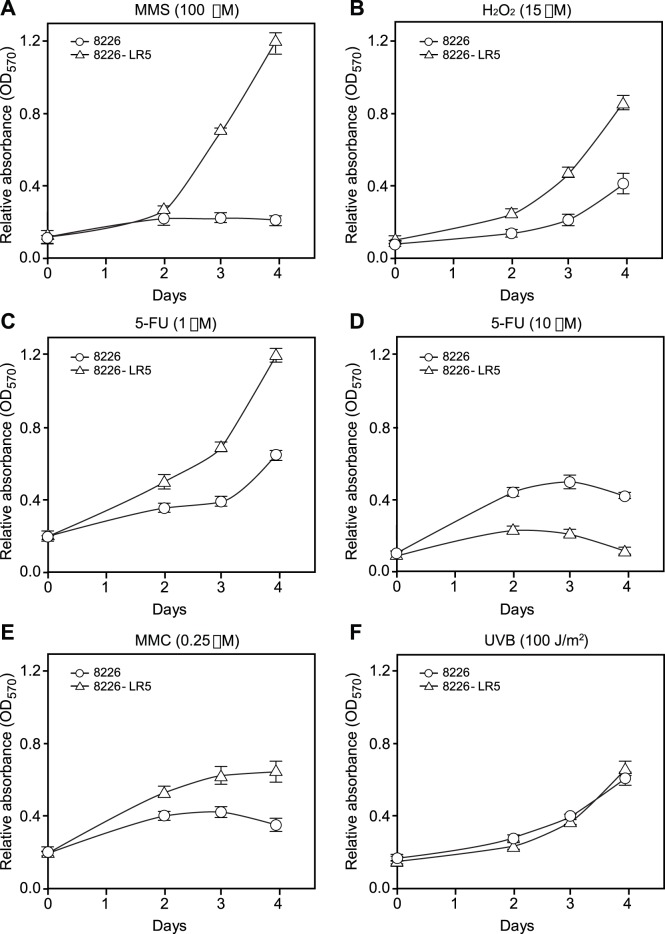
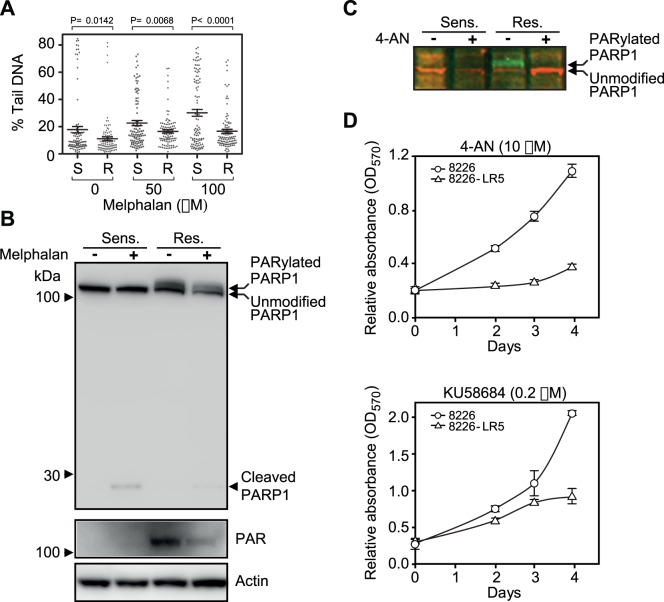
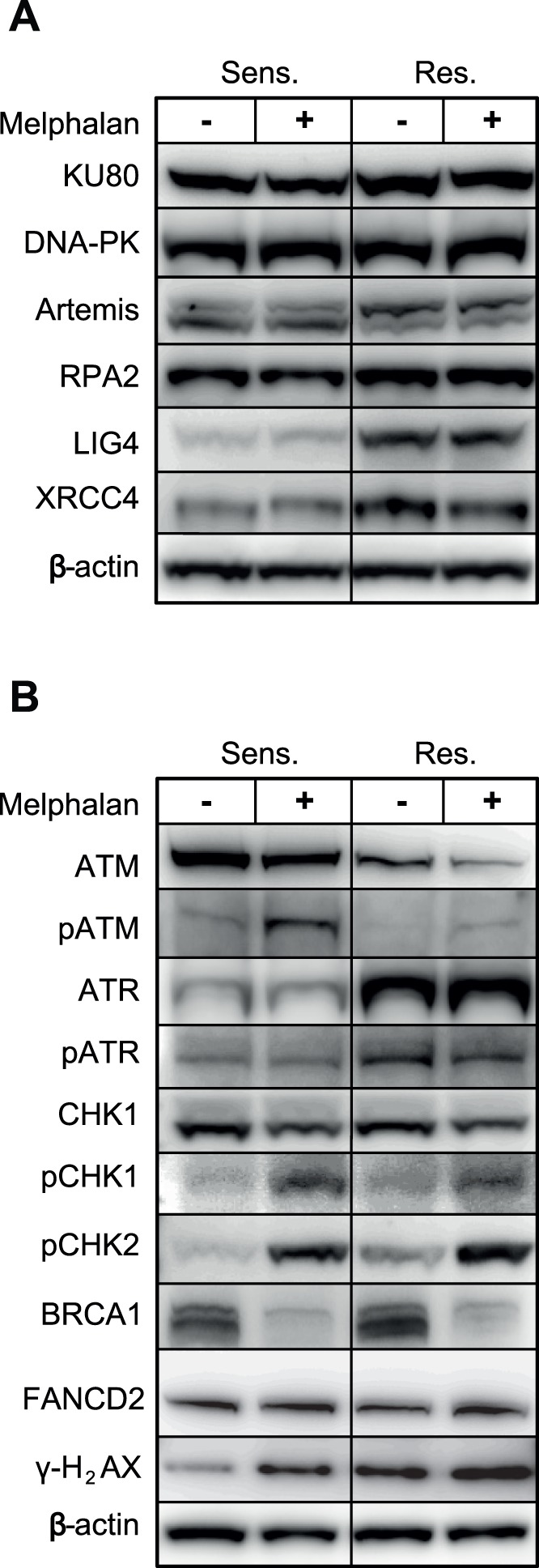
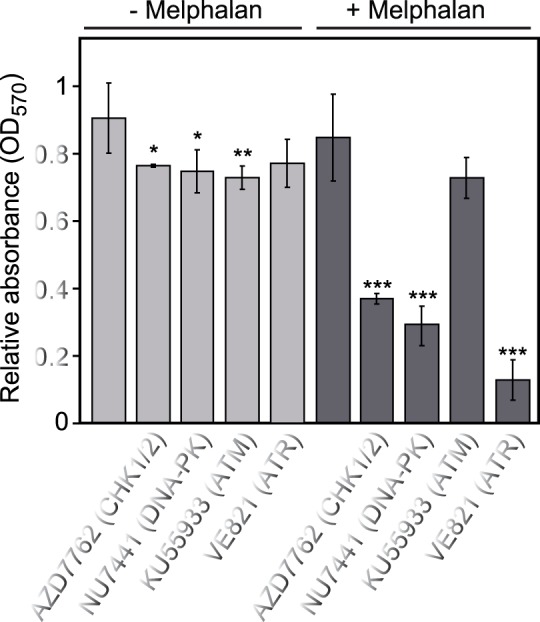
Alterations in checkpoint and DNA repair pathways may provide adaptive mechanisms contributing to acquired drug resistance. Here, we investigated the levels of proteins mediating DNA damage signaling and -repair in RPMI8226 multiple myeloma cells and its Melphalan-resistant derivative 8226-LR5. We observed markedly reduced steady-state levels of DNA glycosylases UNG2, NEIL1 and MPG in the resistant cells and cross-resistance to agents inducing their respective DNA base lesions. Conversely, repair of alkali-labile sites was apparently enhanced in the resistant cells, as substantiated by alkaline comet assay, autoribosylation of PARP-1, and increased sensitivity to PARP-1 inhibition by 4-AN or KU58684. Reduced base-excision and enhanced single-strand break repair would both contribute to the observed reduction in genomic alkali-labile sites, which could jeopardize productive processing of the more cytotoxic Melphalan-induced interstrand DNA crosslinks (ICLs). Furthermore, we found a marked upregulation of proteins in the non-homologous end-joining (NHEJ) pathway of double-strand break (DSB) repair, likely contributing to the observed increase in DSB repair kinetics in the resistant cells. Finally, we observed apparent upregulation of ATR-signaling and downregulation of ATM-signaling in the resistant cells. This was accompanied by markedly increased sensitivity towards Melphalan in the presence of ATR-, DNA-PK, or CHK1/2 inhibitors whereas no sensitizing effect was observed subsequent to ATM inhibition, suggesting that replication blocking lesions are primary triggers of the DNA damage response in the Melphalan resistant cells. In conclusion, Melphalan resistance is apparently contributed by modulation of the DNA damage response at multiple levels, including downregulation of specific repair pathways to avoid repair intermediates that could impair efficient processing of cytotoxic ICLs and ICL-induced DSBs. This study has revealed several novel candidate biomarkers for Melphalan sensitivity that will be included in targeted quantitation studies in larger patient cohorts to validate their value in prognosis as well as targets for replacement- or adjuvant therapies.
细胞周期检验点和 DNA 修复通路的改变可能为获得性耐药提供适应性机制。在这里,我们研究了 RPMI8226 多发性骨髓瘤细胞及其 Melphalan 耐药衍生物 8226-LR5 中介导 DNA 损伤信号和修复的蛋白质水平。我们观察到耐药细胞中 DNA 糖苷酶 UNG2、NEIL1 和 MPG 的稳态水平明显降低,并且对诱导其各自 DNA 碱基损伤的药物表现出交叉耐药性。相反,耐药细胞中的碱不稳定位点修复显然增强,碱性彗星试验、PARP-1 的自动核糖基化以及对 PARP-1 抑制剂 4-AN 或 KU58684 的敏感性增加都证实了这一点。碱基切除修复的减少和单链断裂修复的增强都会导致观察到的基因组碱不稳定位点减少,这可能会危及更具细胞毒性的 Melphalan 诱导的链间 DNA 交联 (ICLs) 的有效处理。此外,我们发现非同源末端连接 (NHEJ) 途径中的双链断裂 (DSB) 修复蛋白明显上调,这可能有助于耐药细胞中 DSB 修复动力学的观察到的增加。最后,我们观察到耐药细胞中 ATR 信号的明显上调和 ATM 信号的下调。这伴随着在 ATR、DNA-PK 或 CHK1/2 抑制剂存在下对 Melphalan 的敏感性明显增加,而在 ATM 抑制后没有观察到增敏作用,表明复制阻断损伤是 Melphalan 耐药细胞中 DNA 损伤反应的主要触发因素。总之,Melphalan 耐药性显然是通过在多个水平上调节 DNA 损伤反应来实现的,包括下调特定的修复途径以避免可能损害有效处理细胞毒性 ICL 和 ICL 诱导的 DSB 的修复中间体。这项研究揭示了几种新的 Melphalan 敏感性候选生物标志物,它们将被纳入更大患者队列的靶向定量研究中,以验证它们在预后以及替代或辅助治疗靶点方面的价值。