Laboratório de Bioquímica do Exercício, Centro de Educação Física e Desportos, Universidade Federal de Santa Maria (UFSM), Santa Maria, Rio Grande do Sul, Brazil.
PLoS One. 2013;8(2):e55668. doi: 10.1371/journal.pone.0055668. Epub 2013 Feb 6.
Although acute exhaustive exercise is known to increase liver reactive oxygen species (ROS) production and aerobic training has shown to improve the antioxidant status in the liver, little is known about mitochondria adaptations to aerobic training. The main objective of this study was to investigate the effects of the aerobic training on oxidative stress markers and antioxidant defense in liver mitochondria both after training and in response to three repeated exhaustive swimming bouts.
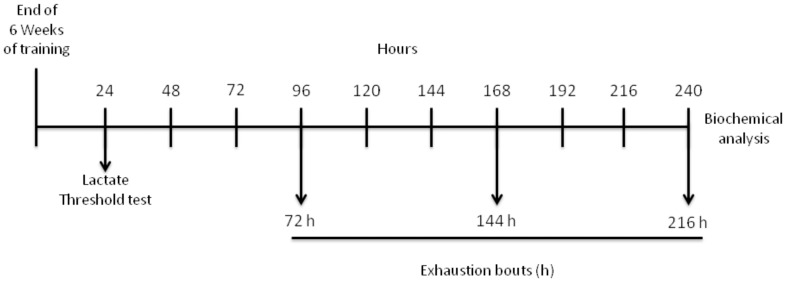
Wistar rats were divided into training (n = 14) and control (n = 14) groups. Training group performed a 6-week swimming training protocol. Subsets of training (n = 7) and control (n = 7) rats performed 3 repeated exhaustive swimming bouts with 72 h rest in between. Oxidative stress biomarkers, antioxidant activity, and mitochondria functionality were assessed.
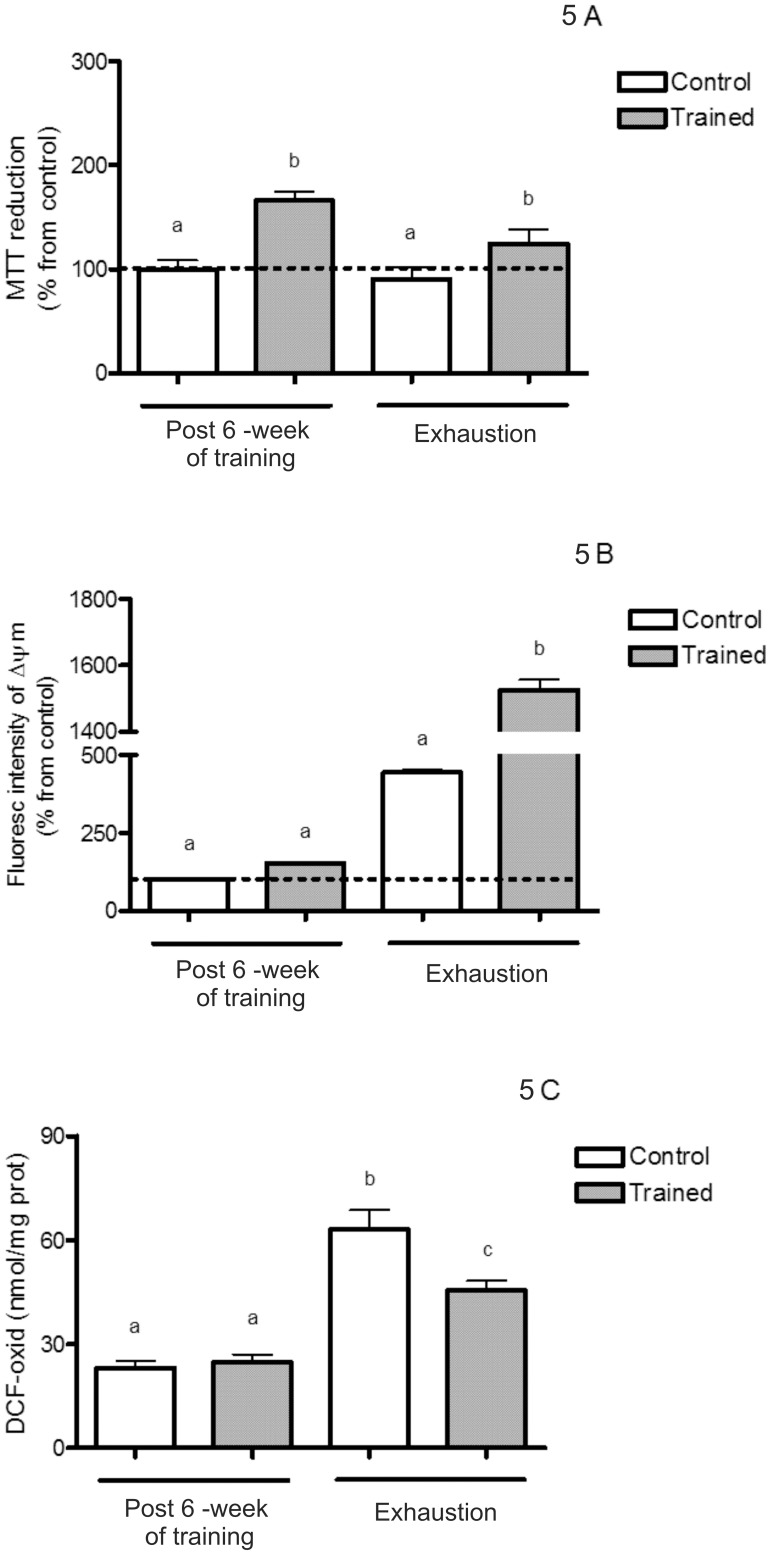
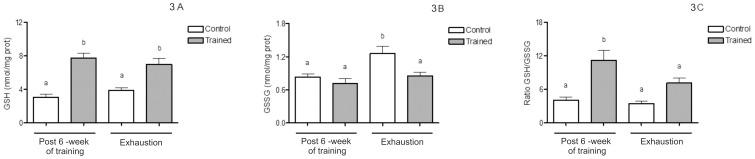
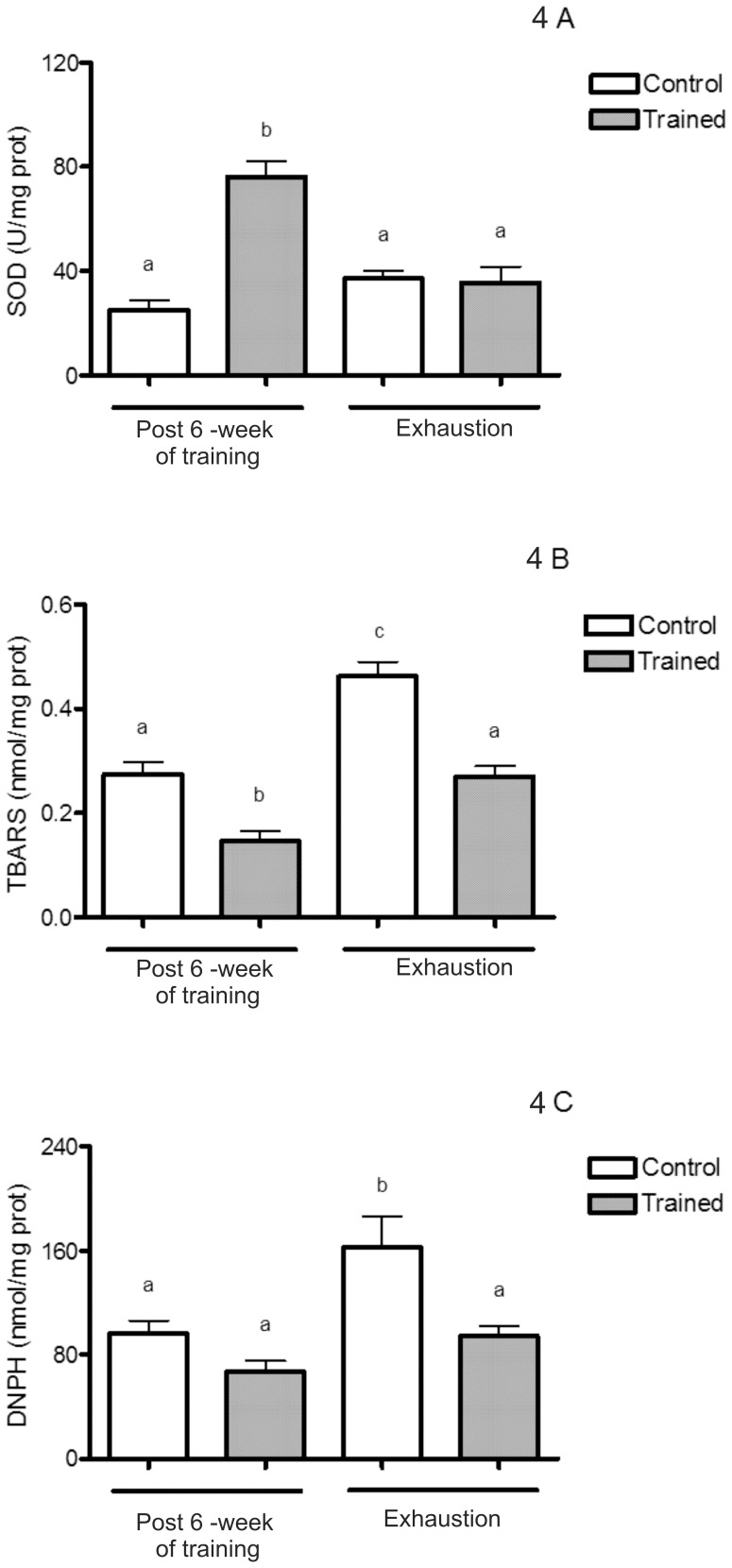
Trained group showed increased reduced glutathione (GSH) content and reduced/oxidized (GSH/GSSG) ratio, higher superoxide dismutase (MnSOD) activity, and decreased lipid peroxidation in liver mitochondria. Aerobic training protected against exhaustive swimming ROS production herein characterized by decreased oxidative stress markers, higher antioxidant defenses, and increases in methyl-tetrazolium reduction and membrane potential. Trained group also presented higher time to exhaustion compared to control group.
Swimming training induced positive adaptations in liver mitochondria of rats. Increased antioxidant defense after training coped well with exercise-produced ROS and liver mitochondria were less affected by exhaustive exercise. Therefore, liver mitochondria also adapt to exercise-induced ROS and may play an important role in exercise performance.
虽然剧烈的耗竭性运动已知会增加肝脏活性氧(ROS)的产生,而有氧训练已显示可改善肝脏的抗氧化状态,但对于有氧训练对线粒体的适应知之甚少。本研究的主要目的是研究有氧训练对运动后和 3 次重复力竭性游泳后肝线粒体氧化应激标志物和抗氧化防御的影响。
将 Wistar 大鼠分为训练组(n=14)和对照组(n=14)。训练组进行了 6 周的游泳训练方案。训练组(n=7)和对照组(n=7)的子集进行了 3 次重复的力竭性游泳,中间休息 72 小时。评估了氧化应激生物标志物、抗氧化活性和线粒体功能。
训练组的还原型谷胱甘肽(GSH)含量和还原/氧化(GSH/GSSG)比值增加,超氧化物歧化酶(MnSOD)活性升高,肝线粒体脂质过氧化减少。有氧训练可防止在此处描述的力竭性游泳产生的 ROS,其特征是氧化应激标志物减少、抗氧化防御增强、甲基四唑还原和膜电位增加。与对照组相比,训练组的力竭时间也更长。
游泳训练诱导了大鼠肝线粒体的积极适应。训练后的抗氧化防御能力增强,可很好地应对运动产生的 ROS,肝线粒体受力竭运动的影响也较小。因此,肝线粒体也适应运动引起的 ROS,可能在运动表现中发挥重要作用。