Department of Prosthetic Dentistry and Biomaterials Science, Hannover Medical School, Hannover, Germany.
PLoS One. 2013;8(2):e55265. doi: 10.1371/journal.pone.0055265. Epub 2013 Feb 7.
We here investigated whether experimental gingivitis enhances systemic markers of inflammation which are also known as surrogate markers of atherosclerotic plaque development.
Gingivitis is a low-level oral infection induced by bacterial deposits with a high prevalence within Western populations. A potential link between the more severe oral disease periodontitis and cardiovascular disease has already been shown.
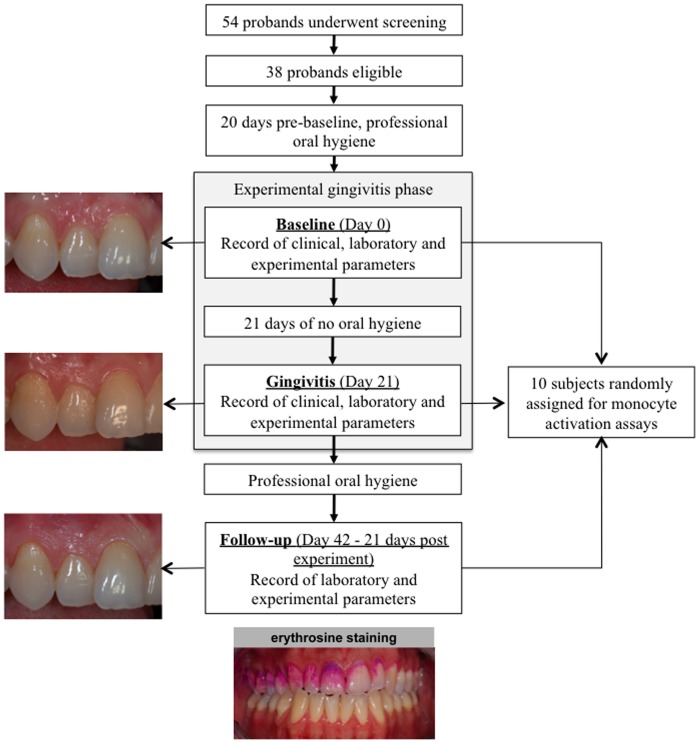
37 non-smoking young volunteers with no inflammatory disease or any cardiovascular risk factors participated in this single-subject interventional study with an intra-individual control. Intentionally experimental oral inflammation was induced by the interruption of oral hygiene for 21 days, followed by a 21-days resolving phase after reinitiation of oral hygiene. Primary outcome measures at baseline, day 21 and 42 were concentrations of hsCRP, IL-6, and MCP-1, as well as adhesion capacity and oxLDL uptake of isolated blood monocytes.
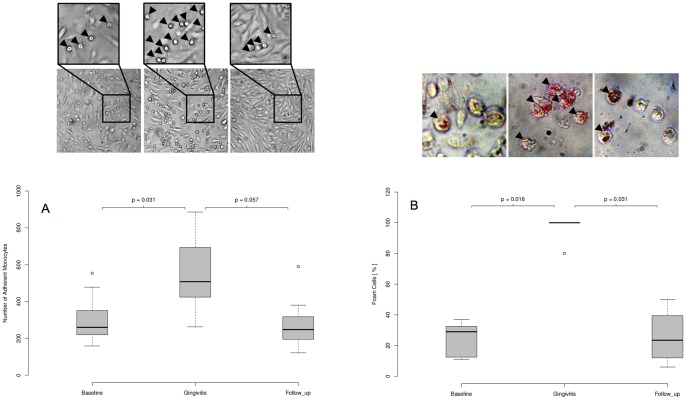
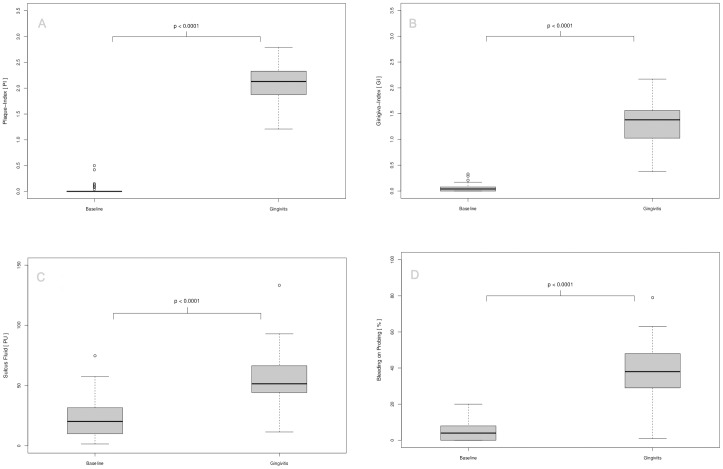
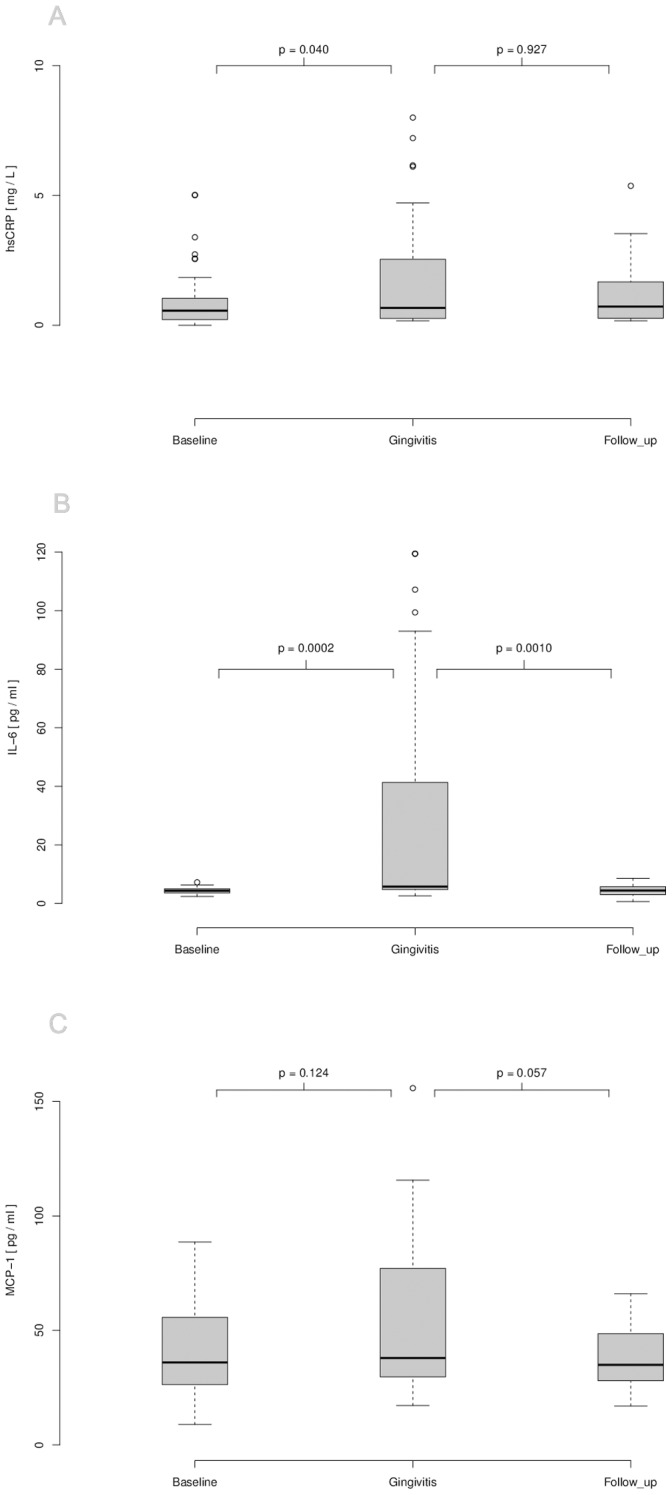
The partial cessation of oral hygiene procedures was followed by the significant increase of gingival bleeding (34.0%, P<0.0001). This local inflammation was associated with a systemic increase in hsCRP (0.24 mg/L, P = 0.038), IL-6 (12.52 ng/L, P = 0.0002) and MCP-1 (9.10 ng/l, P = 0.124) in peripheral blood samples between baseline and day 21, which decreased at day 42. Monocytes showed an enhanced adherence to endothelial cells and increased foam cell formation after oxLDL uptake (P<0.050) at day 21 of gingivitis.
Bacterial-induced gingival low-level inflammation induced a systemic increase in inflammatory markers. Dental hygiene almost completely reversed this experimental inflammatory process, suggesting that appropriate dental prophylaxis may also limit systemic markers of inflammation in subjects with natural gingivitis. International Clinical Trials Register Platform of the World Health Organization, registry number: DRKS00003366, URL: http://apps.who.int/trialsearch/Default.aspx.
本研究旨在探讨实验性牙龈炎是否会增强全身炎症标志物,这些标志物也被称为动脉粥样硬化斑块形成的替代标志物。
牙龈炎是一种由细菌沉积物引起的低水平口腔感染,在西方人群中发病率很高。已经有研究表明,更严重的口腔疾病——牙周炎与心血管疾病之间存在潜在联系。
37 名不吸烟的年轻志愿者,无炎症性疾病或任何心血管危险因素,参与了这项单个体内对照的干预性研究。通过中断口腔卫生 21 天来故意诱导实验性口腔炎症,然后在重新开始口腔卫生 21 天后进入缓解期。主要的测量指标包括基线、第 21 天和第 42 天的 hsCRP、IL-6 和 MCP-1 浓度,以及分离的血单核细胞的黏附能力和 oxLDL 摄取。
部分停止口腔卫生程序后,牙龈出血明显增加(34.0%,P<0.0001)。这种局部炎症与外周血 hsCRP(0.24mg/L,P=0.038)、IL-6(12.52ng/L,P=0.0002)和 MCP-1(9.10ng/L,P=0.124)的全身增加相关,这些标志物在第 21 天和第 42 天之间下降。在牙龈炎第 21 天,单核细胞对内皮细胞的黏附能力增强,泡沫细胞形成增加(oxLDL 摄取后)(P<0.050)。
细菌引起的牙龈低度炎症导致全身炎症标志物增加。口腔卫生几乎完全逆转了这一实验性炎症过程,这表明适当的口腔预防措施也可能限制患有自然性牙龈炎的患者的全身炎症标志物。世界卫生组织国际临床试验注册平台,注册号:DRKS00003366,网址:http://apps.who.int/trialsearch/Default.aspx。