Division of Experimental Medicine, Department of Medicine, University of California San Francisco, San Francisco, California, USA.
PLoS Negl Trop Dis. 2013;7(2):e2028. doi: 10.1371/journal.pntd.0002028. Epub 2013 Feb 7.
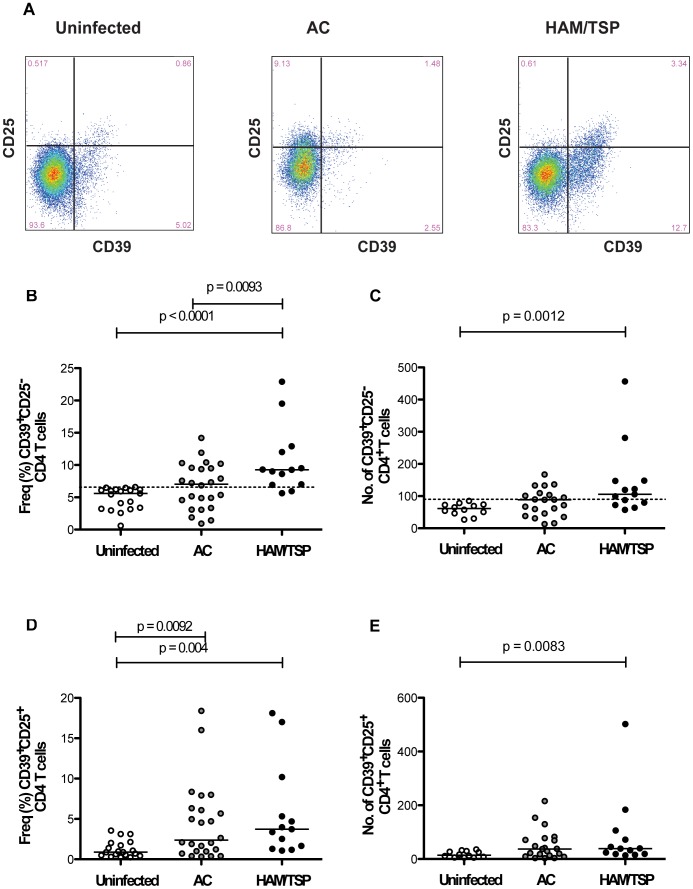
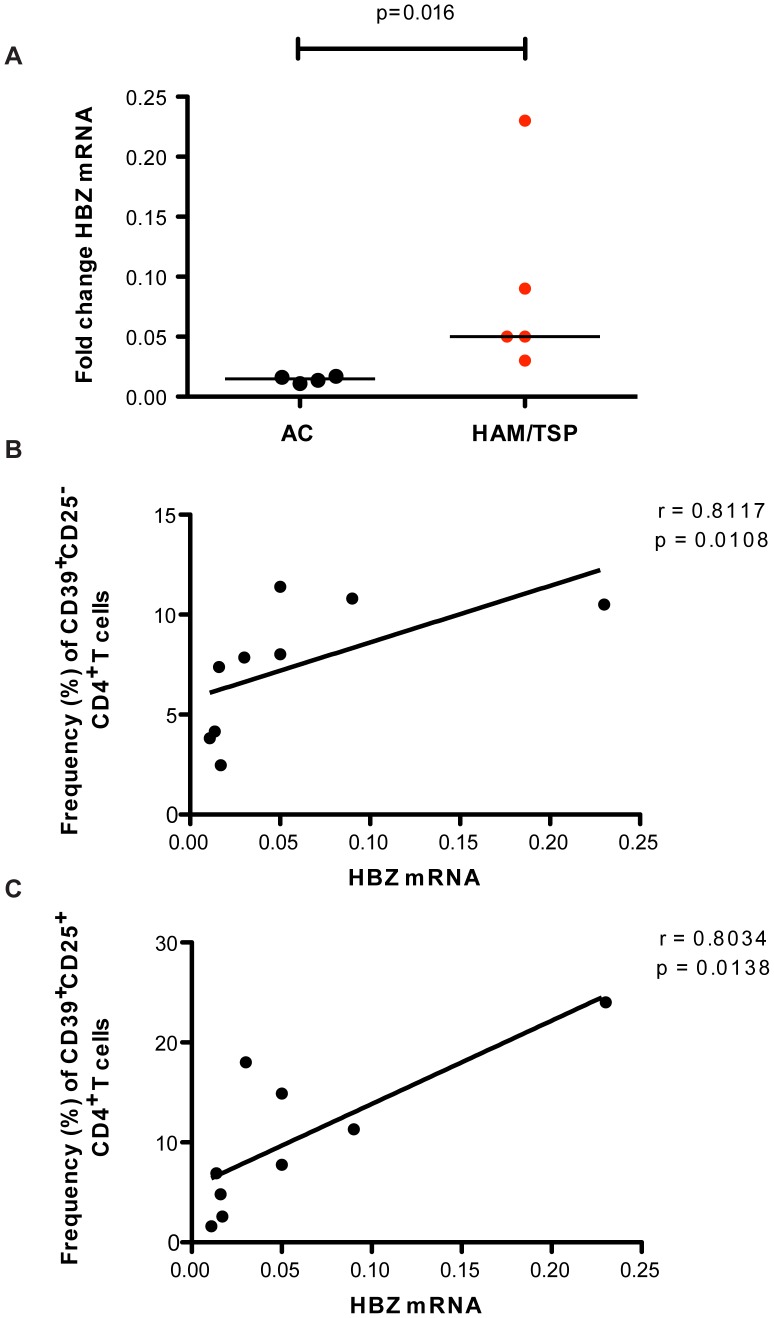
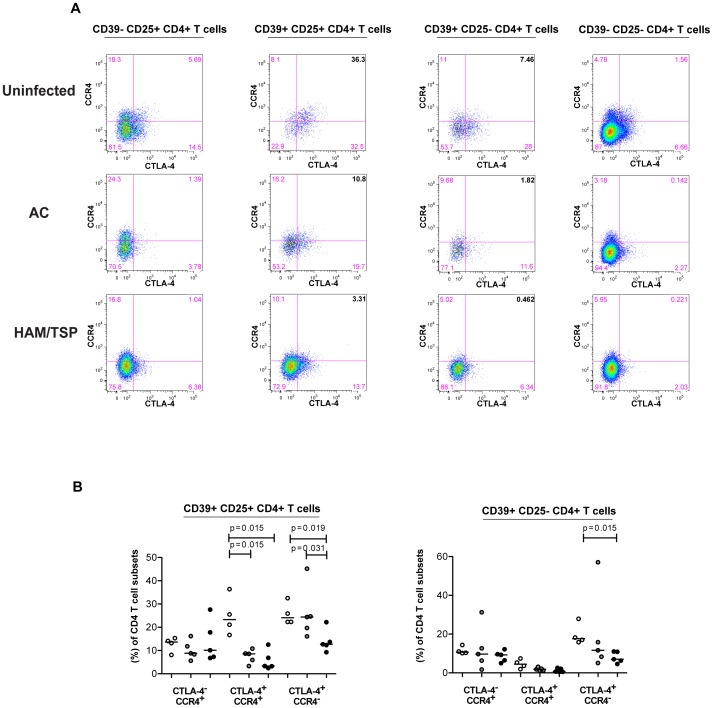
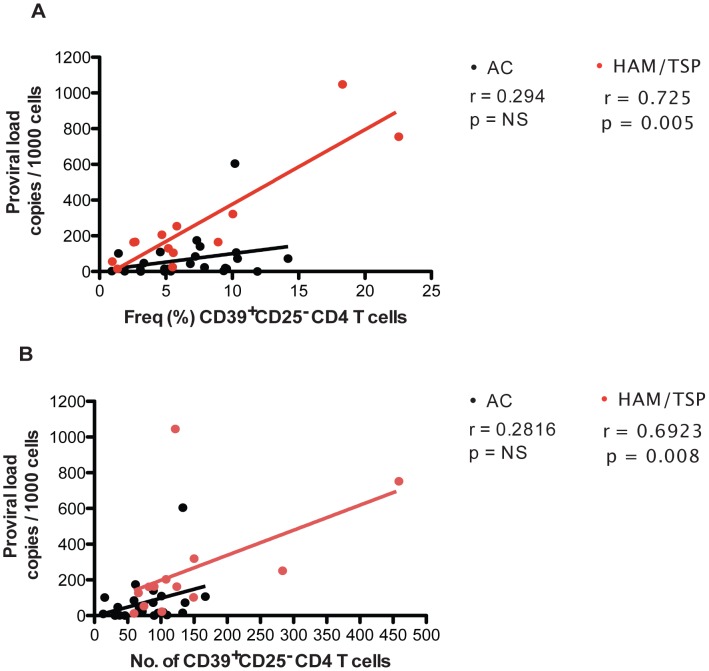
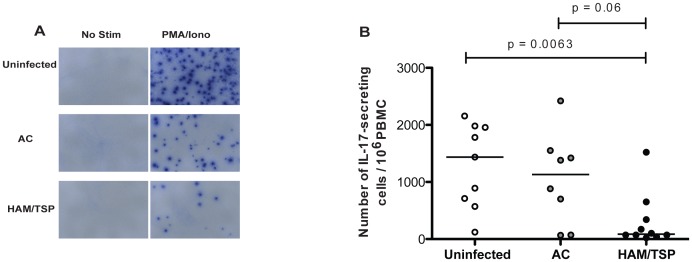
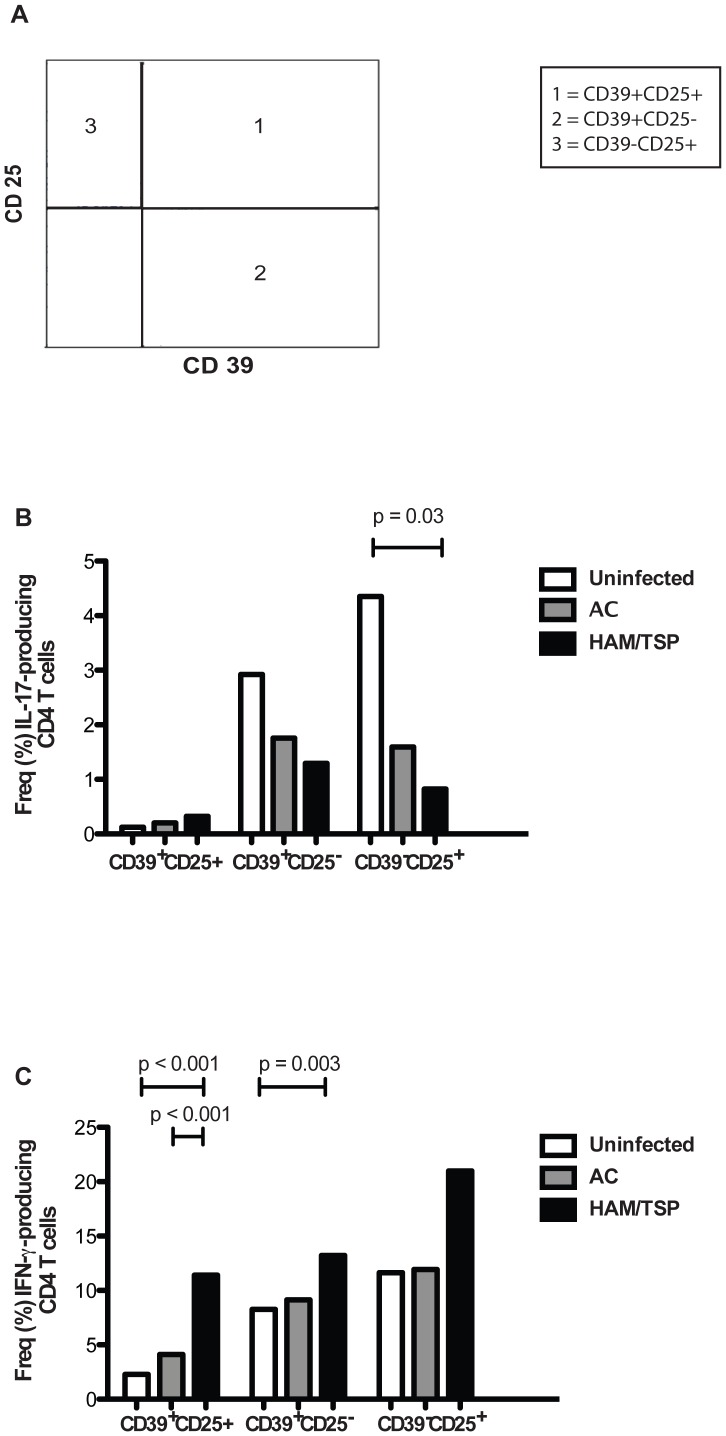
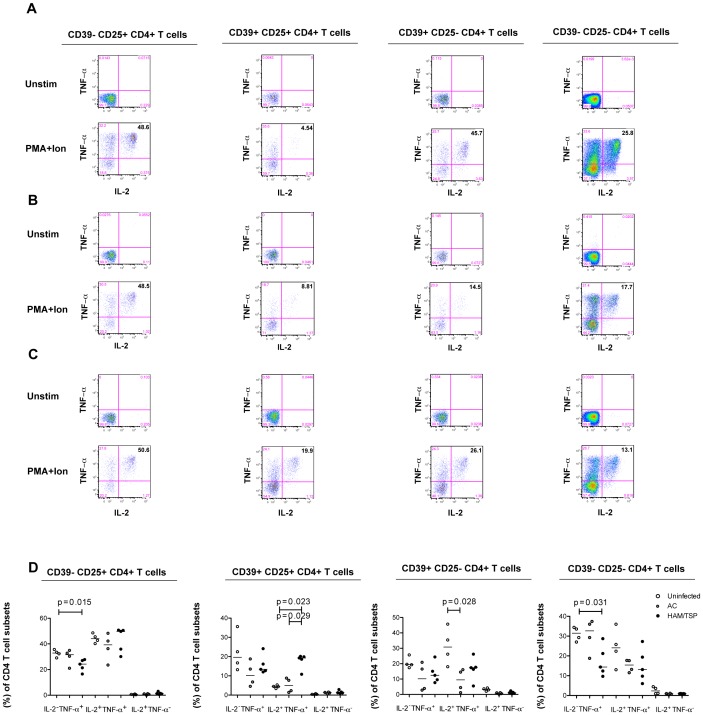
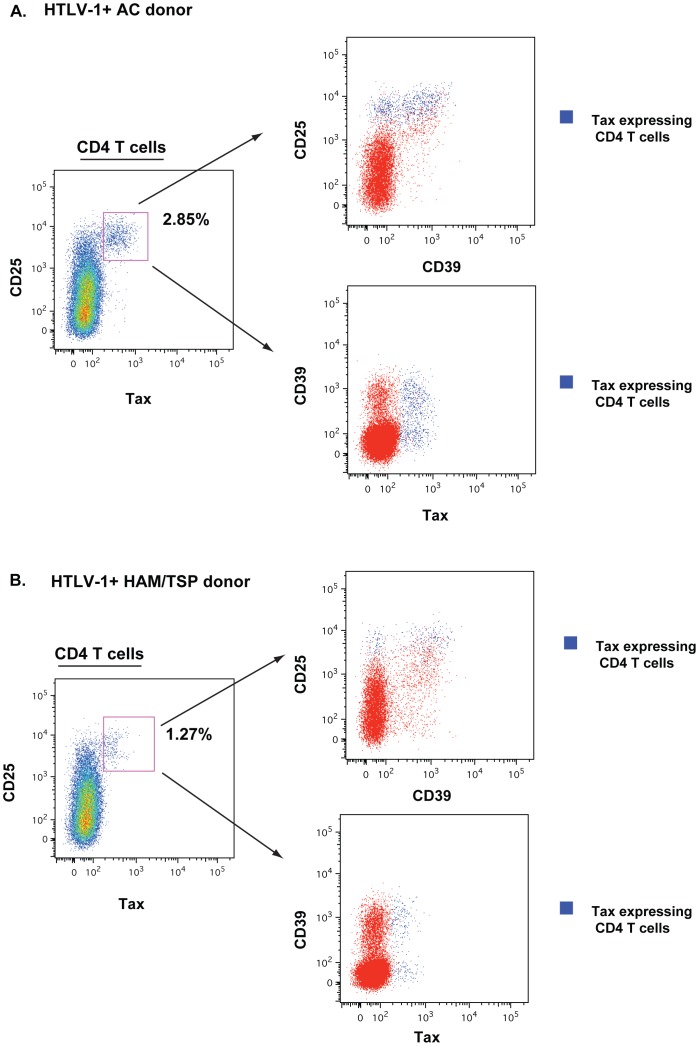
HTLV-1 infection is associated with several inflammatory disorders, including the neurodegenerative condition HTLV-1-associated myelopathy/tropical spastic paraparesis (HAM/TSP). It is unclear why a minority of infected subjects develops HAM/TSP. CD4⁺ T cells are the main target of infection and play a pivotal role in regulating immunity to HTLV and are hypothesized to participate in the pathogenesis of HAM/TSP. The CD39 ectonucleotidase receptor is expressed on CD4⁺ T cells and based on co-expression with CD25, marks T cells with distinct regulatory (CD39⁺CD25⁺) and effector (CD39⁺CD25⁻) function. Here, we investigated the expression of CD39 on CD4⁺ T cells from a cohort of HAM/TSP patients, HTLV-1 asymptomatic carriers (AC), and matched uninfected controls. The frequency of CD39⁺ CD4⁺ T cells was increased in HTLV-1 infected patients, regardless of clinical status. More importantly, the proportion of the immunostimulatory CD39⁺CD25⁻ CD4⁺ T-cell subset was significantly elevated in HAM/TSP patients as compared to AC and phenotypically had lower levels of the immunoinhibitory receptor, PD-1. We saw no difference in the frequency of CD39⁺CD25⁺ regulatory (Treg) cells between AC and HAM/TSP patients. However, these cells transition from being anergic to displaying a polyfunctional cytokine response following HTLV-1 infection. CD39⁻CD25⁺ T cell subsets predominantly secreted the inflammatory cytokine IL-17. We found that HAM/TSP patients had significantly fewer numbers of IL-17 secreting CD4⁺ T cells compared to uninfected controls. Taken together, we show that the expression of CD39 is upregulated on CD4⁺ T cells HAM/TSP patients. This upregulation may play a role in the development of the proinflammatory milieu through pathways both distinct and separate among the different CD39 T cell subsets. CD39 upregulation may therefore serve as a surrogate diagnostic marker of progression and could potentially be a target for interventions to reduce the development of HAM/TSP.
人类嗜 T 淋巴细胞病毒 1(HTLV-1)感染与多种炎症性疾病有关,包括神经退行性疾病 HTLV-1 相关性脊髓病/热带痉挛性截瘫(HAM/TSP)。目前尚不清楚为什么少数感染的患者会发展为 HAM/TSP。CD4⁺T 细胞是感染的主要靶标,在调节对 HTLV 的免疫方面发挥着关键作用,并被假设参与 HAM/TSP 的发病机制。CD39 外核苷酸酶受体表达于 CD4⁺T 细胞上,并基于与 CD25 的共表达,标记具有不同调节(CD39⁺CD25⁺)和效应(CD39⁺CD25⁻)功能的 T 细胞。在这里,我们研究了 HAM/TSP 患者、HTLV-1 无症状携带者(AC)和匹配的未感染对照者队列中 CD4⁺T 细胞上 CD39 的表达。无论临床状况如何,HTLV-1 感染患者的 CD39⁺CD4⁺T 细胞频率均增加。更重要的是,与 AC 相比,HAM/TSP 患者中免疫刺激 CD39⁺CD25⁻CD4⁺T 细胞亚群的比例显着升高,并且表型上具有较低水平的免疫抑制受体 PD-1。我们没有发现 AC 和 HAM/TSP 患者之间 CD39⁺CD25⁺调节性(Treg)细胞的频率存在差异。但是,这些细胞在 HTLV-1 感染后从无反应状态转变为显示多功能细胞因子反应。CD39⁻CD25⁺T 细胞亚群主要分泌炎症细胞因子 IL-17。我们发现 HAM/TSP 患者的 IL-17 分泌 CD4⁺T 细胞数量明显少于未感染的对照组。综上所述,我们表明 CD39 在 HAM/TSP 患者的 CD4⁺T 细胞上表达上调。这种上调可能通过不同 CD39 T 细胞亚群之间独特和独立的途径在炎症环境的发展中发挥作用。CD39 上调因此可以作为进展的替代诊断标志物,并可能成为减少 HAM/TSP 发展的干预目标。