Department of Tropical Medicine, John A. Burns School of Medicine, University of Hawaii, Honolulu, HI, United States.
Department of Microbiology and Immunology, Drexel University College of Medicine, Philadelphia, PA, United States.
Front Immunol. 2021 Mar 9;12:608890. doi: 10.3389/fimmu.2021.608890. eCollection 2021.
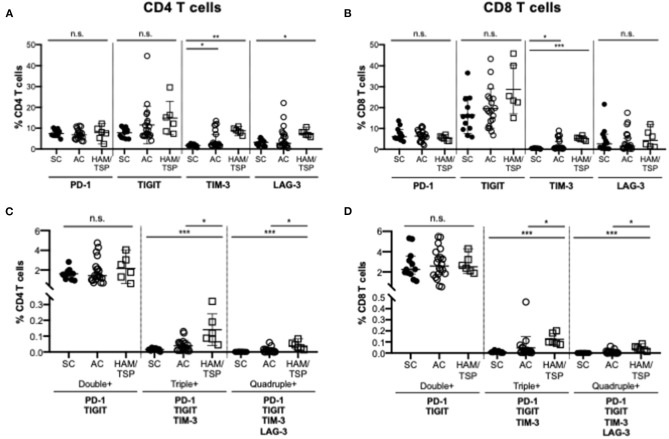
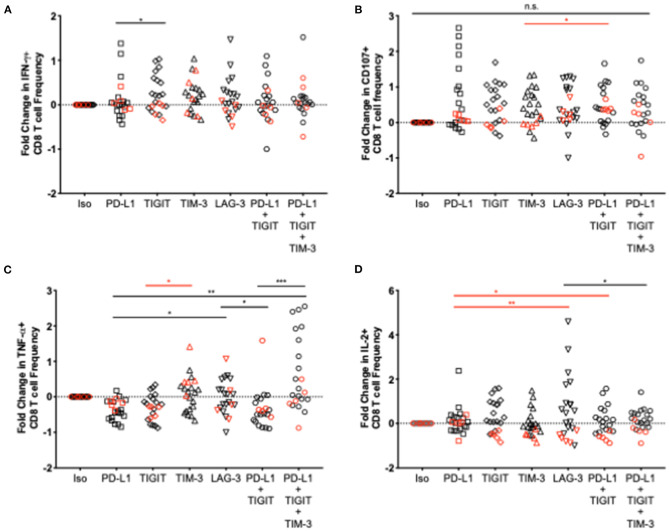
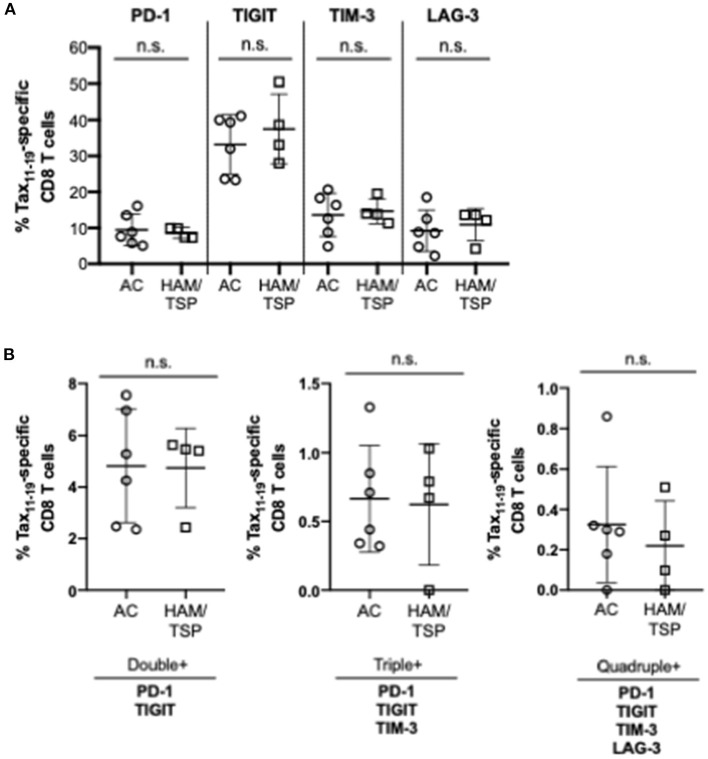
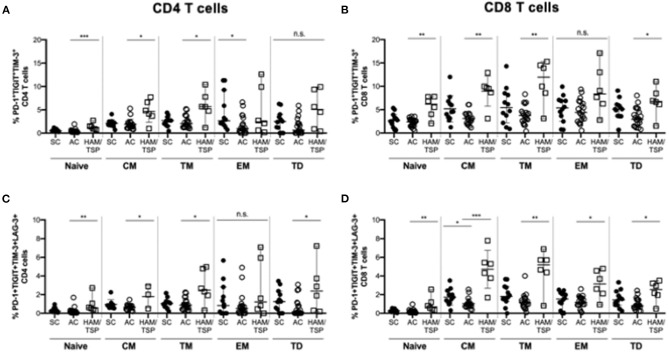
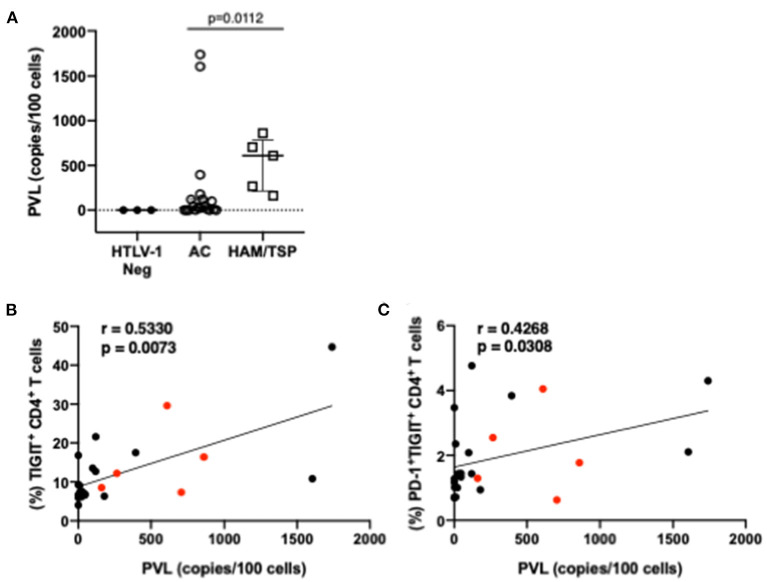
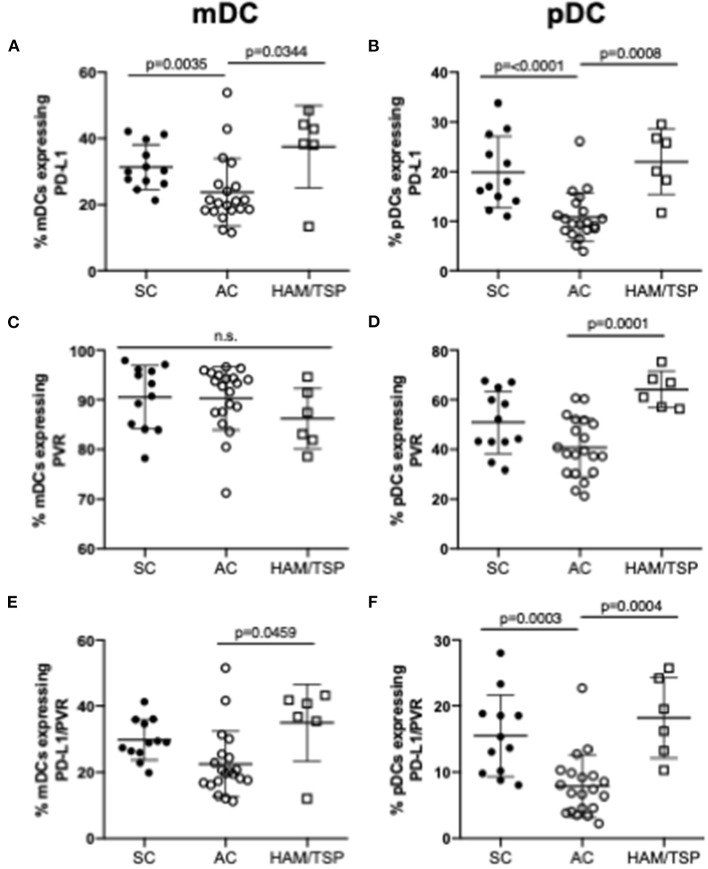
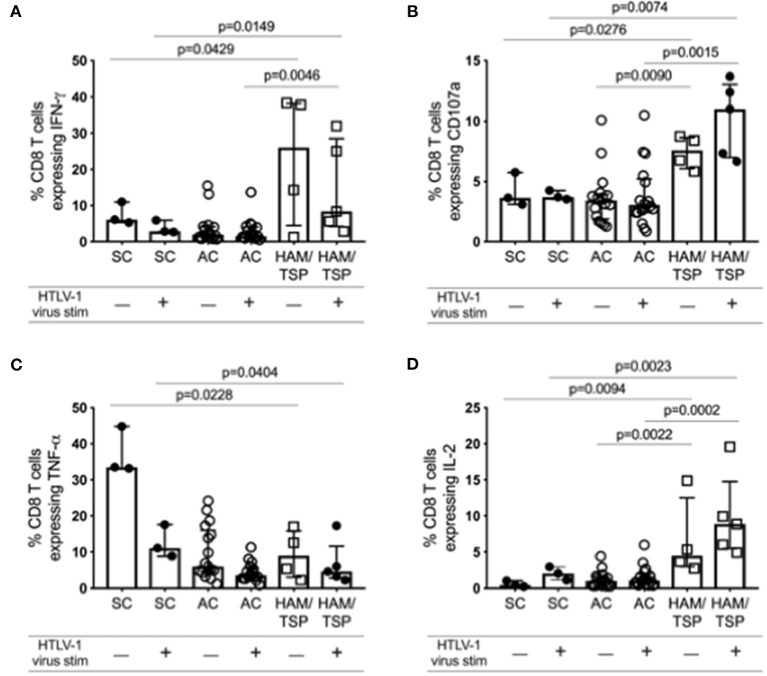
Human T-cell lymphotropic virus type 1 (HTLV-1)-associated myelopathy/tropical spastic paraparesis (HAM/TSP) develops in 1-5% of HTLV-1-infected individuals. Previous studies by us and others have shown that the expression of negative immune checkpoint receptors (NCRs) is significantly increased on CD8 T cells in various chronic viral infections and are associated with poor anti-viral immunity. We have previously identified the differential expression of NCRs on CD8 T cells in blood from patients with HAM/TSP and in central nervous system (CNS) tissues of HTLV-1 infected humanized mice and defined the association with neurological complications. In this study, we determined the co-expression patterns of several key NCRs (PD-1, TIGIT, TIM-3, and LAG-3) and their cognate ligands in HTLV-1 infection and assessed how combination strategies targeting these pathways would impact HTLV-1-specific CD8 T-cell effector functions as an approach to reduce CNS disease outcomes. We found that global CD8 T cells from HAM/TSP patients co-express multiple NCRs at significantly higher frequencies than asymptomatic carriers (AC). Moreover, NCR ligands (PVR and PD-LI) on both plasmacytoid and myeloid dendritic cells were also expressed at higher frequencies in HAM/TSP compared to AC. In both AC and HAM/TSP subjects, combination dual PD-L1/TIGIT or triple PD-L1/TIGIT/TIM-3 blockade with monoclonal antibodies resulted in increases in intracellular cytokine expression in CD8 T cells after virus stimulation, particularly CD107a, a marker of degranulation, and TNF-α, a key cytokine that can directly inhibit viral replication. Interestingly, almost all blockade combinations resulted in reduced IL-2+ HTLV-1-specific CD8 T cell frequencies in HAM/TSP subjects, but not in AC. These results define a novel combinatorial NCR immunotherapeutic blockade strategy to reduce HAM/TSP disease burden.
人类 T 细胞嗜淋巴细胞病毒 1 型(HTLV-1)相关脊髓病/热带痉挛性截瘫(HAM/TSP)在 1-5%的 HTLV-1 感染者中发展。我们和其他人之前的研究表明,在各种慢性病毒感染中,CD8 T 细胞上的负免疫检查点受体(NCR)表达显著增加,并与抗病毒免疫能力差有关。我们之前已经确定了 HAM/TSP 患者血液和 HTLV-1 感染的人源化小鼠中枢神经系统(CNS)组织中 CD8 T 细胞上 NCR 的差异表达,并定义了与神经并发症的关联。在这项研究中,我们确定了几种关键 NCR(PD-1、TIGIT、TIM-3 和 LAG-3)及其配体在 HTLV-1 感染中的共表达模式,并评估了靶向这些途径的联合策略如何影响 HTLV-1 特异性 CD8 T 细胞效应功能,作为减少 CNS 疾病结果的一种方法。我们发现,与无症状携带者(AC)相比,HAM/TSP 患者的 CD8 T 细胞整体共表达多种 NCR 的频率显著更高。此外,与 AC 相比,HAM/TSP 中的浆细胞样和髓样树突状细胞上的 NCR 配体(PVR 和 PD-LI)的表达频率也更高。在 AC 和 HAM/TSP 受试者中,使用单克隆抗体对 PD-L1/TIGIT 或 PD-L1/TIGIT/TIM-3 进行双重或三重阻断,在病毒刺激后可增加 CD8 T 细胞内细胞因子的表达,特别是脱颗粒的标志物 CD107a 和可直接抑制病毒复制的关键细胞因子 TNF-α。有趣的是,几乎所有阻断组合都导致 HAM/TSP 受试者中 IL-2+ HTLV-1 特异性 CD8 T 细胞频率降低,但在 AC 中没有。这些结果定义了一种新的组合 NCR 免疫治疗阻断策略,以降低 HAM/TSP 的疾病负担。