Fuel Cell Research Center, Korea Institute of Science and Technology, 39-1 Hawolgok-dong, Seoul 136-791, Korea.
Sci Rep. 2013;3:1309. doi: 10.1038/srep01309.
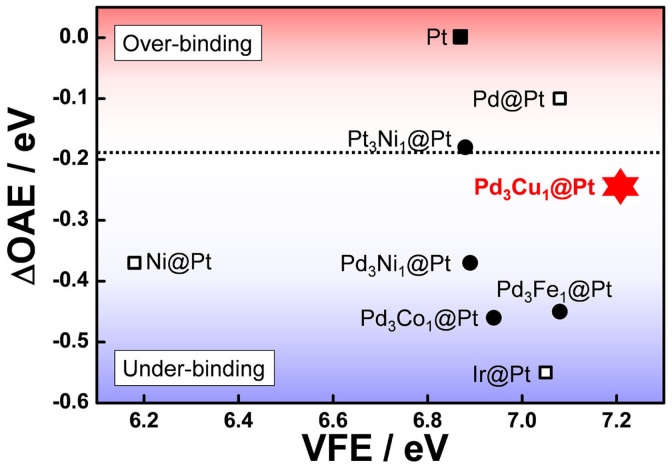
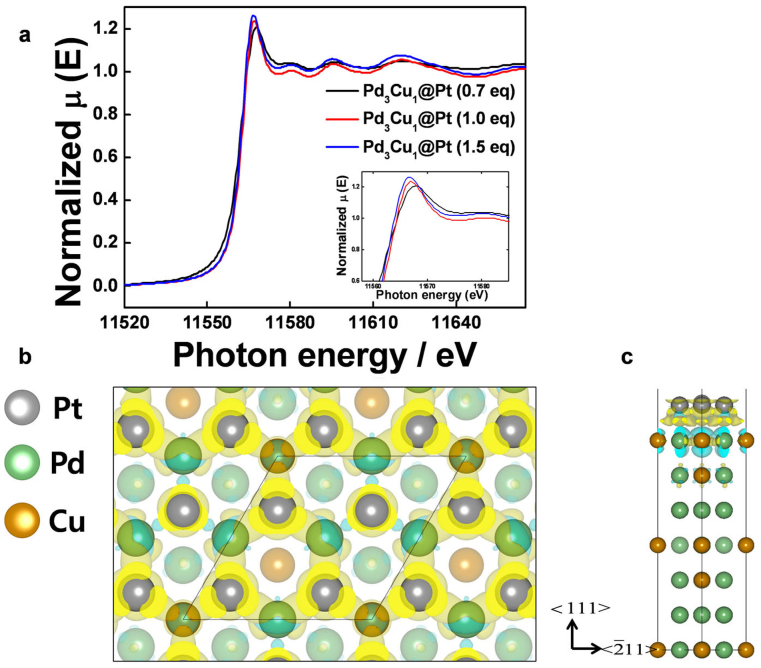
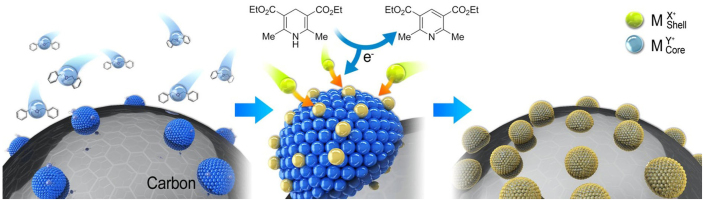
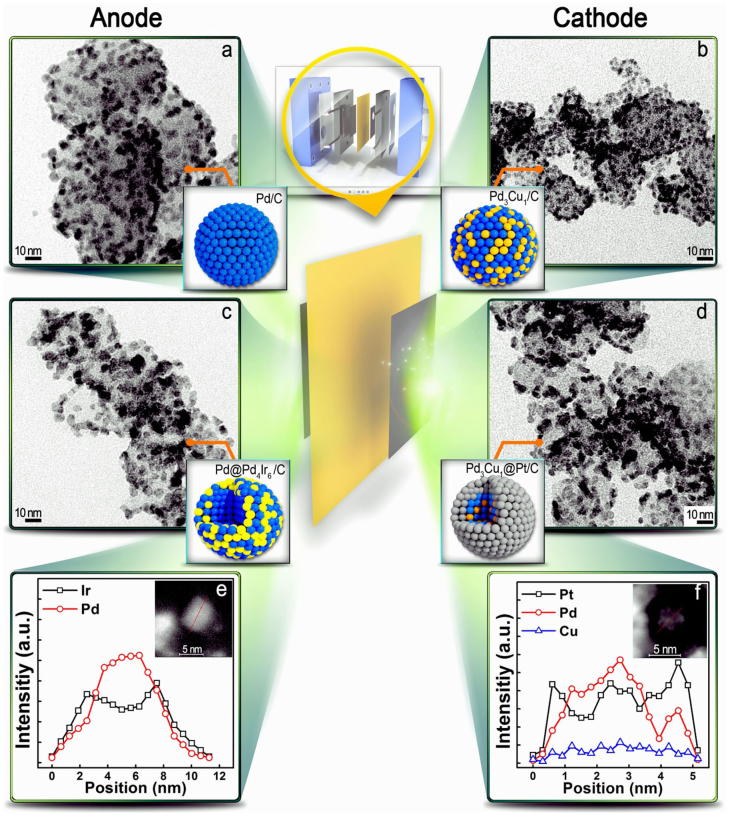
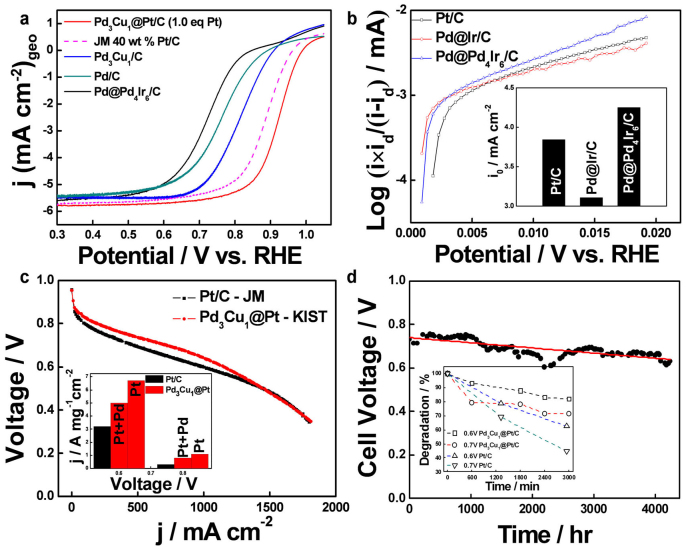
Core@shell electrocatalysts for fuel cells have the advantages of a high utilization of Pt and the modification of its electronic structures toward enhancement of the activities. In this study, we suggest both a theoretical background for the design of highly active and stable core@shell/C and a novel facile synthetic strategy for their preparation. Using density functional theory calculations guided by the oxygen adsorption energy and vacancy formation energy, Pd₃Cu₁@Pt/C was selected as the most suitable candidate for the oxygen reduction reaction in terms of its activity and stability. These predictions were experimentally verified by the surfactant-free synthesis of Pd3Cu1/C cores and the selective Pt shell formation using a Hantzsch ester as a reducing agent. In a similar fashion, Pd@Pd₄Ir₆/C catalyst was also designed and synthesized for the hydrogen oxidation reaction. The developed catalysts exhibited high activity, high selectivity, and 4,000 h of long-term durability at the single-cell level.
核壳型电催化剂用于燃料电池具有提高 Pt 利用率和修饰其电子结构以提高活性的优点。在本研究中,我们提出了一种设计高活性和稳定的核壳型/C 的理论背景和一种新颖的简便合成策略。通过使用氧吸附能和空位形成能指导的密度泛函理论计算,Pd3Cu1@Pt/C 被选为在活性和稳定性方面最适合氧还原反应的候选材料。这些预测通过无表面活性剂合成 Pd3Cu1/C 核和使用 Hantzsch 酯作为还原剂选择性形成 Pt 壳得到了实验验证。同样,还设计和合成了 Pd@Pd4Ir6/C 催化剂用于氧化还原反应。所开发的催化剂在单电池水平上表现出高活性、高选择性和 4000 小时的长期耐久性。