Department of Health Sciences, Autonomus Metropolitan University-Iztapalapa, México DF, Mexico.
Nutrients. 2013 Feb 19;5(2):579-93. doi: 10.3390/nu5020579.
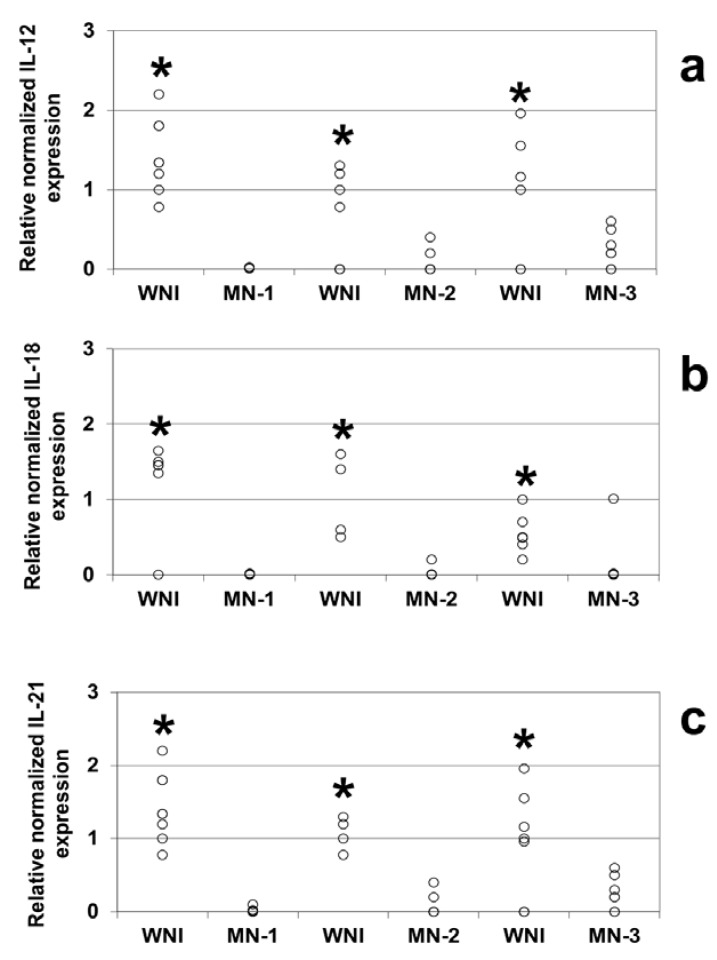
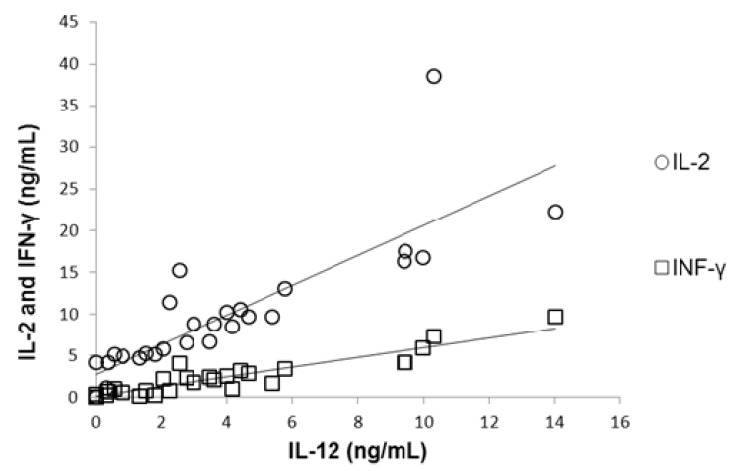
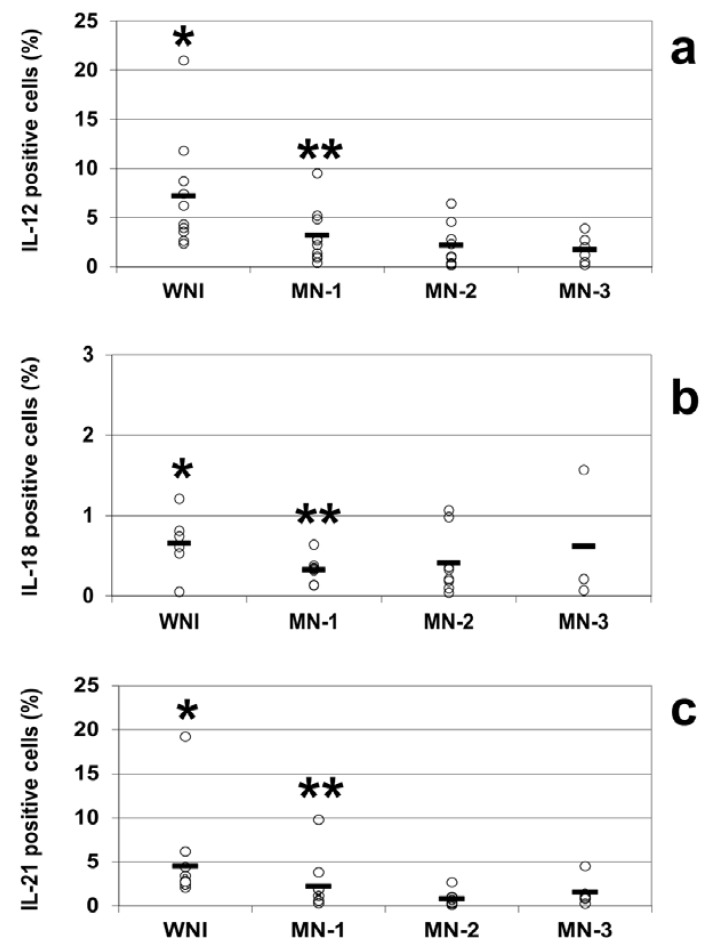
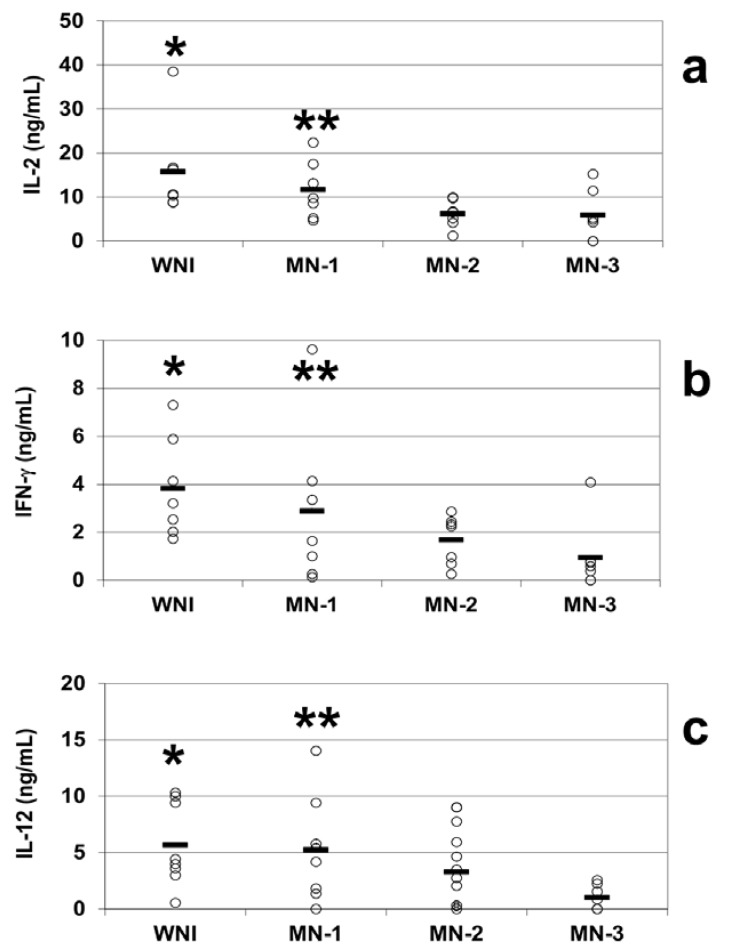
Malnutrition is a common cause of secondary immune deficiency and has been linked to an increased susceptibility to infection in humans. Malnutrition specifically affects T-cell-mediated immune responses. The aim of this study was to assess in lymphocytes from malnourished children the expression levels of IL-12, IL-18 and IL-21, molecules that induce the differentiation of T cells related to the immunological cellular response (Th1 response) and the production of cytokines related to the immunological cellular response (Th1 cytokines). We found that the expression levels of IL-12, IL-18 and IL-21 were significantly diminished in malnourished children compared to well-nourished children and were coincident with lower plasmatic levels of IL-2 and IFN-γ (Th1 cytokines). In this study, we show for the first time that the gene expression and intracellular production of cytokines responsible for Th1 cell differentiation (IL-12, IL-18 and IL-21) are diminished in malnourished children. As expected, this finding was related to lower plasmatic levels of IL-2 and IFN-γ. The decreased expression of Th1 cytokines observed in this study may contribute to the deterioration of the immunological Type 1 (cellular) response. We hypothesize that the decreased production of IL-12, IL-18 and IL-21 in malnourished children contributes to their inability to eradicate infections.
营养不良是导致继发性免疫缺陷的常见原因,与人类易感染相关。营养不良特别影响 T 细胞介导的免疫反应。本研究旨在评估营养不良儿童的淋巴细胞中白细胞介素 12 (IL-12)、白细胞介素 18 (IL-18)和白细胞介素 21 (IL-21)的表达水平,这些分子诱导与免疫细胞反应 (Th1 反应)相关的 T 细胞分化,并产生与免疫细胞反应 (Th1 细胞因子)相关的细胞因子。我们发现,与营养良好的儿童相比,营养不良的儿童的 IL-12、IL-18 和 IL-21 的表达水平显著降低,同时血浆中 IL-2 和 IFN-γ (Th1 细胞因子)的水平也降低。在这项研究中,我们首次表明,负责 Th1 细胞分化的细胞因子(IL-12、IL-18 和 IL-21)的基因表达和细胞内产生在营养不良的儿童中减少。正如预期的那样,这一发现与 IL-2 和 IFN-γ 的血浆水平较低有关。本研究中观察到的 Th1 细胞因子表达减少可能导致免疫 1 型 (细胞)反应的恶化。我们假设营养不良儿童中 IL-12、IL-18 和 IL-21 的产生减少,导致其无法消除感染。