Blizard Institute, Barts and the London School of Medicine and Dentistry, Queen Mary University of London, London, United Kingdom.
PLoS One. 2013;8(2):e57314. doi: 10.1371/journal.pone.0057314. Epub 2013 Feb 20.
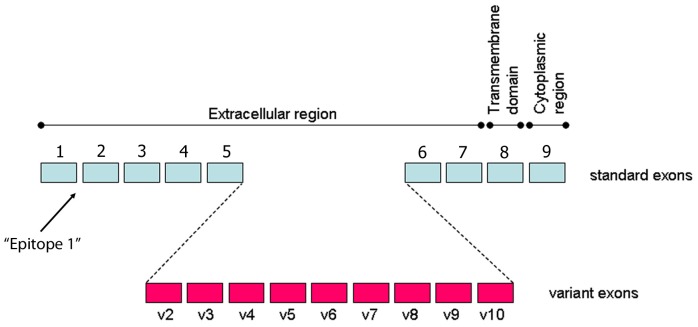
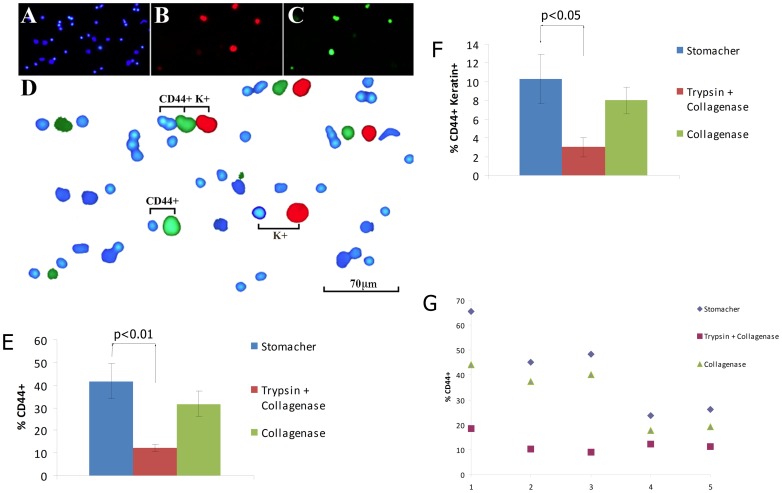
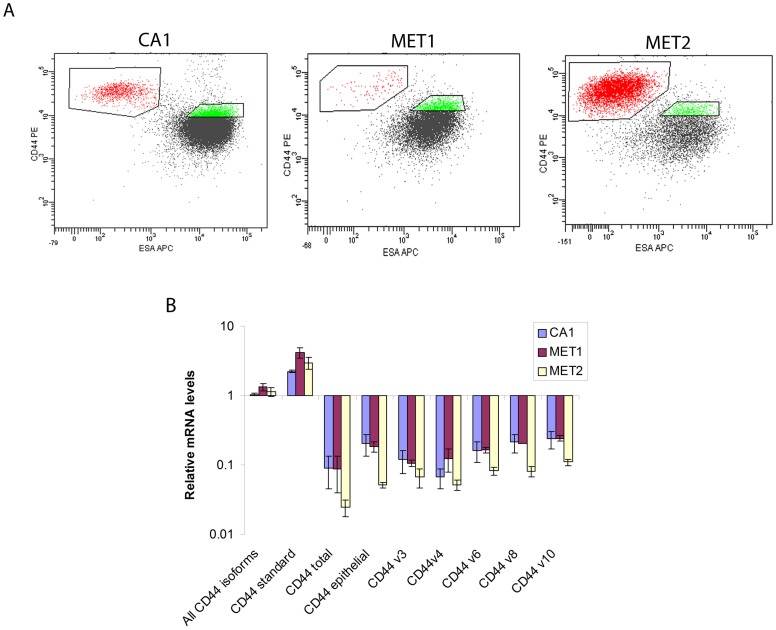
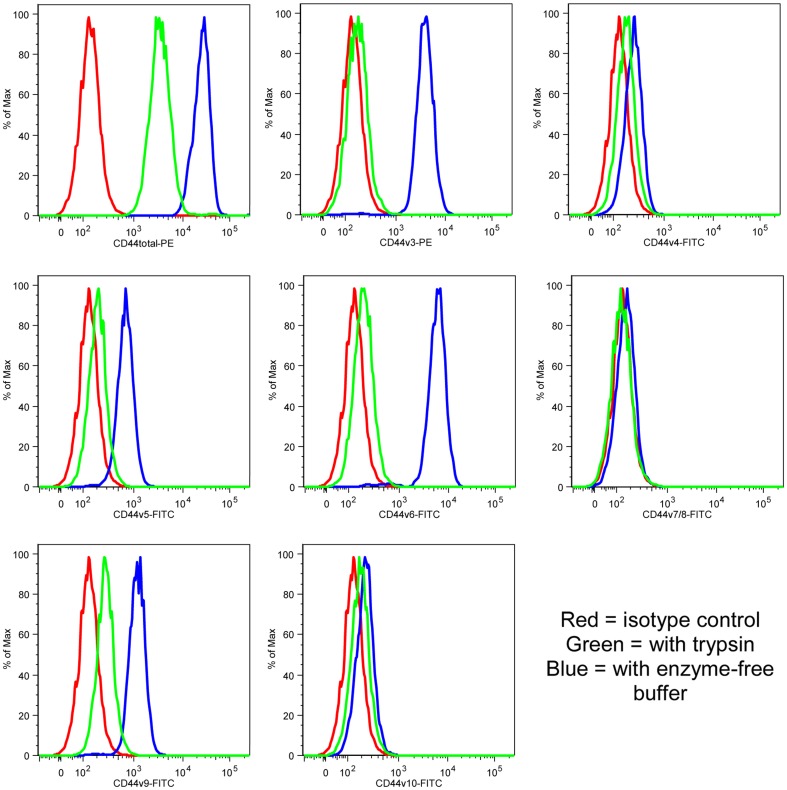
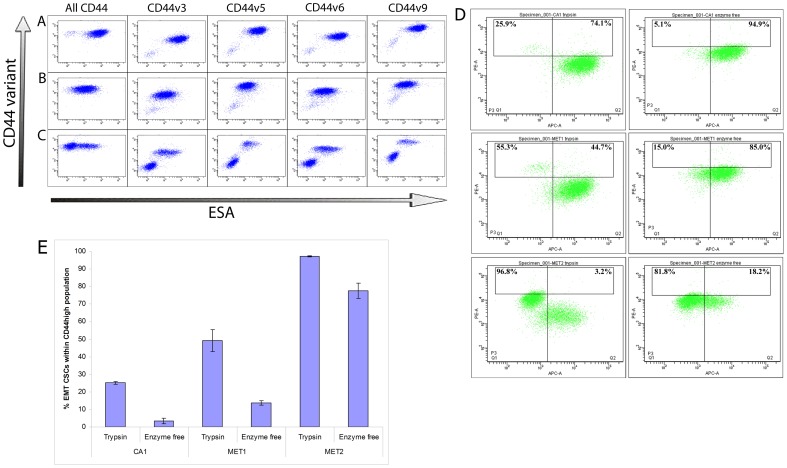
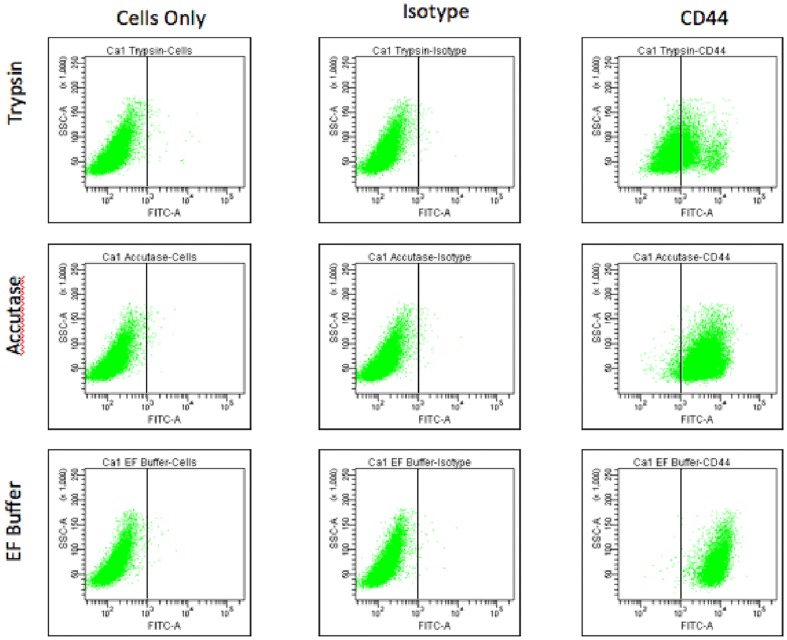
CD44 is commonly used as a cell surface marker of cancer stem-like cells in epithelial tumours, and we have previously demonstrated the existence of two different CD44(high) cancer stem-like cell populations in squamous cell carcinoma, one having undergone epithelial-to-mesenchymal transition and the other maintaining an epithelial phenotype. Alternative splicing of CD44 variant exons generates a great many isoforms, and it is not known which isoforms are expressed on the surface of the two different cancer stem-like cell phenotypes. Here, we demonstrate that cancer stem-like cells with an epithelial phenotype predominantly express isoforms containing the variant exons, whereas the cancer stem-like cells that have undergone an epithelial-to-mesenchymal transition down-regulate these variant isoforms and up-regulate expression of the standard CD44 isoform that contains no variant exons. In addition, we find that enzymatic treatments used to dissociate cells from tissue culture or fresh tumour specimens cause destruction of variant CD44 isoforms at the cell surface whereas expression of the standard CD44 isoform is preserved. This results in enrichment within the CD44(high) population of cancer stem-like cells that have undergone an epithelial-to-mesenchymal transition and depletion from the CD44(high) population of cancer stem-like cells that maintain an epithelial phenotype, and therefore greatly effects the characteristics of any cancer stem-like cell population isolated based on expression of CD44. As well as effecting the CD44(high) population, enzymatic treatment also reduces the percentage of the total epithelial cancer cell population staining CD44-positive, with potential implications for studies that aim to use CD44-positive staining as a prognostic indicator. Analyses of the properties of cancer stem-like cells are largely dependent on the ability to accurately identify and assay these populations. It is therefore critical that consideration be given to use of multiple cancer stem-like cell markers and suitable procedures for cell isolation in order that the correct populations are assayed.
CD44 通常被用作上皮肿瘤中癌症干细胞样细胞的细胞表面标志物,我们之前已经证明在鳞状细胞癌中存在两种不同的 CD44(high) 癌症干细胞样细胞群体,一种经历了上皮-间充质转化,另一种则保持上皮表型。CD44 变体外显子的选择性剪接产生了许多异构体,目前尚不清楚这两种不同的癌症干细胞样细胞表型的表面表达哪种异构体。在这里,我们证明具有上皮表型的癌症干细胞样细胞主要表达含有变体外显子的异构体,而经历上皮-间充质转化的癌症干细胞样细胞则下调这些变体异构体,并上调不含变体外显子的标准 CD44 异构体的表达。此外,我们发现用于从组织培养或新鲜肿瘤标本中分离细胞的酶处理会导致细胞表面变体 CD44 异构体的破坏,而标准 CD44 异构体的表达则得以保留。这导致经历上皮-间充质转化的癌症干细胞样细胞在 CD44(high) 群体中富集,而维持上皮表型的癌症干细胞样细胞在 CD44(high) 群体中耗尽,因此极大地影响了基于 CD44 表达分离的任何癌症干细胞样细胞群体的特征。除了影响 CD44(high) 群体外,酶处理还降低了总上皮癌细胞群体中 CD44 阳性染色的百分比,这可能对旨在将 CD44 阳性染色用作预后指标的研究产生影响。对癌症干细胞样细胞特性的分析在很大程度上取决于准确识别和检测这些群体的能力。因此,考虑使用多个癌症干细胞样细胞标志物和合适的细胞分离程序以检测正确的群体非常重要。