Division of Molecular and Cellular Medicine, National Cancer Center Research Institute, 5-1-1, Tsukiji, Chuo-ku, Tokyo 104-0045, Japan.
J Biol Chem. 2013 Apr 12;288(15):10849-59. doi: 10.1074/jbc.M112.446831. Epub 2013 Feb 25.
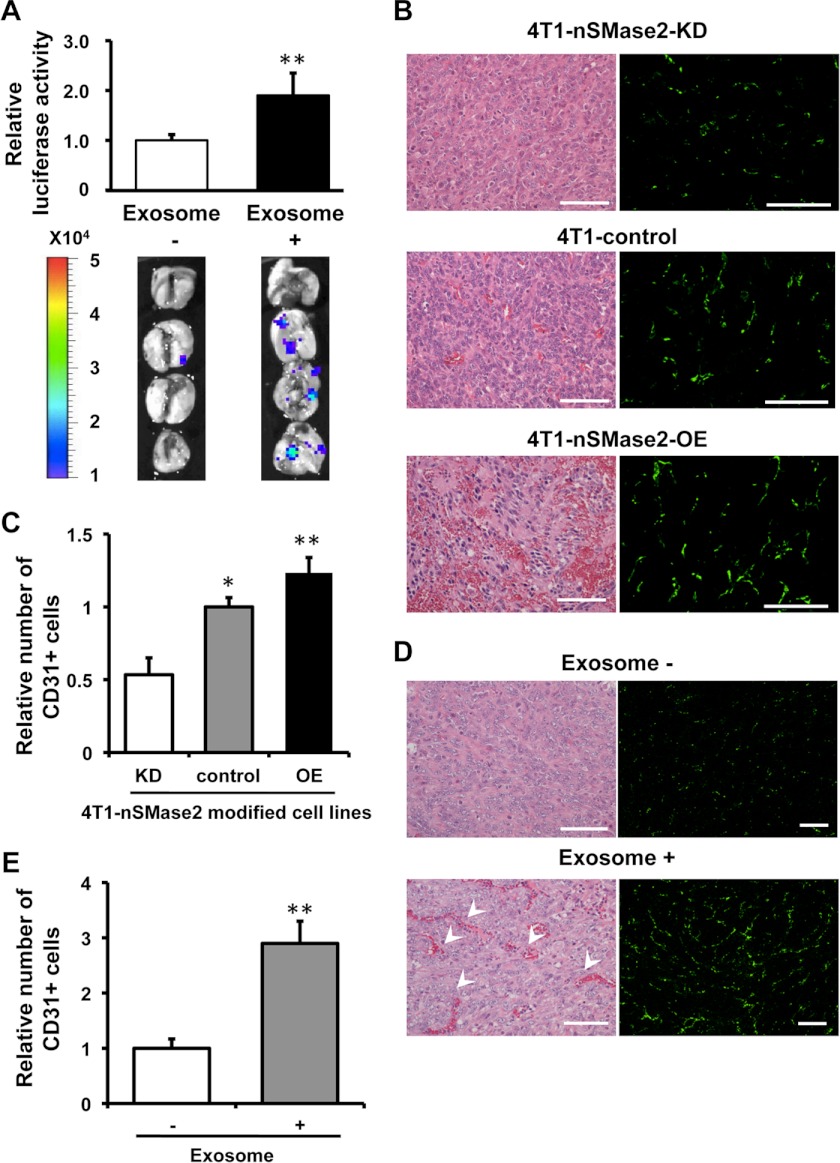
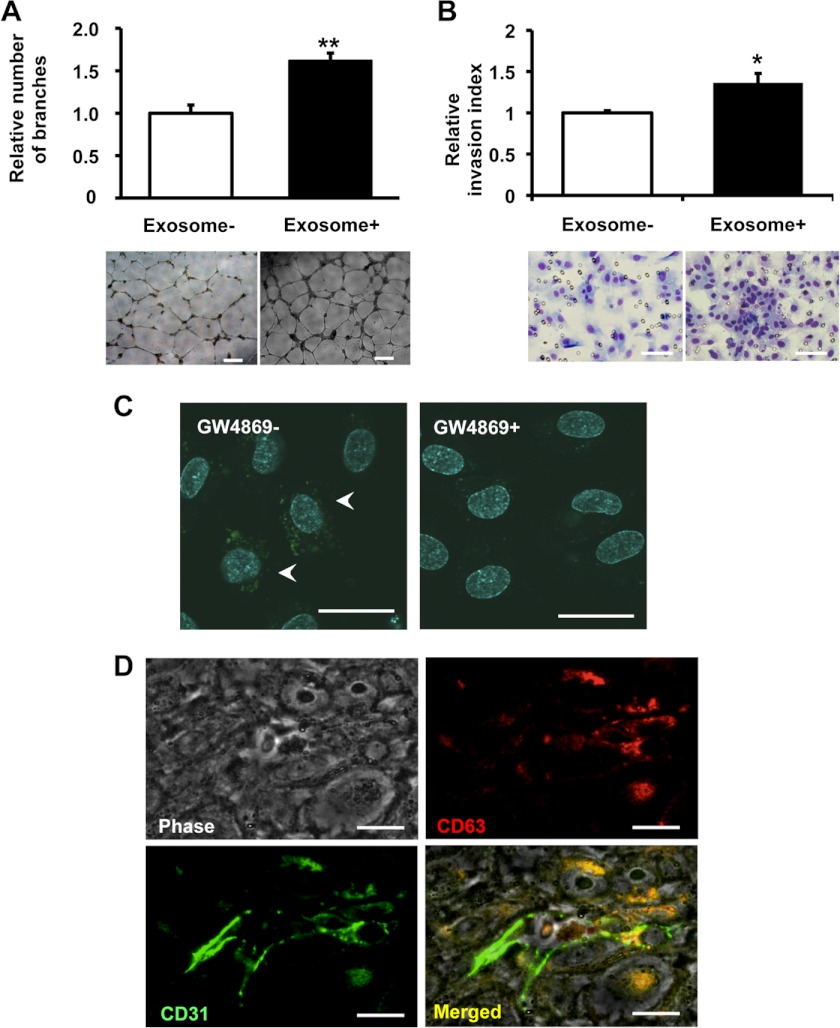
The release of humoral factors between cancer cells and the microenvironmental cells is critical for metastasis; however, the roles of secreted miRNAs in non-cell autonomous cancer progression against microenvironmental cells remain largely unknown. Here, we demonstrate that the neutral sphyngomyelinase 2 (nSMase2) regulates exosomal microRNA (miRNA) secretion and promotes angiogenesis within the tumor microenvironment as well as metastasis. We demonstrate a requirement for nSMase2-mediated cancer cell exosomal miRNAs in the regulation of metastasis through the induction of angiogenesis in inoculated tumors. In addition, miR-210, released by metastatic cancer cells, was shown to transport to endothelial cells and suppress the expression of specific target genes, which resulted in enhanced angiogenesis. These findings suggest that the horizontal transfer of exosomal miRNAs from cancer cells can dictate the microenviromental niche for the benefit of the cancer cell, like "on demand system" for cancer cells.
癌细胞与微环境细胞之间的体液因子释放对转移至关重要;然而,分泌的 miRNA 在非细胞自主的癌症进展对微环境细胞的作用在很大程度上仍然未知。在这里,我们证明了中性鞘磷脂酶 2 (nSMase2) 调节细胞外体 microRNA (miRNA) 的分泌,并促进肿瘤微环境中的血管生成和转移。我们证明了 nSMase2 介导的癌细胞外体 miRNA 通过诱导接种肿瘤中的血管生成在调节转移中的必要性。此外,转移性癌细胞释放的 miR-210 被证明可以转移到内皮细胞并抑制特定靶基因的表达,从而导致血管生成增强。这些发现表明,癌细胞中外泌体 miRNA 的水平转移可以决定有利于癌细胞的微环境龛位,就像癌细胞的“按需系统”一样。