Institute of Animal Nutrition, Department of Veterinary Medicine, Freie Universität Berlin, Berlin, Germany.
PLoS One. 2013;8(2):e56405. doi: 10.1371/journal.pone.0056405. Epub 2013 Feb 18.
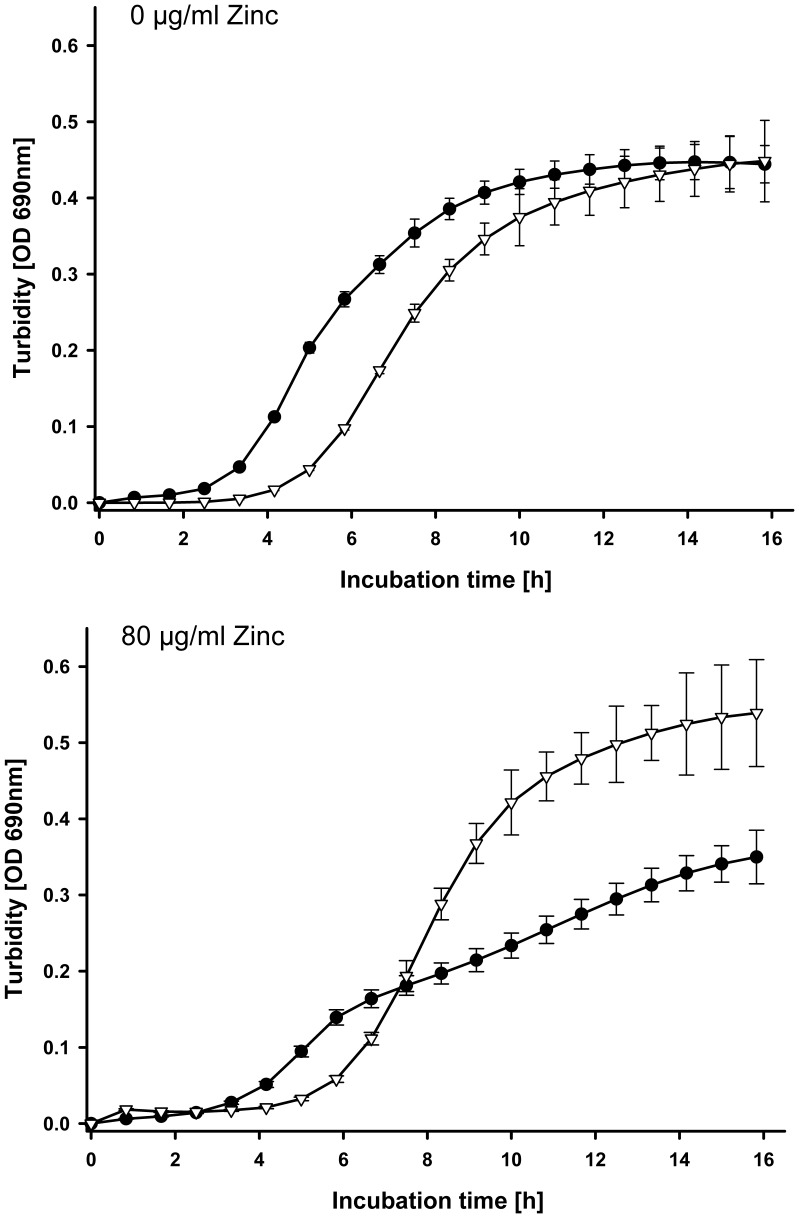
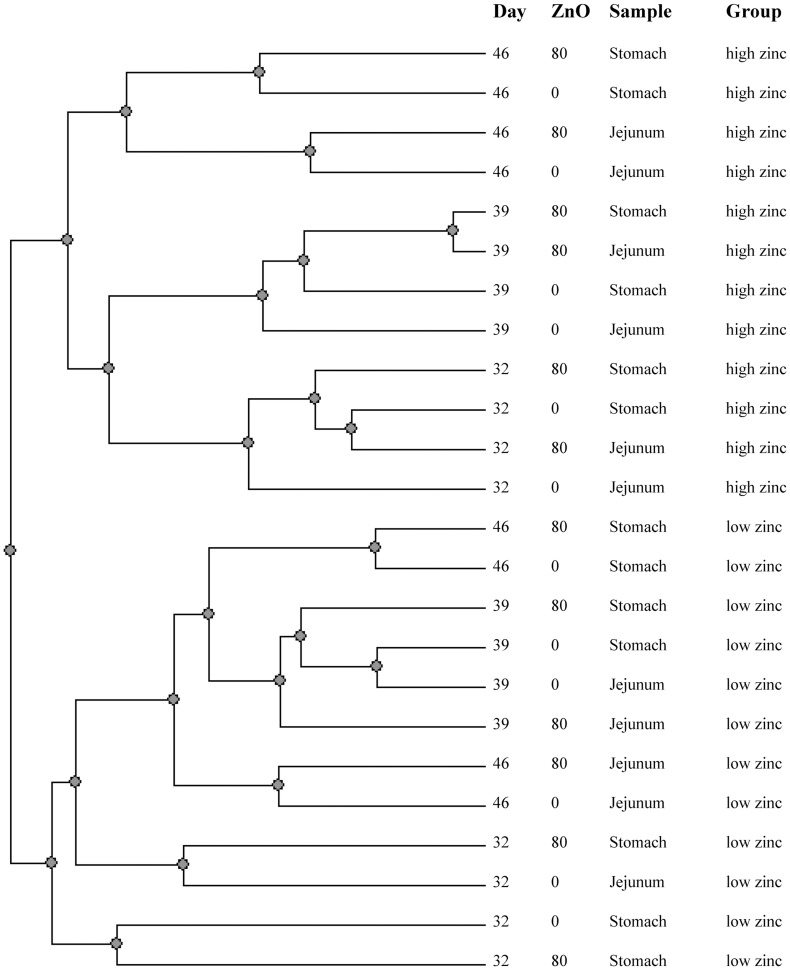
Piglets were fed diets containing 57 (low) or 2425 (high) mg zinc from analytical grade zinc oxide (ZnO) ·kg(-1) feed. Digesta samples from the stomach and jejuna of 32, 39, 46 and 53 d old animals (n = 6 per group) were incubated in media containing 80, 40, 20 and 0 µg·mL(-1) soluble zinc from ZnO. Turbidity was recorded for 16 h and growth parameters were calculated. Additionally, DNA extracts of selected samples were analyzed via qPCR for different bacterial groups. Samples from animals fed the low dietary zinc concentration always showed highest rate of growth and lowest lag times in media without added zinc. However, media supplemented with zinc displayed highest growth rates and lowest lag time in the high dietary zinc group. Specific growth rates and lag time showed significant differences on day 32 and 39 of age, but rarely on days 46 and 53 of age. Bacterial growth in digesta samples from the high dietary zinc group was less influenced by zinc and recovered growth more rapidly than in the low dietary zinc group. Specific growth rates and bacterial cell numbers from qPCR results showed that lactobacilli were most susceptible to zinc, while bifidobacteria, enterobacteria and enterococci exhibited increased growth rates in samples of animals from the high dietary zinc treatment. No treatment related differences were observed for clostridial cluster IV and the Bacteroides-Prevotella-Porphyromonas cluster. The diversity of enterobacteria after incubation was always higher in the high dietary zinc treatment or in medium supplemented with 80 µg·mL(-1) soluble ZnO. This study has shown that a pharmacological dosage of ZnO leads to a reduced ex vivo-bacterial growth rate of bacteria from the stomach and jejunum of weaned piglets. In view of the rapid bacterial adaptation to dietary zinc, the administration of ZnO in feeds for weaned piglets might only be beneficial in a short period after weaning.
仔猪饲喂含 57(低)或 2425(高)mg 分析纯氧化锌(ZnO)·kg(-1)饲料的日粮。32、39、46 和 53 日龄动物(每组 6 头)的胃和空肠内容物样品在含有 80、40、20 和 0 µg·mL(-1)ZnO 可溶锌的培养基中孵育。16 h 后记录浊度并计算生长参数。此外,通过 qPCR 分析选定样品的 DNA 提取物,以研究不同细菌群。饲喂低锌日粮的动物的样品在无添加锌的培养基中始终表现出最高的生长率和最低的滞后时间。然而,高锌日粮组中添加锌的培养基显示出最高的生长率和最低的滞后时间。特定生长率和滞后时间在 32 和 39 日龄时差异显著,但在 46 和 53 日龄时很少差异。高锌日粮组的粪便样本中细菌生长受锌的影响较小,恢复生长速度快于低锌日粮组。qPCR 结果的特定生长率和细菌细胞数表明,乳酸菌对锌最敏感,而双歧杆菌、肠杆菌和肠球菌在高锌日粮处理动物的样本中表现出更高的生长率。在梭菌 IV 簇和拟杆菌-普雷沃氏菌-卟啉单胞菌簇中未观察到与处理相关的差异。孵育后,高锌日粮处理或添加 80 µg·mL(-1)可溶 ZnO 的培养基中,肠杆菌的多样性始终较高。本研究表明,药理学剂量的 ZnO 可降低断奶仔猪胃和空肠细菌的离体生长速度。鉴于细菌对日粮锌的快速适应,在断奶后短期内,在断奶仔猪饲料中添加 ZnO 可能是有益的。