The Gurdon Institute, University of Cambridge, Cambridge, UK.
Cell Cycle. 2013 Mar 15;12(6):1000-8. doi: 10.4161/cc.23947. Epub 2013 Feb 26.
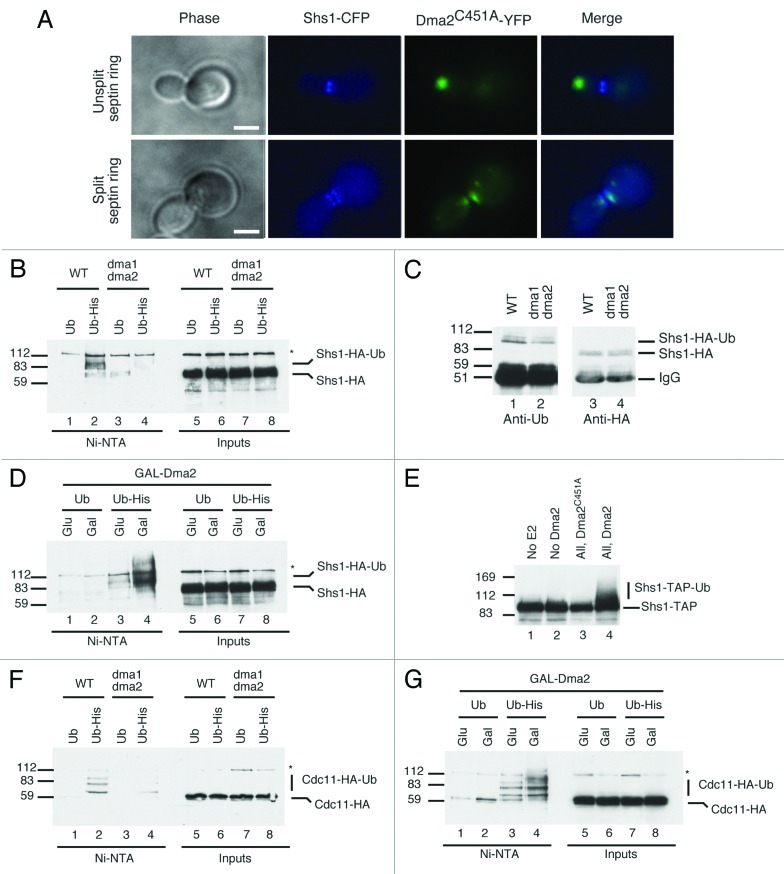
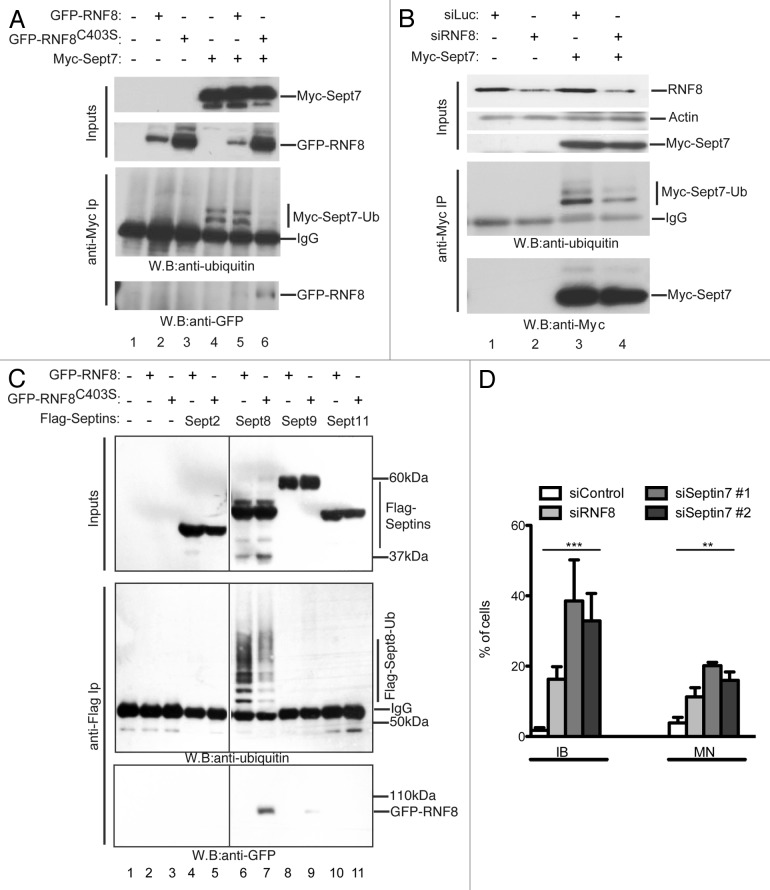
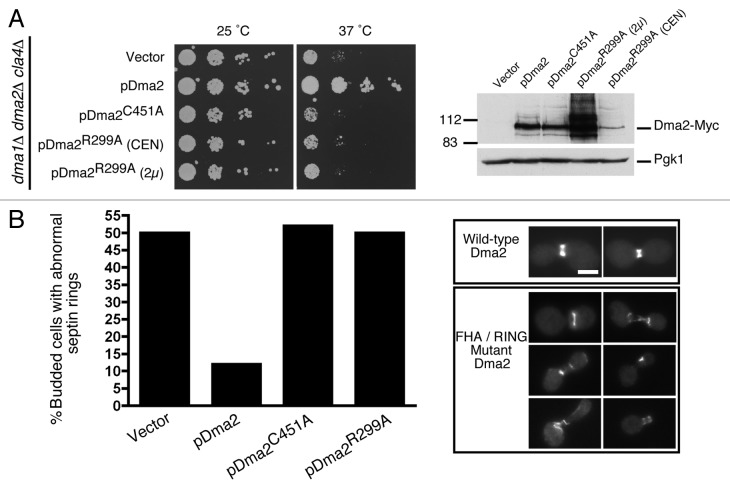
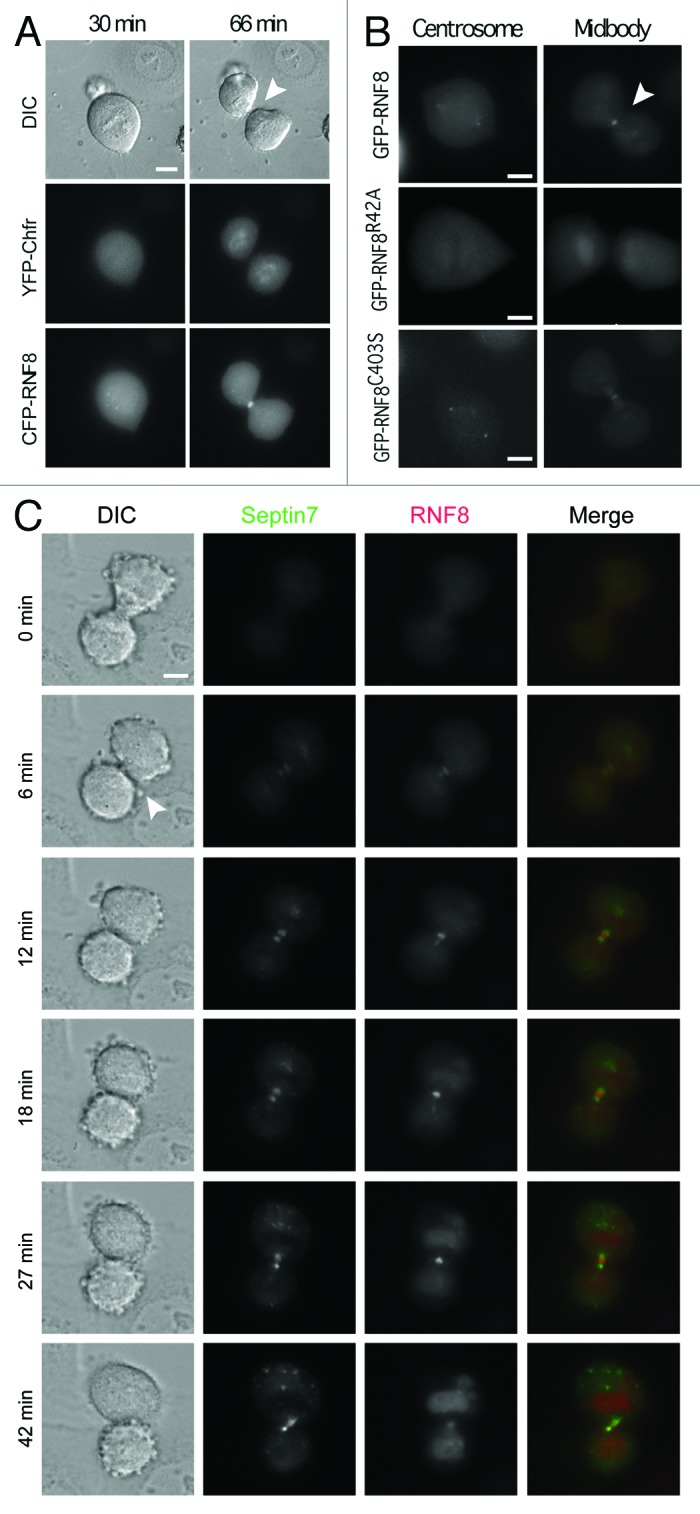
The budding yeast proteins Dma1 and Dma2 are members of the unique FHA-RING domain protein family and are linked to mitotic regulation and septin organization by ill-defined mechanisms. We show that Dma2 has ubiquitin ligase activity, and that septins Shs1 and Cdc11 are likely direct in vivo targets. We further propose that human RNF8, rather than Chfr, is the mammalian Dma homolog. As in yeast, RNF8 localizes to the centrosomes and cell division sites and promotes ubiquitylation of the septin SEPT7, whose depletion increases cell division anomalies. Together, these findings reveal evolutionary and functional conservation of Dma proteins, and suggest that RNF8 maintains genome stability through independent, yet analogous, nuclear and cytoplasmic ubiquitylation activities.
芽殖酵母蛋白 Dma1 和 Dma2 是独特 FHA-RING 结构域蛋白家族的成员,通过尚未明确的机制与有丝分裂调控和隔膜蛋白组织相关联。我们发现 Dma2 具有泛素连接酶活性,而 septin Shs1 和 Cdc11 可能是其直接的体内靶标。我们进一步提出,人类 RNF8 而不是 Chfr 是哺乳动物 Dma 的同源物。与酵母一样,RNF8 定位于中心体和细胞分裂部位,并促进 septin SEPT7 的泛素化,后者的缺失会增加细胞分裂异常。这些发现揭示了 Dma 蛋白的进化和功能保守性,并表明 RNF8 通过独立但类似的核内和细胞质泛素化活性维持基因组稳定性。