Gielen Heidi, Remans Tony, Vangronsveld Jaco, Cuypers Ann
Centre for Environmental Sciences, Hasselt University, Agoralaan Building D, Diepenbeek 3590, Belgium.
Int J Mol Sci. 2012 Nov 27;13(12):15826-47. doi: 10.3390/ijms131215826.
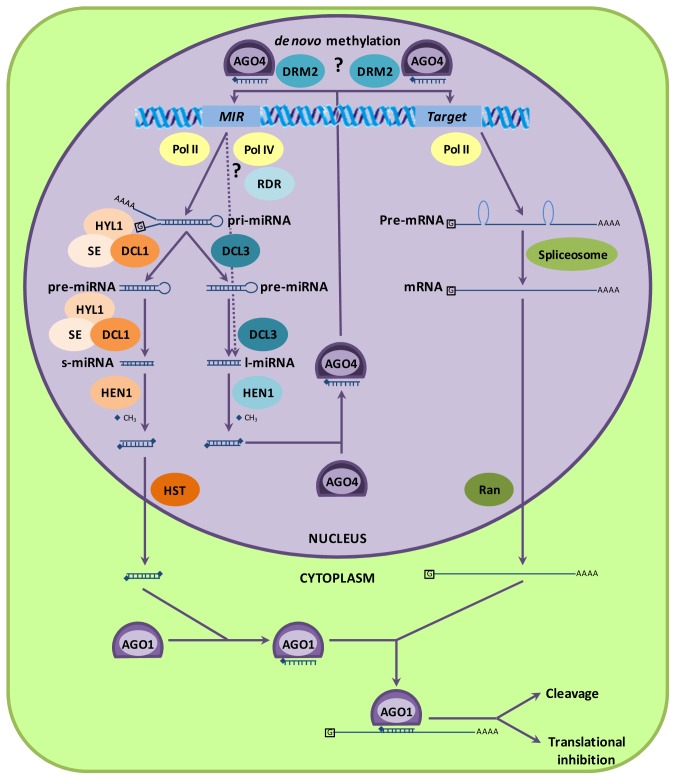
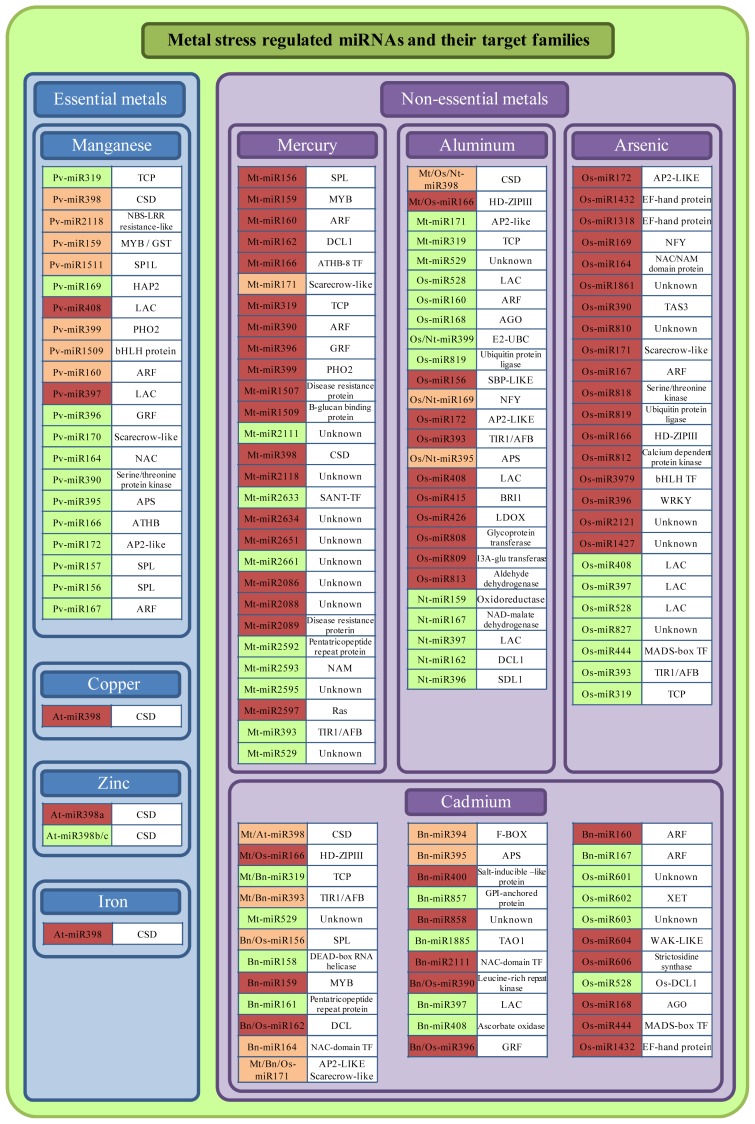
In plants, microRNAs (miRNAs) control various biological processes by negatively regulating the expression of complementary target genes, either (1) post-transcriptionally by cleavage or translational inhibition of target mRNA, or (2) transcriptionally by methylation of target DNA. Besides their role in developmental processes, miRNAs are main players in stress responses, including metal stress responses. Exposure of plants to excess metal concentrations disturbs the cellular redox balance and enhances ROS accumulation, eventually leading to oxidative damage or signaling. Plants modify their gene expression by the activity of miRNAs in response to metal toxicity to regulate (1) complexation of excess metals, (2) defense against oxidative stress and (3) signal transduction for controlling various biological responses. This review focuses on the biogenesis, working mechanisms and functioning of miRNAs in plants. In a final part, our current knowledge on the regulatory roles of miRNAs in plant metal stress responses is highlighted, and whether stress-regulated miRNAs have specific roles or are secondary consequences is discussed.
在植物中,微小RNA(miRNA)通过负向调控互补靶基因的表达来控制各种生物学过程,调控方式有两种:(1)通过切割靶mRNA或抑制其翻译进行转录后调控,或(2)通过靶DNA甲基化进行转录调控。除了在发育过程中发挥作用外,miRNA还是应激反应(包括金属应激反应)的主要参与者。植物暴露于过量金属浓度下会扰乱细胞氧化还原平衡并增强活性氧(ROS)积累,最终导致氧化损伤或信号传导。植物通过miRNA的活性改变其基因表达,以应对金属毒性,从而调节:(1)过量金属的络合;(2)对氧化应激的防御;(3)控制各种生物学反应的信号转导。本综述重点关注植物中miRNA的生物合成、作用机制和功能。在最后一部分,我们强调了目前关于miRNA在植物金属应激反应中调控作用的知识,并讨论了应激调控的miRNA是具有特定作用还是次生结果。