Department of Biotechnology Research, Research Institute of Forests and Rangelands, Agricultural Research, Education and Extension Organization (AREEO), National Botanical Garden, Tehran Karaj Freeway, P.O. Box 13185-116, Tehran, Iran.
Farzanegan Campus, Semnan University, Semnan, Iran.
BMC Plant Biol. 2023 May 6;23(1):240. doi: 10.1186/s12870-023-04240-9.
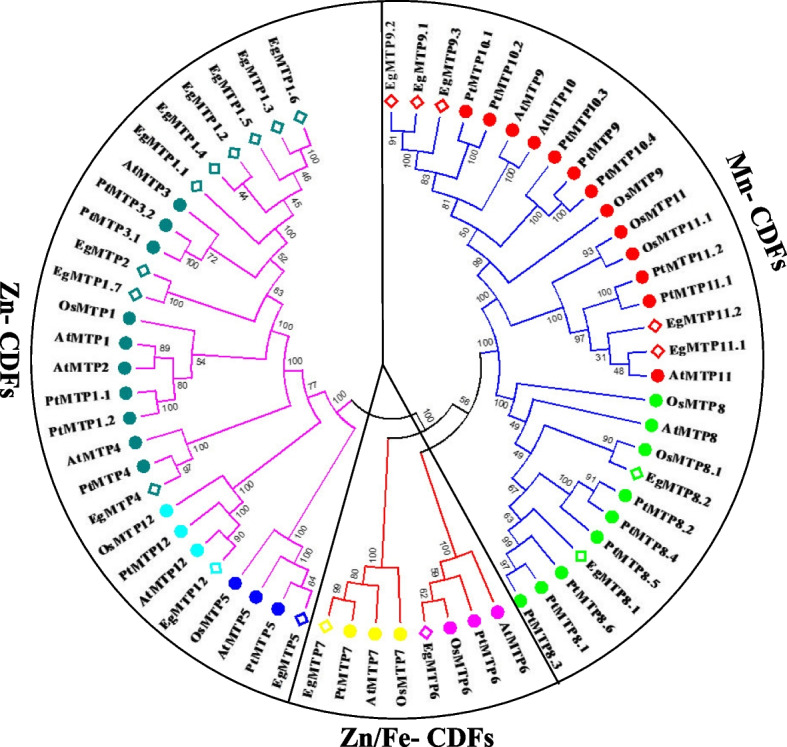
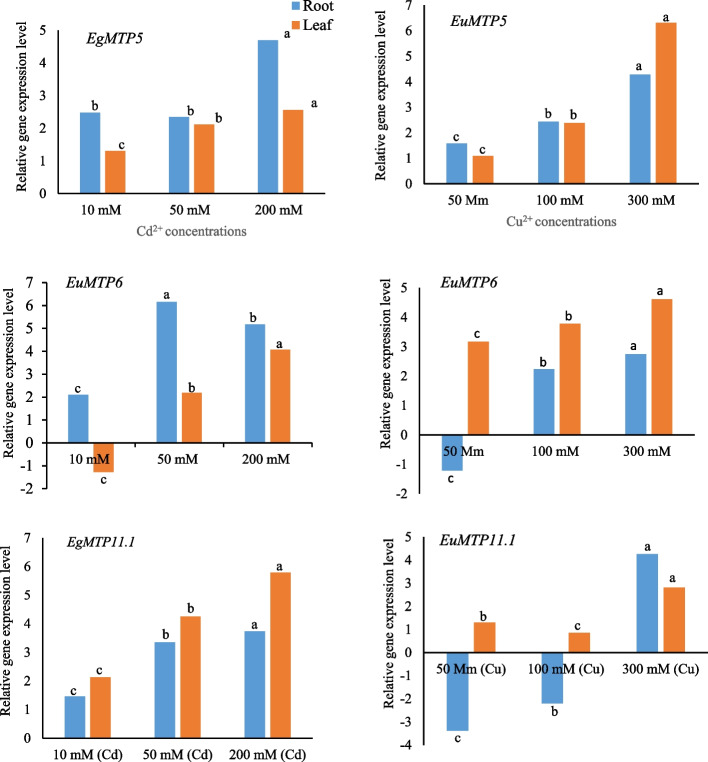
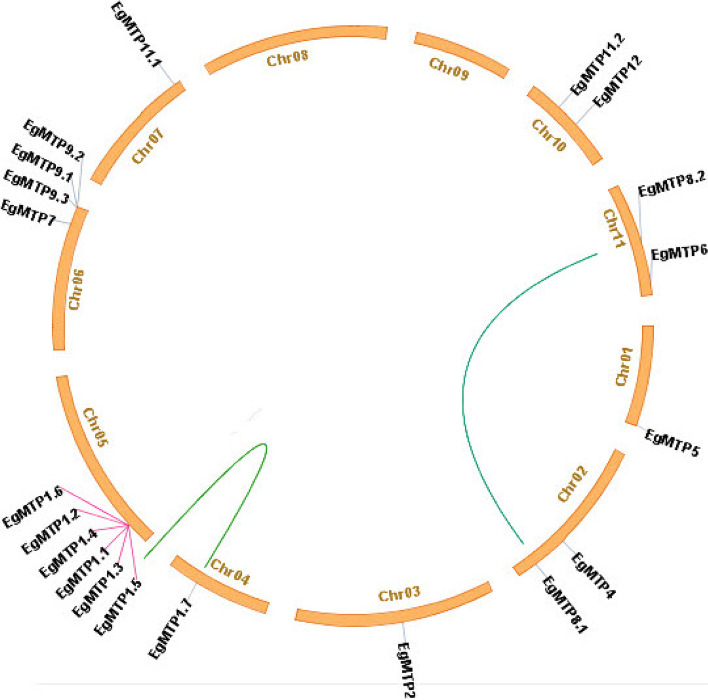
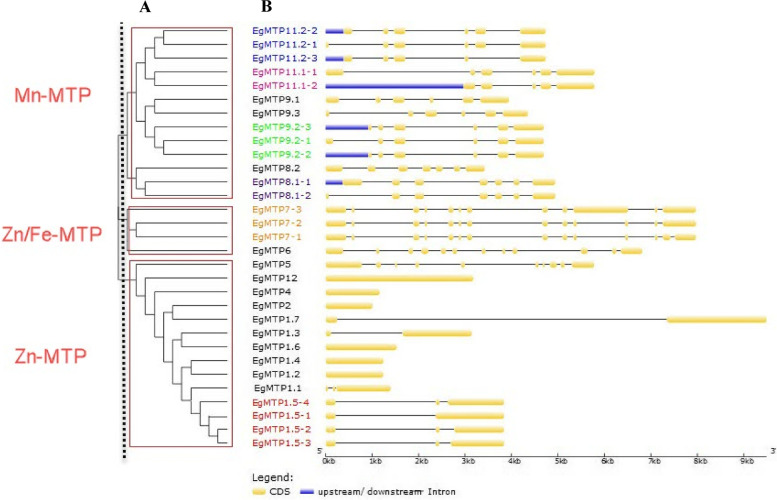
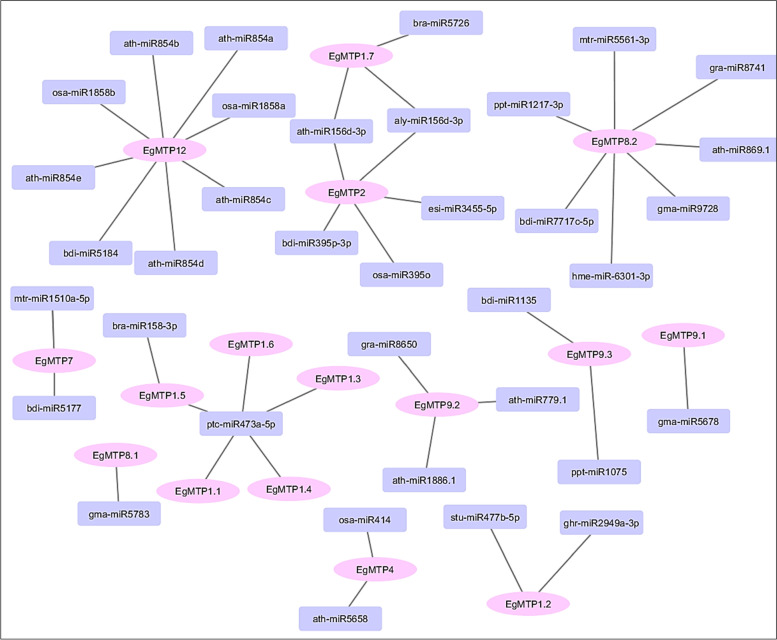
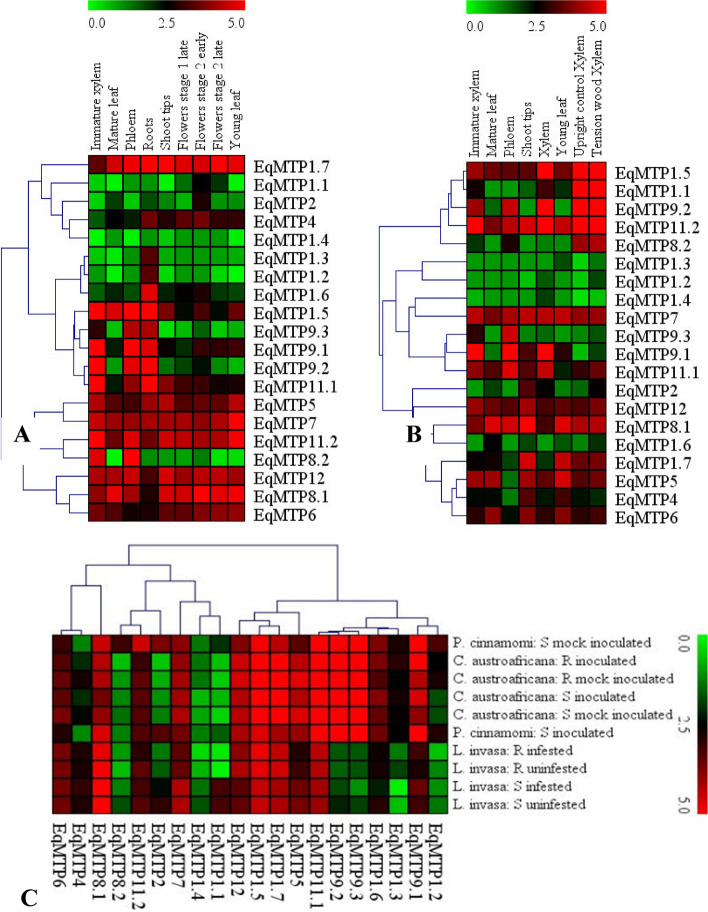
Metal tolerance proteins (MTPs) as Me/H(K) antiporters participate in the transport of divalent cations, leading to heavy metal stress resistance and mineral utilization in plants. In the present study, to obtain better knowledge of the biological functions of the MTPs family, 20 potential EgMTPs genes were identified in Eucalyptus grandis and classified into seven groups belonging to three cation diffusion facilitator groups (Mn-CDFs, Zn/Fe-CDFs, and Zn-CDFs) and seven groups. EgMTP-encoded amino acids ranged from 315 to 884, and most of them contained 4-6 recognized transmembrane domains and were clearly prognosticated to localize into the cell vacuole. Almost all EgMTP genes experienced gene duplication events, in which some might be uniformly distributed in the genome. The numbers of cation efflux and the zinc transporter dimerization domain were highest in EgMTP proteins. The promoter regions of EgMTP genes have different cis-regulatory elements, indicating that the transcription rate of EgMTP genes can be a controlled response to different stimuli in multiple pathways. Our findings provide accurate perception on the role of the predicted miRNAs and the presence of SSR marker in the Eucalyptus genome and clarify their functions in metal tolerance regulation and marker-assisted selection, respectively. Gene expression profiling based on previous RNA-seq data indicates a probable function for EgMTP genes during development and responses to biotic stress. Additionally, the upregulation of EgMTP6, EgMTP5, and EgMTP11.1 to excess Cd and Cu exposure might be responsible for metal translocation from roots to leaves.
金属耐受蛋白(MTPs)作为 Me/H(K)反向转运蛋白,参与二价阳离子的运输,从而提高植物对重金属胁迫的抗性和对矿物质的利用。在本研究中,为了更好地了解 MTP 家族的生物学功能,在尾叶桉中鉴定出 20 个潜在的 EgMTP 基因,并将其分为 7 组,分别属于三个阳离子扩散促进因子组(Mn-CDFs、Zn/Fe-CDFs 和 Zn-CDFs)和 7 个组。EgMTP 编码的氨基酸长度为 315 到 884 个,大多数含有 4-6 个公认的跨膜结构域,且明显预测定位于细胞液泡。几乎所有 EgMTP 基因都经历了基因复制事件,其中一些可能均匀分布在基因组中。阳离子外排和锌转运体二聚化结构域的数量在 EgMTP 蛋白中最高。EgMTP 基因启动子区域具有不同的顺式调控元件,表明 EgMTP 基因的转录率可以是对不同刺激的受控反应,涉及多条途径。我们的研究结果为预测 miRNA 的作用以及 SSR 标记在桉树基因组中的存在提供了准确的认识,并分别阐明了它们在金属耐受调节和标记辅助选择中的作用。基于以前 RNA-seq 数据的基因表达谱分析表明,EgMTP 基因在发育和对生物胁迫的反应中可能具有重要功能。此外,EgMTP6、EgMTP5 和 EgMTP11.1 在过量 Cd 和 Cu 暴露下的上调可能负责将金属从根部转运到叶片。