University of Illinois at Chicago, Department of Medicine, Chicago, IL 60612, USA.
Mol Cancer Ther. 2013 Mar;12(3):245-54. doi: 10.1158/1535-7163.MCT-12-0712. Epub 2013 Feb 26.
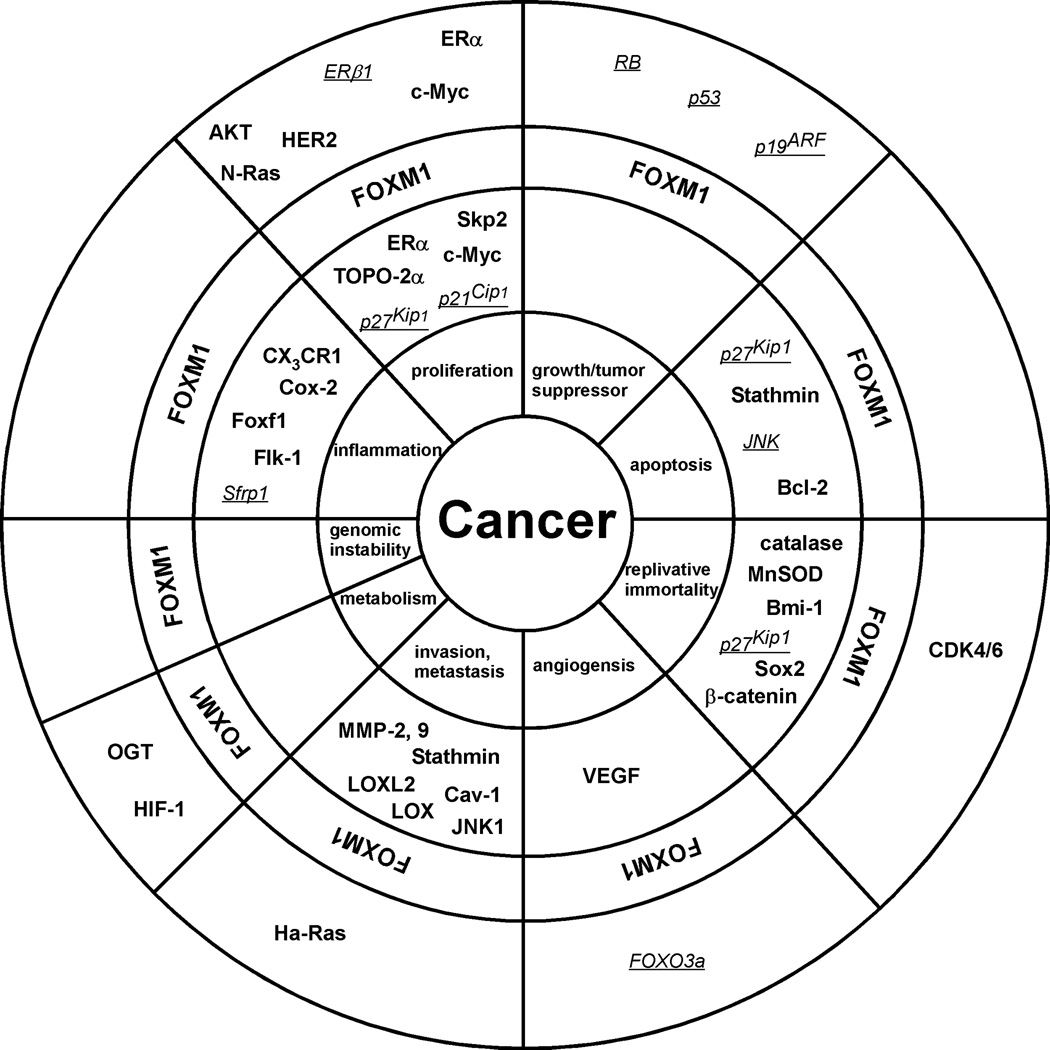
FOXM1 is an oncogenic transcription factor of the Forkhead family and it has a well-defined role in cell proliferation and cell-cycle progression. Expression of FOXM1 is excluded in quiescent or differentiated cells, but its level is highly elevated in proliferating and malignant cells. Overexpression of FOXM1 has been reported in more than 20 types of human cancer. In recent years, FOXM1 has been implicated in diverse cellular processes and also a growing body of experimental data has underlined the relevance of FOXM1 in tumorigenesis. Although FOXM1 is under the control of three major tumor suppressors (RB, p53, and p19(ARF)), it is still active in the majority of human cancers. The oncogenic potential of FOXM1 is mainly based on its ability to transcriptionally activate genes that are involved in different facets of cancer development. In this review, the contribution of FOXM1 to each of the hallmarks of cancer will be summarized and discussed.
FOXM1 是 Forkhead 家族的一种致癌转录因子,它在细胞增殖和细胞周期进程中起着明确的作用。FOXM1 的表达在静止或分化的细胞中被排除,但在增殖和恶性细胞中的水平高度升高。FOXM1 的过表达已在超过 20 种人类癌症中报道。近年来,FOXM1 已被牵连到多种细胞过程中,并且越来越多的实验数据强调了 FOXM1 在肿瘤发生中的相关性。尽管 FOXM1 受到三个主要肿瘤抑制因子(RB、p53 和 p19(ARF))的控制,但它在大多数人类癌症中仍然活跃。FOXM1 的致癌潜能主要基于其转录激活参与癌症发展不同方面的基因的能力。在这篇综述中,将总结和讨论 FOXM1 对癌症的每个标志的贡献。