Department of Developmental and Regenerative Biology, Mount SinaiSchool of Medicine, New York, NY, USA.
BMC Genomics. 2013 Feb 27;14:136. doi: 10.1186/1471-2164-14-136.
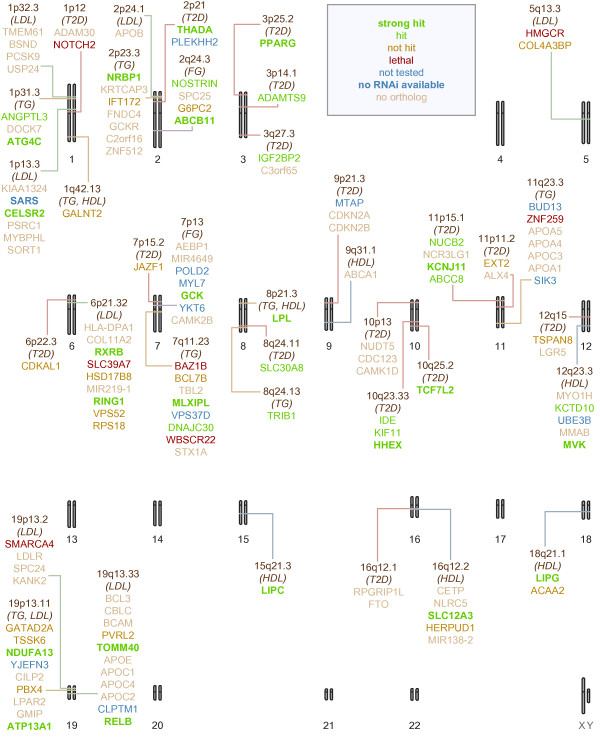
Genome-wide association studies (GWAS) identify regions of the genome that are associated with particular traits, but do not typically identify specific causative genetic elements. For example, while a large number of single nucleotide polymorphisms associated with type 2 diabetes (T2D) and related traits have been identified by human GWAS, only a few genes have functional evidence to support or to rule out a role in cellular metabolism or dietary interactions. Here, we use a recently developed Drosophila model in which high-sucrose feeding induces phenotypes similar to T2D to assess orthologs of human GWAS-identified candidate genes for risk of T2D and related traits.
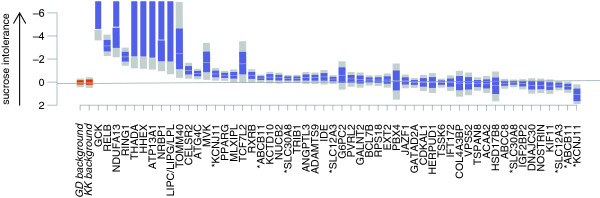
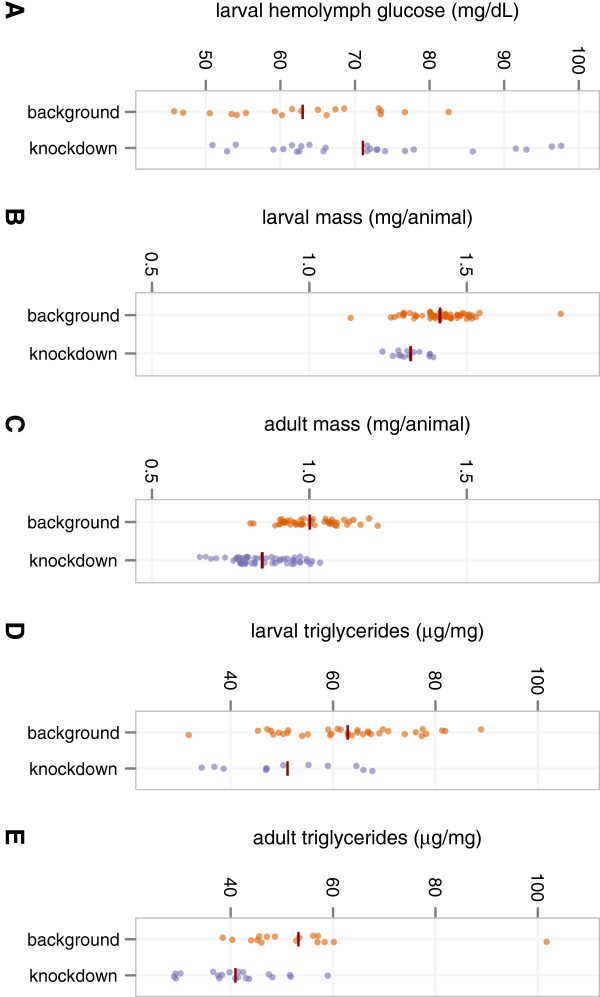
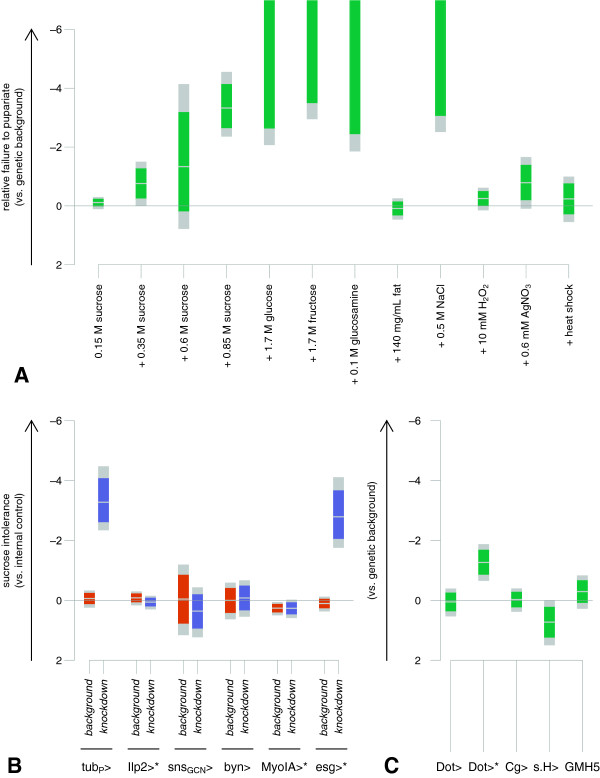
Disrupting orthologs of certain T2D candidate genes (HHEX, THADA, PPARG, KCNJ11) led to sucrose-dependent toxicity. Tissue-specific knockdown of the HHEX ortholog dHHEX (CG7056) directed metabolic defects and enhanced lethality; for example, fat-body-specific loss of dHHEX led to increased hemolymph glucose and reduced insulin sensitivity.
Candidate genes identified in human genetic studies of metabolic traits can be prioritized and functionally characterized using a simple Drosophila approach. To our knowledge, this is the first large-scale effort to study the functional interaction between GWAS-identified candidate genes and an environmental risk factor such as diet in a model organism system.
全基因组关联研究(GWAS)确定了与特定特征相关的基因组区域,但通常无法识别特定的致病遗传因素。例如,虽然通过人类 GWAS 已经确定了大量与 2 型糖尿病(T2D)和相关特征相关的单核苷酸多态性,但只有少数基因具有支持或排除其在细胞代谢或饮食相互作用中作用的功能证据。在这里,我们使用了一种新开发的果蝇模型,该模型中高蔗糖喂养会诱导类似于 T2D 的表型,用于评估人类 GWAS 确定的候选基因的同源物,以评估其患 T2D 和相关特征的风险。
破坏某些 T2D 候选基因(HHEX、THADA、PPARG、KCNJ11)的同源物会导致蔗糖依赖性毒性。HHEX 同源物 dHHEX(CG7056)的组织特异性敲低导致代谢缺陷和增强的致死性;例如,脂肪体特异性的 dHHEX 缺失会导致血液葡萄糖升高和胰岛素敏感性降低。
使用简单的果蝇方法,可以对代谢特征的人类遗传研究中确定的候选基因进行优先级排序和功能表征。据我们所知,这是首次在模型生物系统中研究 GWAS 确定的候选基因与环境风险因素(如饮食)之间的功能相互作用的大规模努力。