Department of Forest and Conservation Sciences, The University of British Columbia, Vancouver, BC, Canada V6T 1Z4.
G3 (Bethesda). 2013 Mar;3(3):465-80. doi: 10.1534/g3.112.004986. Epub 2013 Mar 1.
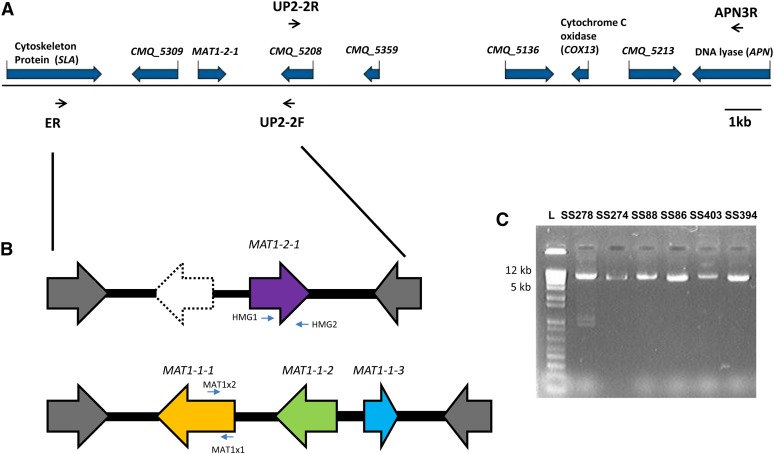
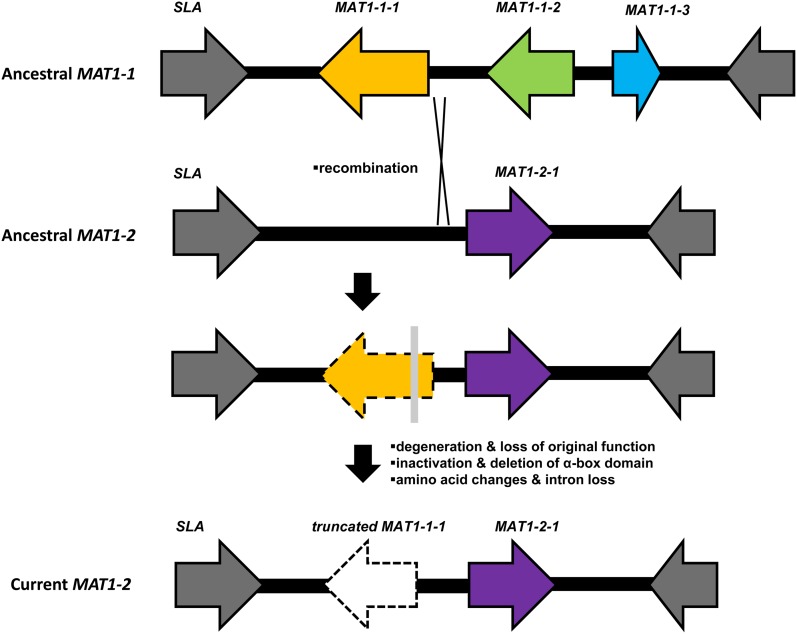
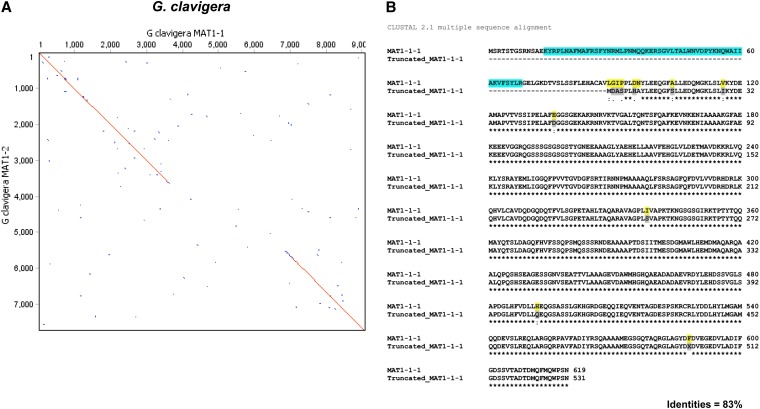
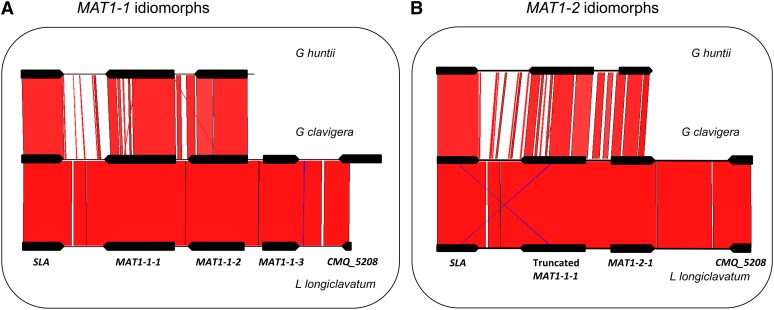
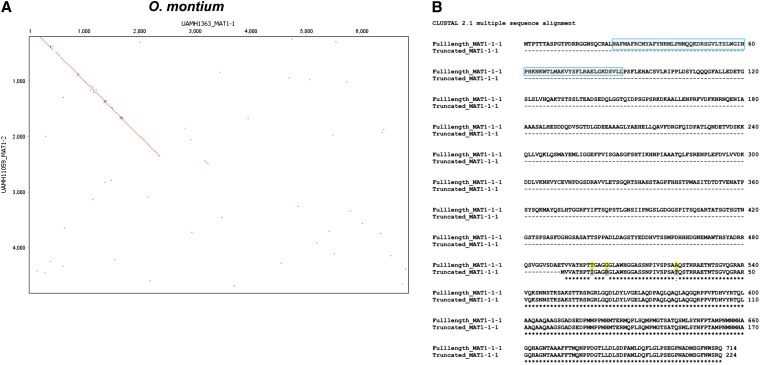
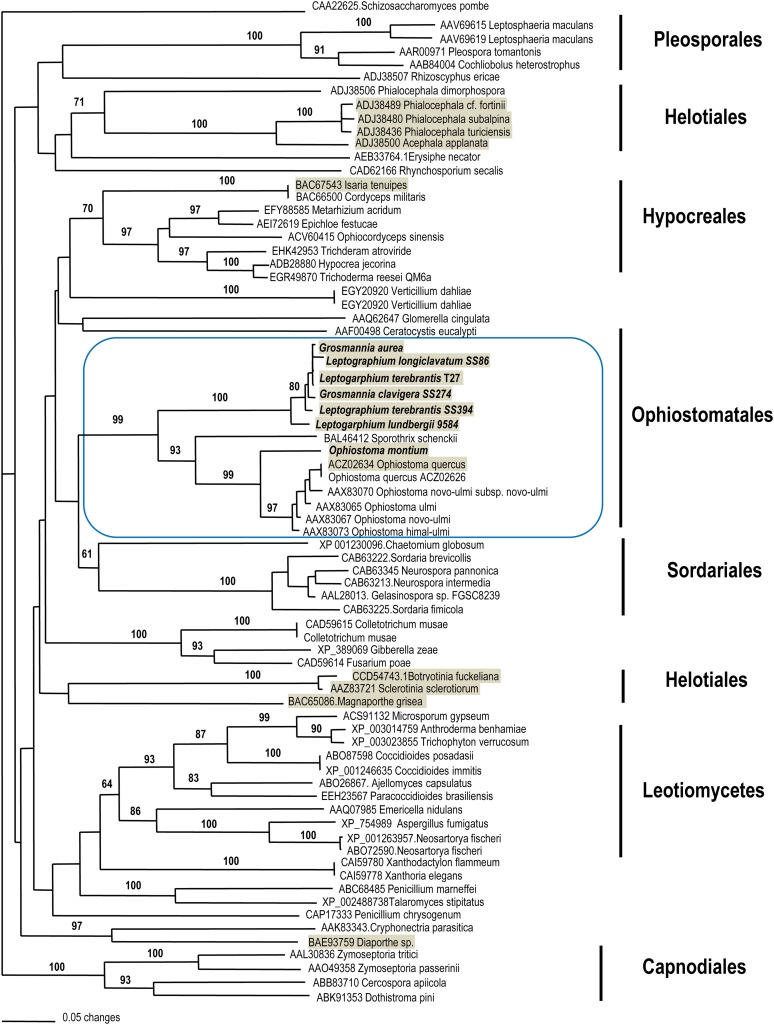
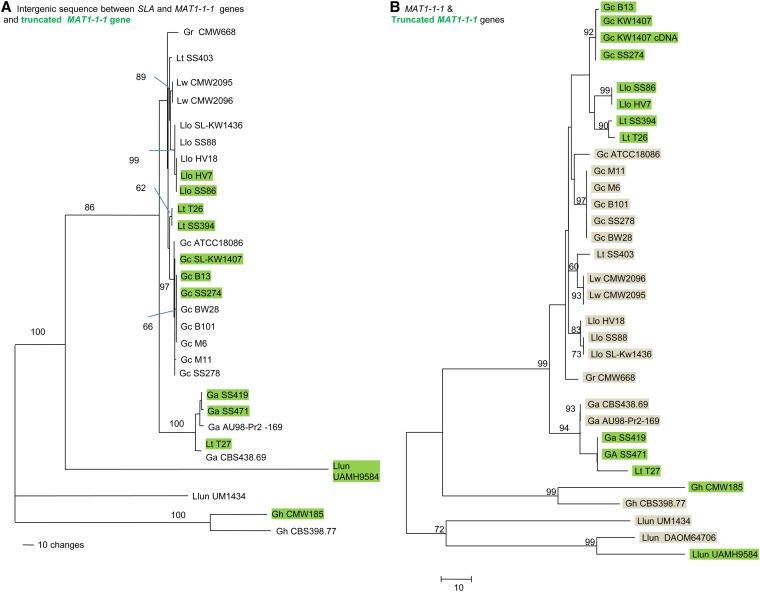
Sexual reproduction in fungi is regulated by the mating-type (MAT) locus where recombination is suppressed. We investigated the evolution of MAT loci in eight fungal species belonging to Grosmannia and Ophiostoma (Sordariomycetes, Ascomycota) that include conifer pathogens and beetle symbionts. The MAT1-2 idiomorph/allele was identified from the assembled and annotated Grosmannia clavigera genome, and the MAT locus is flanked by genes coding for cytoskeleton protein (SLA) and DNA lyase. The synteny of these genes is conserved and consistent with other members in Ascomycota. Using sequences from SLA and flanking regions, we characterized the MAT1-1 idiomorph from other isolates of G. clavigera and performed dotplot analysis between the two idiomorphs. Unexpectedly, the MAT1-2 idiomorph contains a truncated MAT1-1-1 gene upstream of the MAT1-2-1 gene that bears the high-mobility-group domain. The nucleotide and amino acid sequence of the truncated MAT1-1-1 gene is similar to its homologous copy in the MAT1-1 idiomorph in the opposite mating-type isolate, except that positive selection is acting on the truncated gene and the alpha(α)-box that encodes the transcription factor has been deleted. The MAT idiomorphs sharing identical gene organization were present in seven additional species in the Ophiostomatales, suggesting that the presence of truncated MAT1-1-1 gene is a general pattern in this order. We propose that an ancient unequal recombination event resulted in the ancestral MAT1-1-1 gene integrated into the MAT1-2 idiomorph and surviving as the truncated MAT1-1-1 genes. The α-box domain of MAT1-1-1 gene, located at the same MAT locus adjacent to the MAT1-2-1 gene, could have been removed by deletion after recombination due to mating signal interference. Our data confirmed a 1:1 MAT/sex ratio in two pathogen populations, and showed that all members of the Ophiostomatales studied here including those that were previously deemed asexual have the potential to reproduce sexually. This ability can potentially increase genetic variability and can enhance fitness in new, ecological niches.
真菌的有性生殖受交配型 (MAT) 基因座调控,其中重组受到抑制。我们研究了属于 Grosmannia 和 Ophiostoma(子囊菌门,子囊菌)的 8 个真菌物种的 MAT 基因座的进化,这些物种包括针叶树病原体和甲虫共生体。从组装和注释的 Grosmannia clavigera 基因组中鉴定出 MAT1-2 等位基因,MAT 基因座两侧是编码细胞骨架蛋白 (SLA) 和 DNA 核酸酶的基因。这些基因的基因排列是保守的,与子囊菌门的其他成员一致。使用 SLA 和侧翼区域的序列,我们从其他 Grosmannia clavigera 分离株中表征了 MAT1-1 等位基因,并在两个等位基因之间进行了点图分析。出乎意料的是,MAT1-2 等位基因在 MAT1-2-1 基因上游包含一个截断的 MAT1-1-1 基因,该基因具有高迁移率组域。截断的 MAT1-1-1 基因的核苷酸和氨基酸序列与其在相反交配型分离株的 MAT1-1 等位基因中的同源拷贝相似,但正向选择作用于截断基因,并且编码转录因子的α-盒已被删除。在 Ophiostomatales 中的另外 7 个物种中存在具有相同基因组织的 MAT 等位基因,这表明存在截断的 MAT1-1-1 基因是该目下的一般模式。我们提出,一个古老的不等交换事件导致了祖先的 MAT1-1-1 基因整合到 MAT1-2 等位基因中,并作为截断的 MAT1-1-1 基因存活下来。MAT1-1-1 基因的α-盒结构域位于与 MAT1-2-1 基因相邻的同一 MAT 基因座上,在重组后由于交配信号干扰可能被删除。我们的数据证实了两个病原体种群中 1:1 MAT/性别的比例,并表明我们研究的 Ophiostomatales 中的所有成员,包括以前被认为是无性的成员,都有可能进行有性生殖。这种能力可以潜在地增加遗传变异性,并能增强在新的生态位中的适应性。