Department of Biosciences and Nutrition, Karolinska Institutet, Huddinge, Sweden.
PLoS One. 2013;8(2):e57458. doi: 10.1371/journal.pone.0057458. Epub 2013 Feb 25.
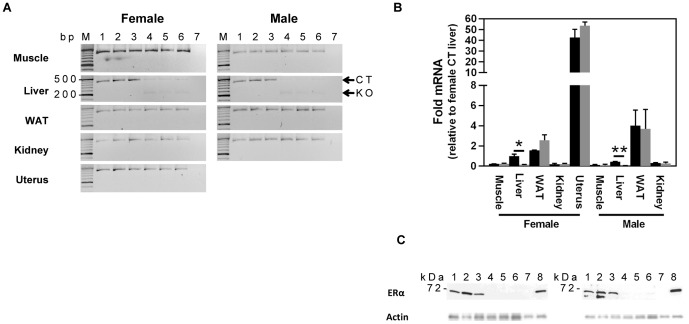
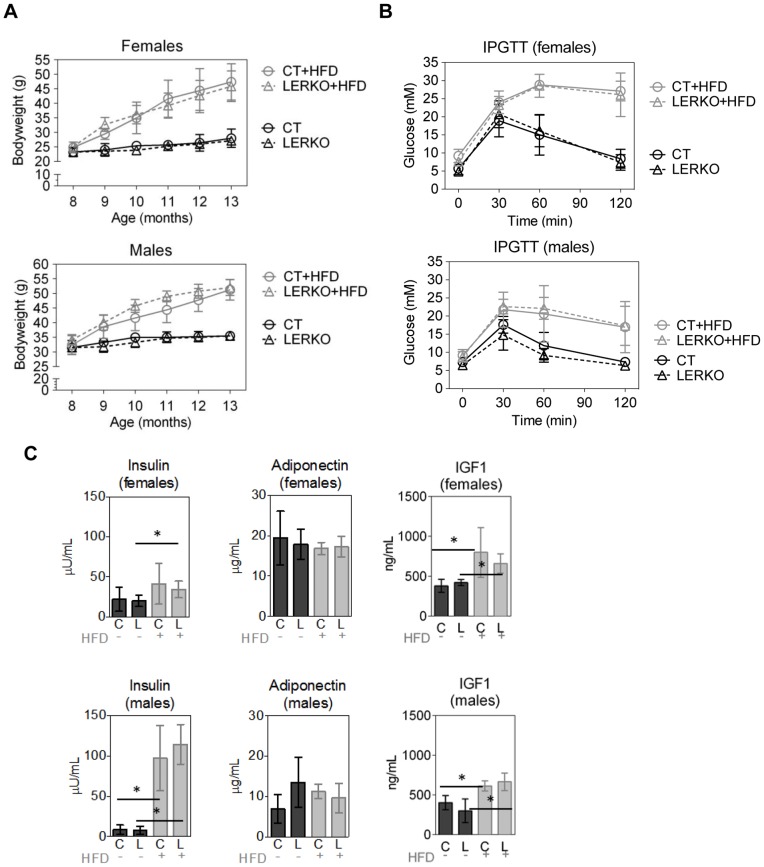
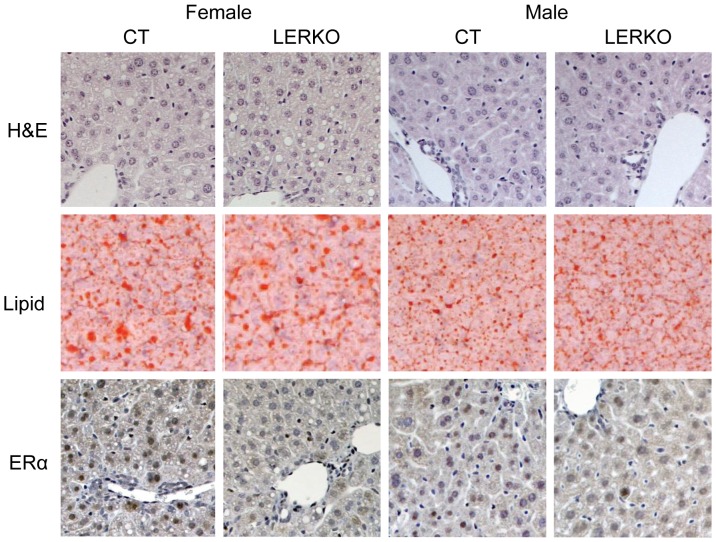
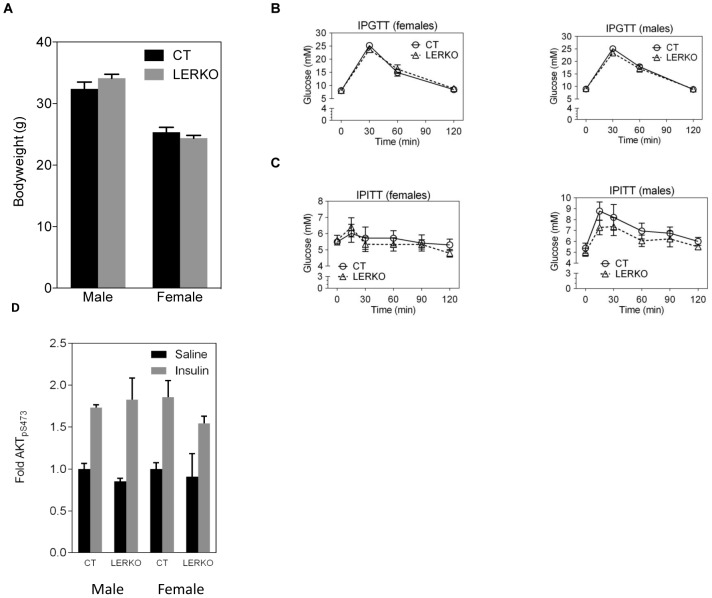
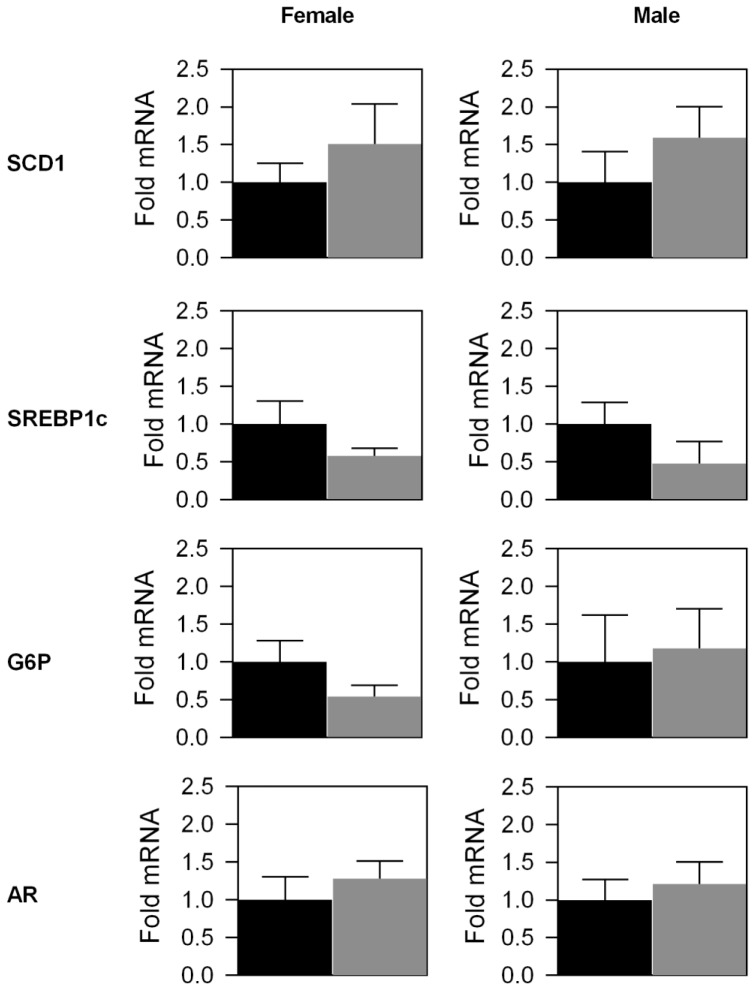
An increasing body of evidence now links estrogenic signalling with the metabolic syndrome (MS). Despite the beneficial estrogenic effects in reversing some of the MS symptoms, the underlying mechanisms remain largely undiscovered. We have previously shown that total estrogen receptor alpha (ERα) knockout (KO) mice exhibit hepatic insulin resistance. To determine whether liver-selective ablation of ERα recapitulates metabolic phenotypes of ERKO mice we generated a liver-selective ERαKO mouse model, LERKO. We demonstrate that LERKO mice have efficient reduction of ERα selectively within the liver. However, LERKO and wild type control mice do not differ in body weight, and have a comparable hormone profile as well as insulin and glucose response, even when challenged with a high fat diet. Furthermore, LERKO mice display very minor changes in their hepatic transcript profile. Collectively, our findings indicate that hepatic ERα action may not be the responsible factor for the previously identified hepatic insulin resistance in ERαKO mice.
越来越多的证据表明,雌激素信号与代谢综合征(MS)有关。尽管雌激素具有逆转部分 MS 症状的有益作用,但潜在机制在很大程度上仍未被发现。我们之前已经表明,雌激素受体α(ERα)敲除(KO)小鼠表现出肝胰岛素抵抗。为了确定肝特异性 ERα 缺失是否重现 ERKO 小鼠的代谢表型,我们生成了肝特异性 ERαKO 小鼠模型,LERKO。我们证明 LERKO 小鼠在肝脏中能够有效地选择性降低 ERα。然而,LERKO 和野生型对照小鼠的体重没有差异,并且具有相似的激素谱以及胰岛素和葡萄糖反应,即使在高脂肪饮食的挑战下也是如此。此外,LERKO 小鼠的肝转录谱变化非常小。总之,我们的研究结果表明,肝 ERα 作用可能不是 ERαKO 小鼠先前确定的肝胰岛素抵抗的原因。