Porteous Carolyn M, Menon David K, Aigbirhio Franklin I, Smith Robin A J, Murphy Michael P
Department of Chemistry, University of Otago, Dunedin, New Zealand.
Biochim Biophys Acta. 2013 Jun;1830(6):3458-65. doi: 10.1016/j.bbagen.2013.02.005. Epub 2013 Feb 21.
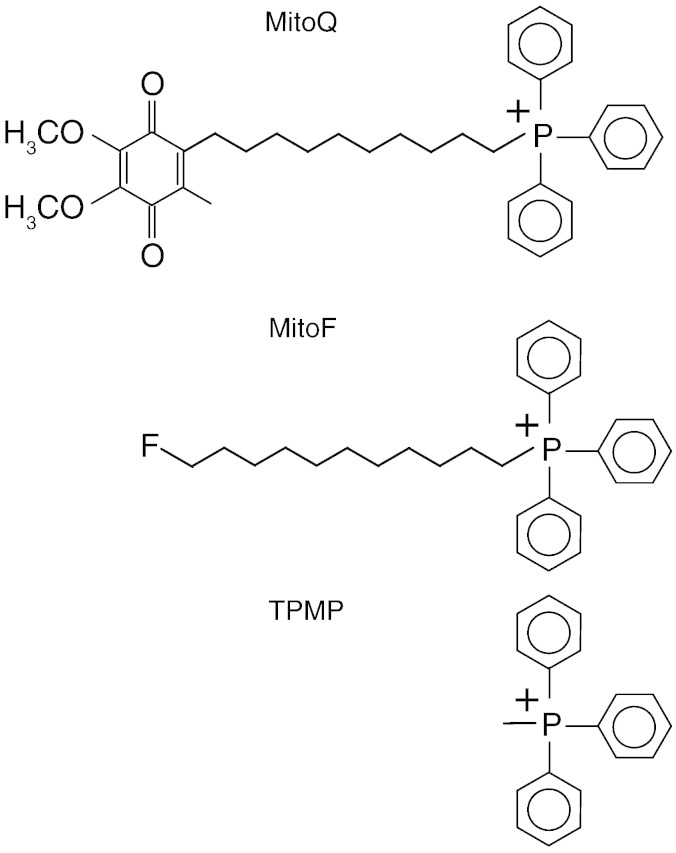
Mitochondrial dysfunction contributes to degenerative neurological disorders, consequently there is a need for mitochondria-targeted therapies that are effective within the brain. One approach to deliver pharmacophores is by conjugation to the lipophilic triphenylphosphonium (TPP) cation that accumulates in mitochondria driven by the membrane potential. While this approach has delivered TPP-conjugated compounds to the brain, the amounts taken up are lower than by other organs.
To discover why uptake of hydrophobic TPP compounds by the brain is relatively poor, we assessed the role of the P-glycoprotein (Mdr1a/b) and breast cancer resistance protein (Bcrp) ATP binding cassette (ABC) transporters, which drive the efflux of lipophilic compounds from the brain thereby restricting the uptake of lipophilic drugs. We used a triple transgenic mouse model lacking two isoforms of P-glycoprotein (Mdr1a/1b) and the Bcrp.
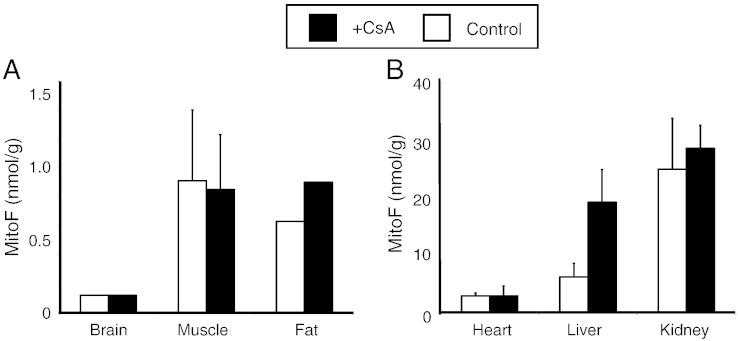
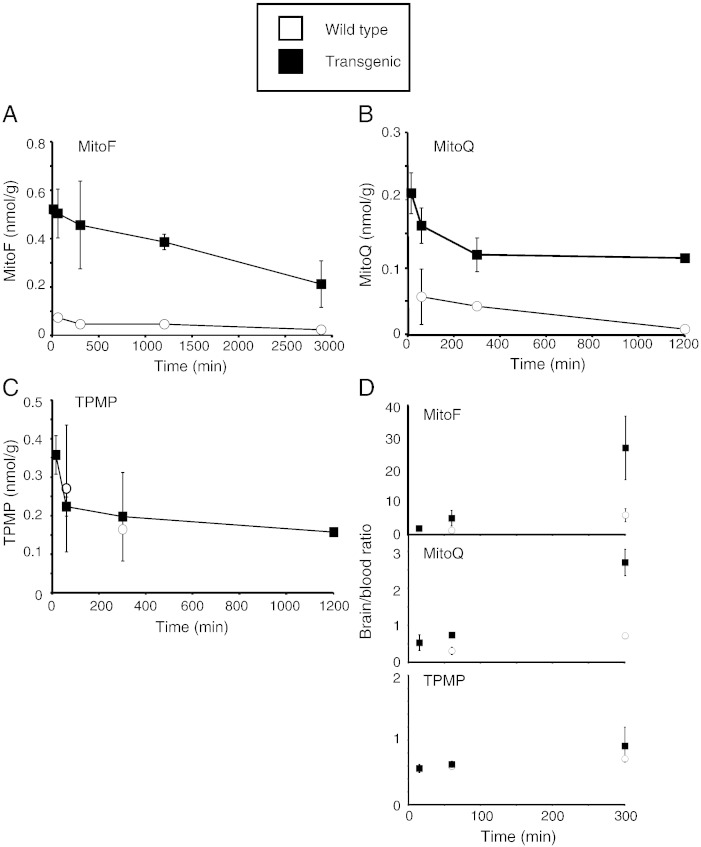
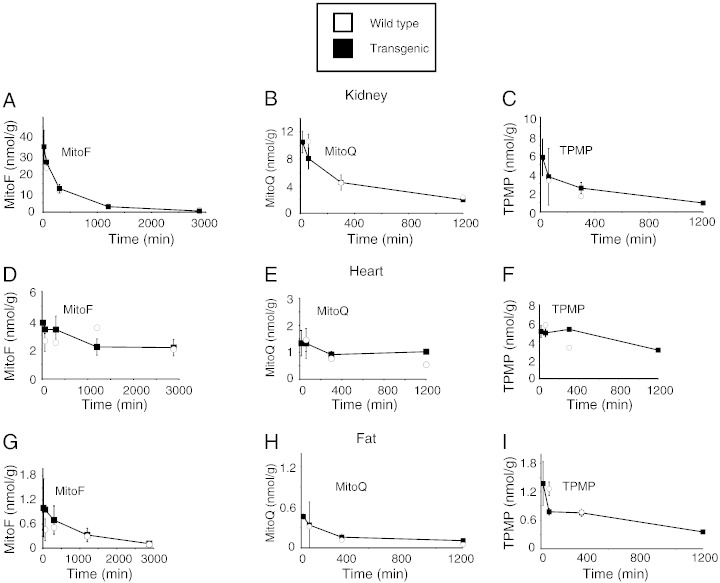
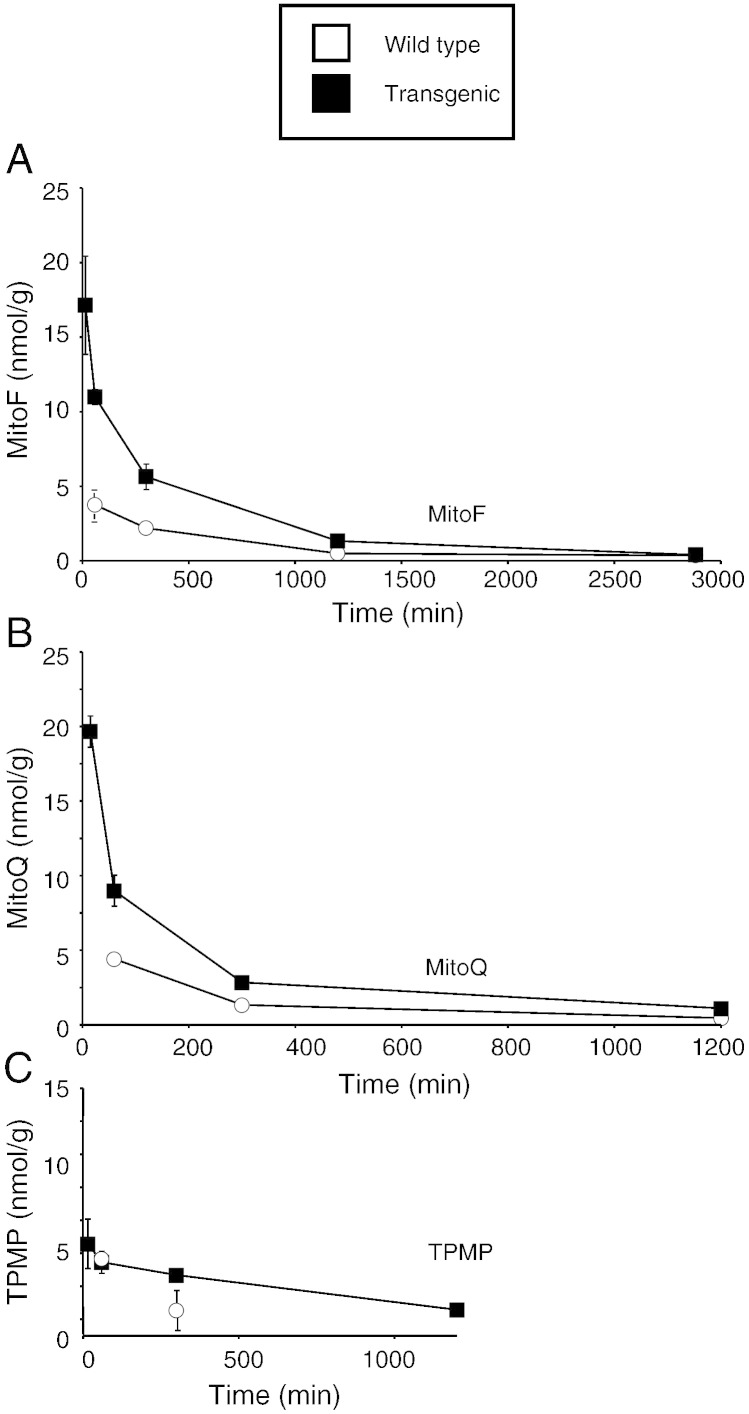
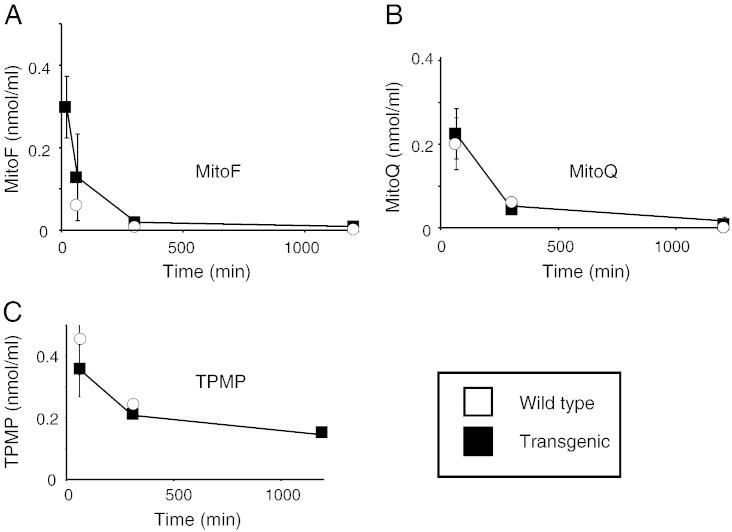
There was a significant increase in the uptake into the brain of two hydrophobic TPP compounds, MitoQ and MitoF, in the triple transgenics following intra venous (IV) administration compared to control mice. Greater amounts of the hydrophobic TPP compounds were also retained in the liver of transgenic mice compared to controls. The uptake into the heart, white fat, muscle and kidneys was comparable between the transgenic mice and controls.
Efflux of hydrophobic TPP compounds by ABC transporters contributes to their lowered uptake into the brain and liver.
These findings suggest that strategies to bypass ABC transporters in the BBB will enhance delivery of mitochondria-targeted antioxidants, probes and pharmacophores to the brain.
线粒体功能障碍会导致退行性神经疾病,因此需要能够在脑内发挥作用的线粒体靶向治疗方法。一种递送药效基团的方法是将其与亲脂性三苯基膦(TPP)阳离子偶联,TPP阳离子会在膜电位的驱动下积聚在线粒体内。虽然这种方法已将TPP偶联化合物递送至脑内,但摄取量低于其他器官。
为了探究脑对疏水性TPP化合物摄取相对较差的原因,我们评估了P-糖蛋白(Mdr1a/b)和乳腺癌耐药蛋白(Bcrp)ATP结合盒(ABC)转运蛋白的作用,这些转运蛋白会促使亲脂性化合物从脑内流出,从而限制亲脂性药物的摄取。我们使用了一种缺乏两种P-糖蛋白异构体(Mdr1a/1b)和Bcrp的三重转基因小鼠模型。
与对照小鼠相比,静脉注射后,两种疏水性TPP化合物MitoQ和MitoF在三重转基因小鼠脑内的摄取量显著增加。与对照相比,转基因小鼠肝脏中也保留了更多的疏水性TPP化合物。转基因小鼠和对照小鼠在心脏、白色脂肪、肌肉和肾脏中的摄取量相当。
ABC转运蛋白介导的疏水性TPP化合物外排导致其在脑和肝脏中的摄取减少。
这些发现表明,绕过血脑屏障中ABC转运蛋白的策略将增强线粒体靶向抗氧化剂、探针和药效基团向脑内递送。