Department of Environmental Sciences, University of Virginia, Charlottesville, Virginia, United States of America.
PLoS One. 2013;8(2):e55825. doi: 10.1371/journal.pone.0055825. Epub 2013 Feb 15.
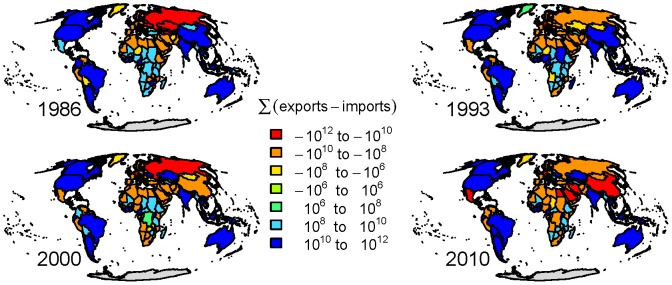
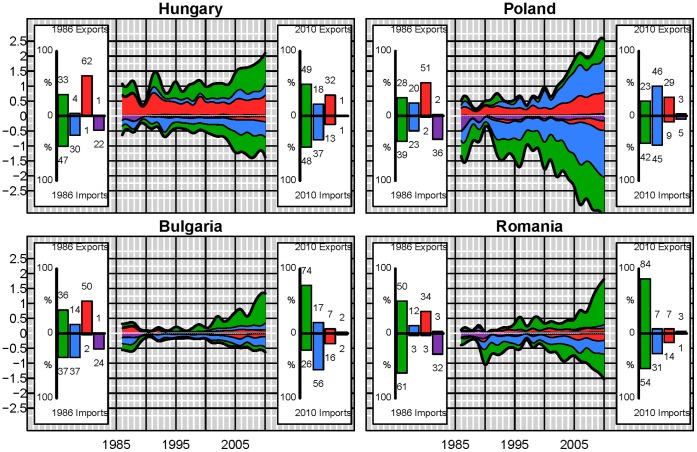
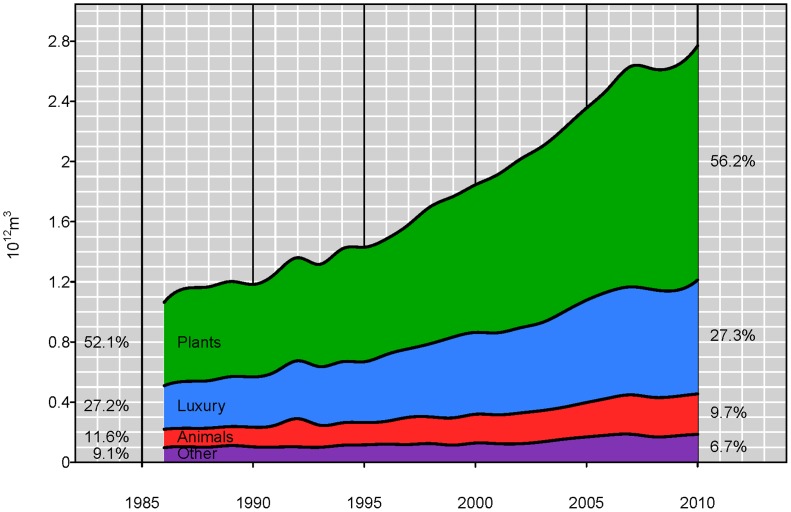
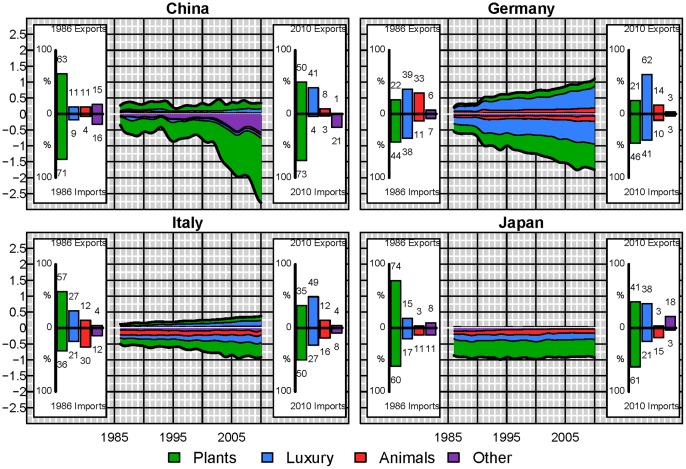
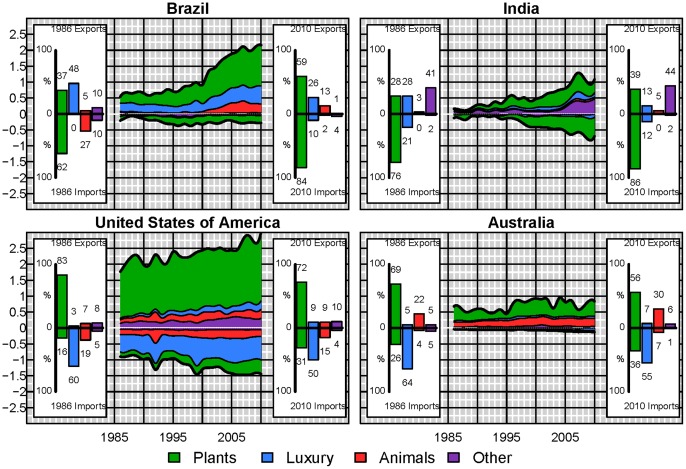
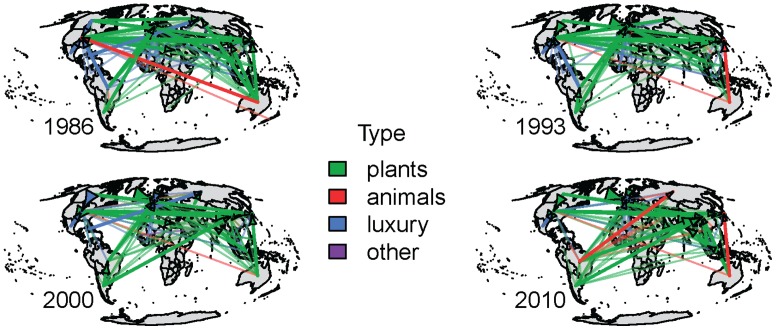
The global trade of goods is associated with a virtual transfer of the water required for their production. The way changes in trade affect the virtual redistribution of freshwater resources has been recently documented through the analysis of the virtual water network. It is, however, unclear how these changes are contributed by different types of products and regions of the world. Here we show how the global patterns of virtual water transport are contributed by the trade of different commodity types, including plant, animal, luxury (e.g., coffee, tea, and alcohol), and other products. Major contributors to the virtual water network exhibit different trade patterns with regard to these commodity types. The net importers rely on the supply of virtual water from a small percentage of the global population. However, discrepancies exist among the different commodity networks. While the total virtual water flux through the network has increased between 1986 and 2010, the proportions associated with the four commodity groups have remained relatively stable. However, some of the major players have shown significant changes in the virtual water imports and exports associated with those commodity groups. For instance, China has switched from being a net exporter of virtual water associated with other products (non-edible plant and animal products typically used for manufacturing) to being the largest importer, accounting for 31% of the total water virtually transported with these products. Conversely, in the case of The United states of America, the commodity proportions have remained overall unchanged throughout the study period: the virtual water exports from The United States of America are dominated by plant products, whereas the imports are comprised mainly of animal and luxury products.
全球货物贸易伴随着生产这些货物所需的虚拟水资源转移。通过分析虚拟水网络,最近已经记录了贸易变化如何影响虚拟淡水资源的再分配。然而,尚不清楚这些变化是由世界不同地区和产品类型的变化造成的。在这里,我们展示了不同商品类型的贸易如何影响全球虚拟水运输模式,这些商品类型包括植物、动物、奢侈品(如咖啡、茶和酒)和其他产品。虚拟水网络的主要贡献者表现出与这些商品类型不同的贸易模式。净进口国依赖于全球一小部分人口供应的虚拟水。然而,不同商品网络之间存在差异。虽然网络中的总虚拟水通量在 1986 年至 2010 年间有所增加,但与这四个商品组相关的比例仍相对稳定。然而,一些主要参与者在与这些商品组相关的虚拟水进出口方面显示出了显著的变化。例如,中国已经从其他产品(通常用于制造的非食用植物和动物产品)的虚拟水净出口国转变为最大的进口国,占这些产品虚拟运输水总量的 31%。相反,在美国,整个研究期间商品比例总体保持不变:美国的虚拟水出口主要由植物产品主导,而进口则主要由动物和奢侈品产品组成。