Biochem Med (Zagreb). 2013;23(1):7-11. doi: 10.11613/bm.2013.002.
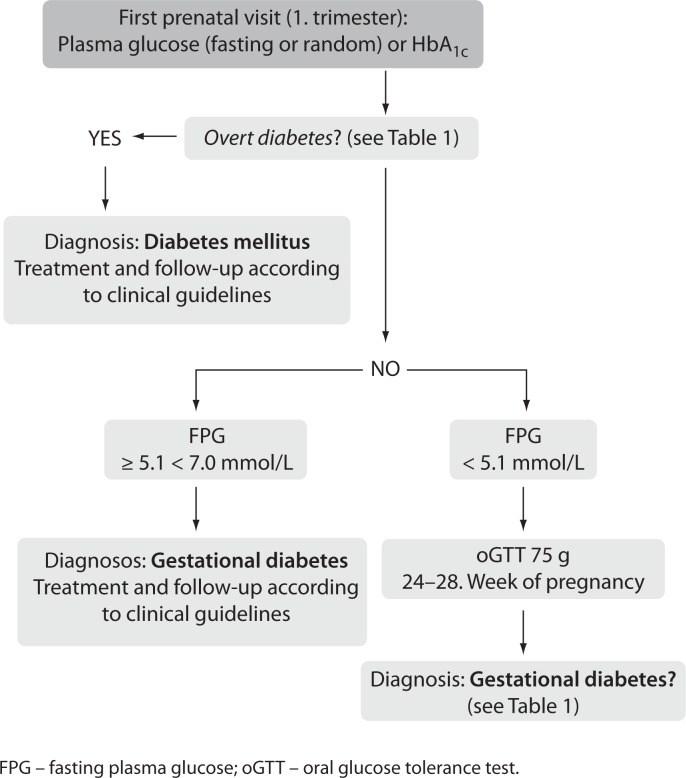
An increasing prevalence of gestational diabetes has become a very challenging task in prenatal care worldwide. International Association of Diabetes and Pregnancy Study Groups (IADPSG) has recently issued recommendations on the diagnosis and classification of hyperglycaemia in pregnancy. These recommendations, the first to provide harmonised, evidence-based criteria for the diagnosis and classification of diabetes in pregnancy, are currently being discussed and accepted worldwide by the relevant authorities. As the acceptance of the proposed criteria has major implications for both clinical and laboratory settings, a concerted action towards necessary changes in practice has to be carefully planned and adjusted to national health-care specificities. IADPSG criteria have been strongly advocated by the Croatian Perinatology Society, resulting in a new strategy for the detection and diagnosis of hyperglycaemic disorders in pregnancy. To address the respective laboratory requirements, in April 2012, the Croatian Chamber of Medical Biochemists appointed a Working Group to provide a standardised procedure for the diagnosis of gestational diabetes, applicable to all laboratories involved in prenatal care, in both primary and specialised health-care facilities. In this paper we discuss key laboratory-related issues regarding succesful implementation of the IADPSG criteria in Croatia.
妊娠期糖尿病的患病率不断上升,成为全球产前保健领域的一项极具挑战性的任务。国际妊娠合并糖尿病研究组织(IADPSG)最近就妊娠期间高血糖的诊断和分类发布了相关建议。这些建议首次为妊娠合并糖尿病的诊断和分类提供了统一的、基于证据的标准,目前正在被相关权威机构在全球范围内进行讨论和接受。由于所提议的标准的接受对临床和实验室环境都有重大影响,因此必须仔细规划和调整以适应国家卫生保健的特点,采取协调一致的行动来进行必要的实践改变。克罗地亚围产医学学会强烈倡导 IADPSG 标准,由此制定了一项新的策略来检测和诊断妊娠期间的高血糖障碍。为了满足各自的实验室要求,2012 年 4 月,克罗地亚医学生物化学家协会任命了一个工作组,为适用于初级和专门保健设施中所有参与产前保健的实验室的妊娠期糖尿病诊断提供标准化程序。本文将讨论在克罗地亚成功实施 IADPSG 标准的关键实验室相关问题。