Aix Marseille Université, URMITE, UM63, CNRS 7278, IRD 198, Inserm 1095, Marseille, France.
PLoS One. 2013;8(3):e58111. doi: 10.1371/journal.pone.0058111. Epub 2013 Mar 1.
Patients admitted to intensive care units are frequently exposed to pathogenic microorganisms present in their environment. Exposure to these microbes may lead to the development of hospital-acquired infections that complicate the illness and may be fatal. Amoeba-associated microorganisms (AAMs) are frequently isolated from hospital water networks and are reported to be associated to cases of community and hospital-acquired pneumonia.
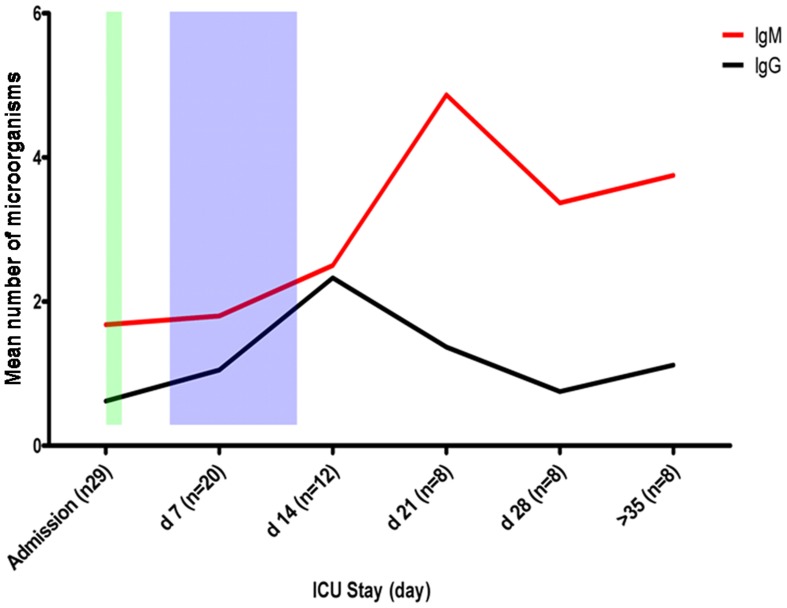
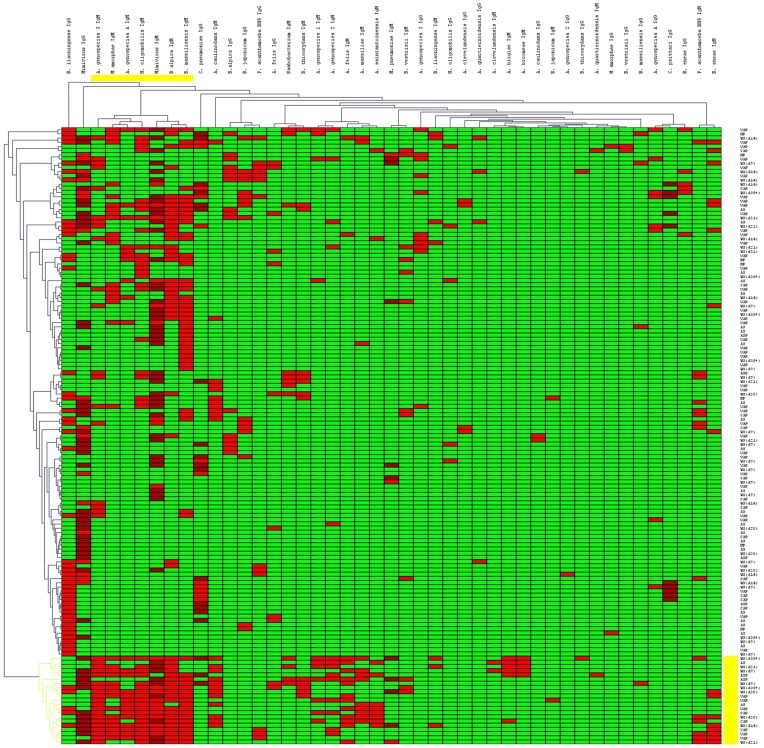
METHODOLOGY/PRINCIPAL FINDINGS: We used a multiplexed immunofluorescence assay to test for the presence of antibodies against AAMs in sera of intensive care unit (ICU) pneumonia patients and compared to patients at the admission to the ICU (controls). Our results show that some AAMs may be more frequently detected in patients who had hospital-acquired pneumonia than in controls, whereas other AAMs are ubiquitously detected. However, ICU patients seem to exhibit increasing immune response to AAMs when the ICU stay is prolonged. Moreover, concomitant antibodies responses against seven different microorganisms (5 Rhizobiales, Balneatrix alpica, and Mimivirus) were observed in the serum of patients that had a prolonged ICU stay.
CONCLUSIONS/SIGNIFICANCE: Our work partially confirms the results of previous studies, which show that ICU patients would be exposed to water amoeba-associated microorganisms, and provides information about the magnitude of AAM infection in ICU patients, especially patients that have a prolonged ICU stay. However, the incidence of this exposure on the development of pneumonia remains to assess.
入住重症监护病房的患者经常会接触到其环境中存在的致病微生物。接触这些微生物可能会导致医院获得性感染,使病情复杂化,甚至可能致命。阿米巴相关微生物(AAMs)经常从医院的水网络中分离出来,并被报道与社区获得性和医院获得性肺炎有关。
方法/主要发现:我们使用多重免疫荧光检测法来检测重症监护病房(ICU)肺炎患者血清中针对 AAMs 的抗体,并将其与 ICU 入院时的患者(对照组)进行比较。我们的结果表明,与对照组相比,一些 AAMs 在患有医院获得性肺炎的患者中可能更频繁地被检测到,而其他 AAMs则广泛存在。然而,当 ICU 停留时间延长时,ICU 患者似乎对 AAMs 表现出增强的免疫反应。此外,在 ICU 停留时间延长的患者的血清中还观察到针对七种不同微生物(5 种根瘤菌、巴尔内特氏菌和 mimivirus)的伴随抗体反应。
结论/意义:我们的工作部分证实了之前的研究结果,表明 ICU 患者会接触到水阿米巴相关微生物,并提供了有关 ICU 患者 AAM 感染程度的信息,特别是 ICU 停留时间延长的患者。然而,这种暴露对肺炎发展的影响仍有待评估。