Department of Intensive Care Unit, The First Affiliated Hospital of Nanjing Medical University, Nanjing, China.
Cell Death Dis. 2013 Mar 7;4(3):e526. doi: 10.1038/cddis.2013.56.
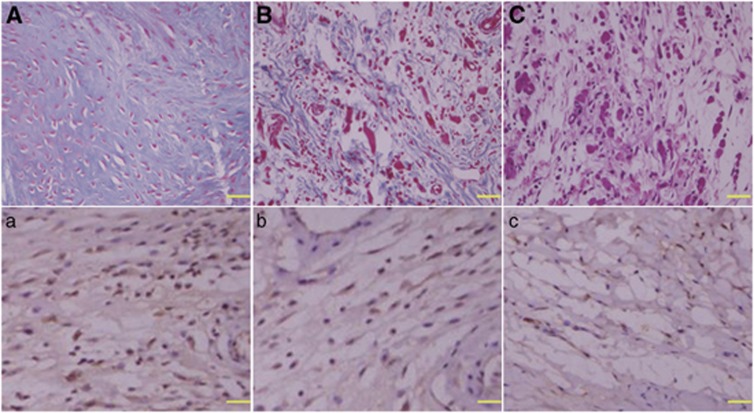
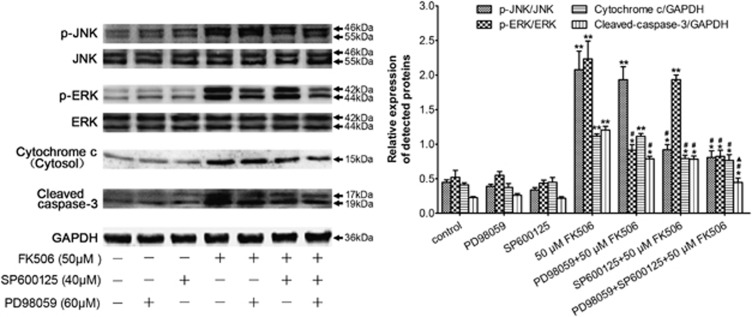
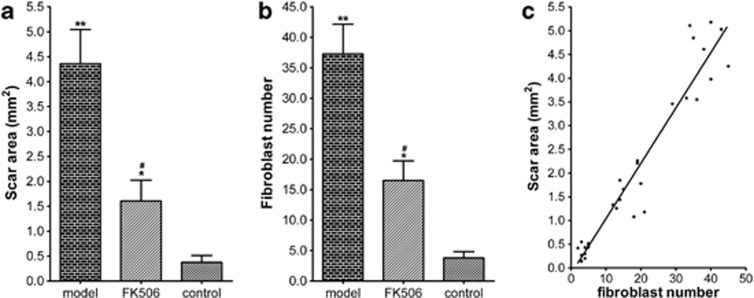
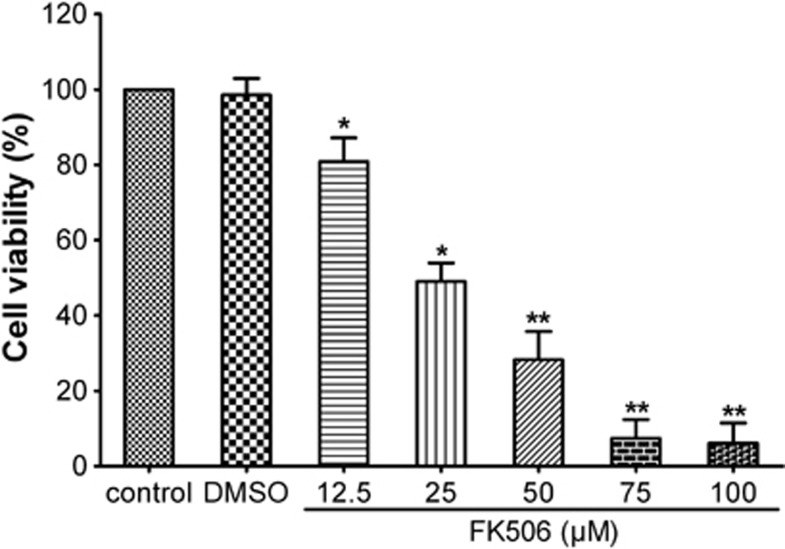
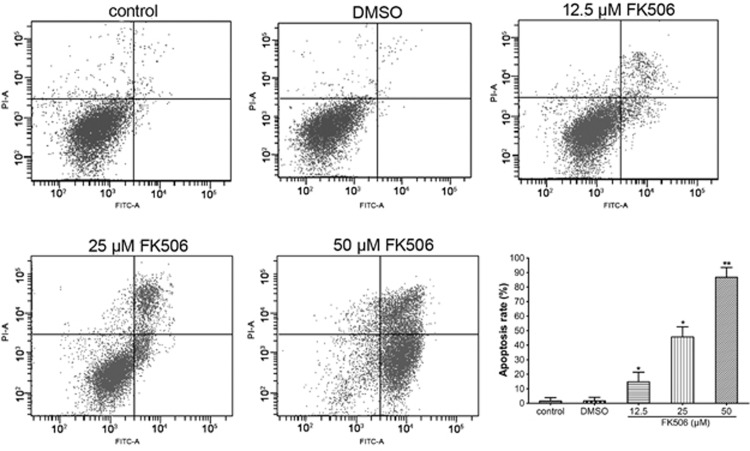
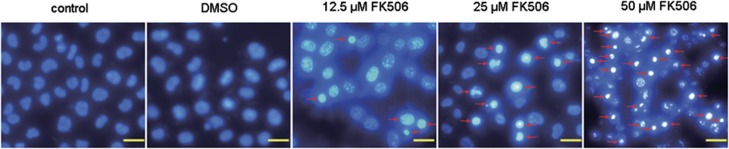
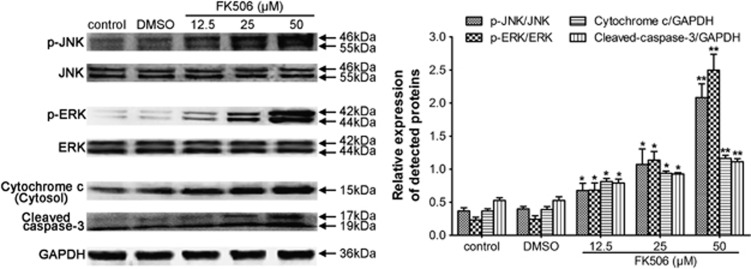
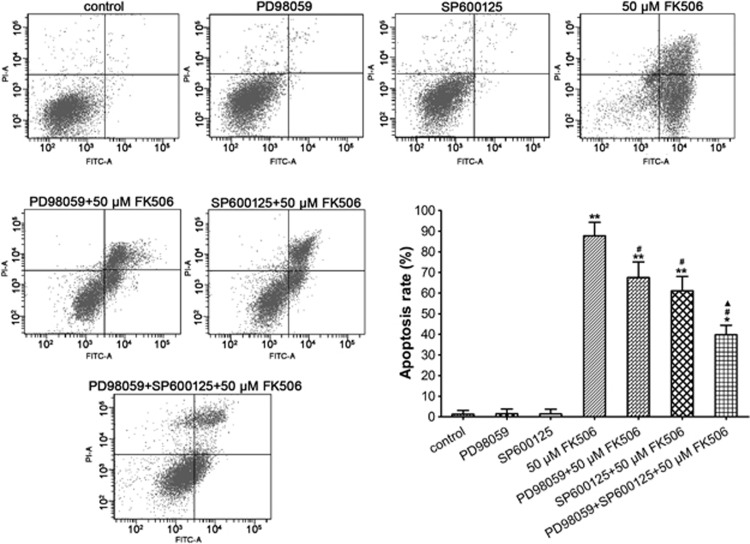
We previously demonstrated that FK506, a generally applied immunosuppressant in organ transplantation, could promote peripheral nerve regeneration through reducing scar formation. However, little is known about how FK506 reduces scar formation. Herein we investigated the influence of FK506 on fibroblast proliferation and its correlation with scar formation after sciatic nerve injury in rats, and further explored the effect of FK506 on fibroblast proliferation and apoptosis in vitro. Masson staining and immunohistochemistry revealed that scar area and fibroblast number in the nerve anastomosis of sciatic nerve-injured rats were significantly reduced after FK506 administration. The scar area had a significant positive correlation with the fibroblast number, as detected by linear correlation analysis. CCK-8 assay and flow cytometry indicated that FK506 also inhibited proliferation and induced apoptosis of fibroblasts in vitro. It was primarily phosphorylation of JNK and ERK that were activated during the apoptosis of fibroblast. Pretreatment of cells with JNK inhibitor, SP600125, or ERK inhibitor, PD98059, could inhibit FK506-induced fibroblast apoptosis, respectively. Moreover, simultaneous application of both inhibitors had additive roles in cell protection from apoptosis. These results suggest that FK506-induced fibroblast apoptosis contributes to the suppression of fibroblast proliferation and then results in the reduction of scar formation in sciatic nerve-injured rat, and that JNK and ERK are involved in FK506-induced fibroblast apoptosis.
我们之前已经证实,FK506 是器官移植中常用的免疫抑制剂,它可以通过减少疤痕形成来促进周围神经再生。然而,FK506 如何减少疤痕形成的机制尚不清楚。在此,我们研究了 FK506 对成纤维细胞增殖的影响及其与大鼠坐骨神经损伤后疤痕形成的相关性,并进一步探讨了 FK506 对成纤维细胞增殖和凋亡的体外作用。Masson 染色和免疫组织化学染色显示,FK506 给药后,坐骨神经损伤大鼠神经吻合处的疤痕面积和成纤维细胞数量明显减少。线性相关分析显示,疤痕面积与成纤维细胞数量呈显著正相关。CCK-8 检测和流式细胞术表明,FK506 还可以抑制体外成纤维细胞的增殖并诱导其凋亡。成纤维细胞凋亡过程中,JNK 和 ERK 的磷酸化被激活。用 JNK 抑制剂 SP600125 或 ERK 抑制剂 PD98059 预处理细胞,可分别抑制 FK506 诱导的成纤维细胞凋亡。此外,两种抑制剂同时应用具有协同作用,可保护细胞免于凋亡。这些结果表明,FK506 诱导的成纤维细胞凋亡有助于抑制成纤维细胞增殖,从而减少坐骨神经损伤大鼠的疤痕形成,并且 JNK 和 ERK 参与 FK506 诱导的成纤维细胞凋亡。