University of Auvergne-UDA, 49 boulevard François Mitterrand, F-63001 Clermont-Ferrand, France.
PLoS One. 2013;8(3):e57971. doi: 10.1371/journal.pone.0057971. Epub 2013 Mar 5.
Curcumin (CUR) has deserved extensive research due to its anti-inflammatory properties, of interest in human diseases including cancer. However, pleiotropic even paradoxical responses of tumor cells have been reported, and the mechanisms of action of CUR remain uncompletely elucidated.
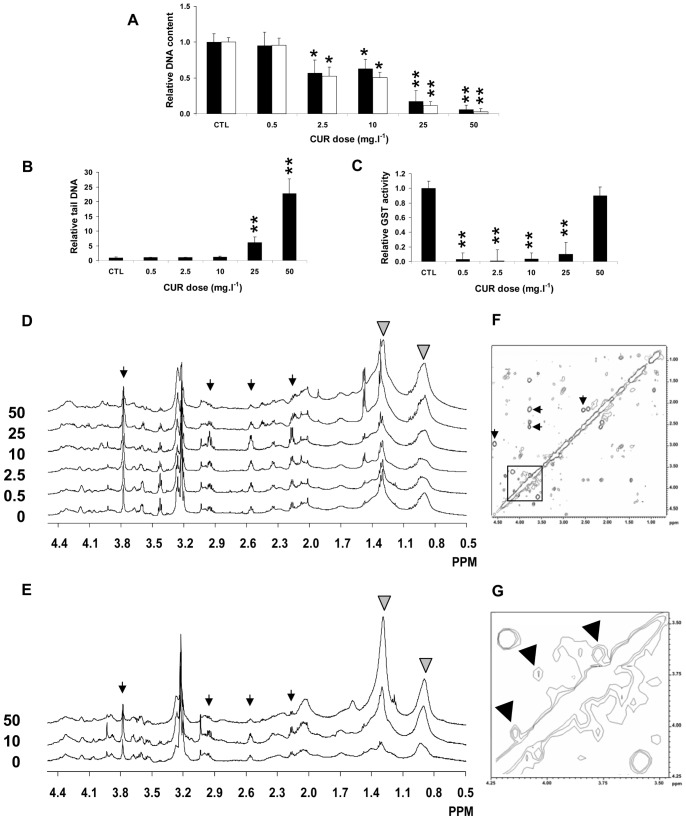
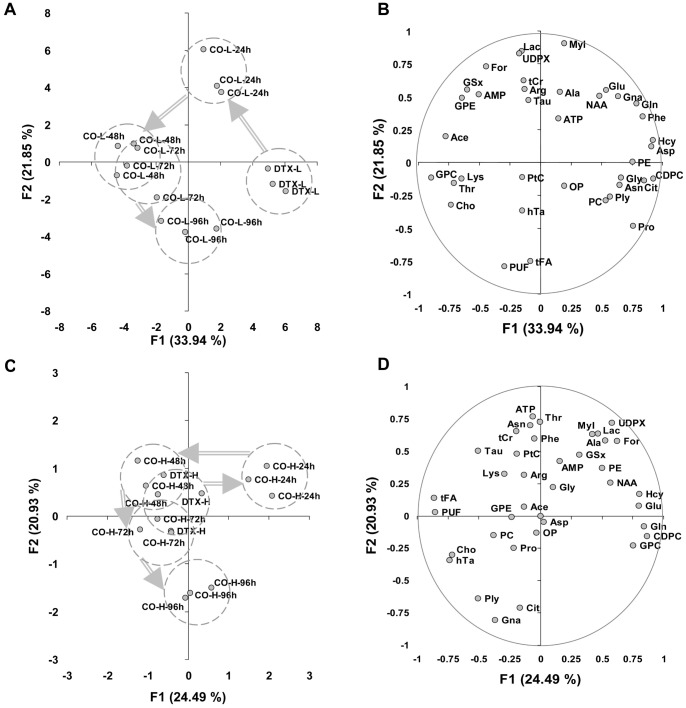
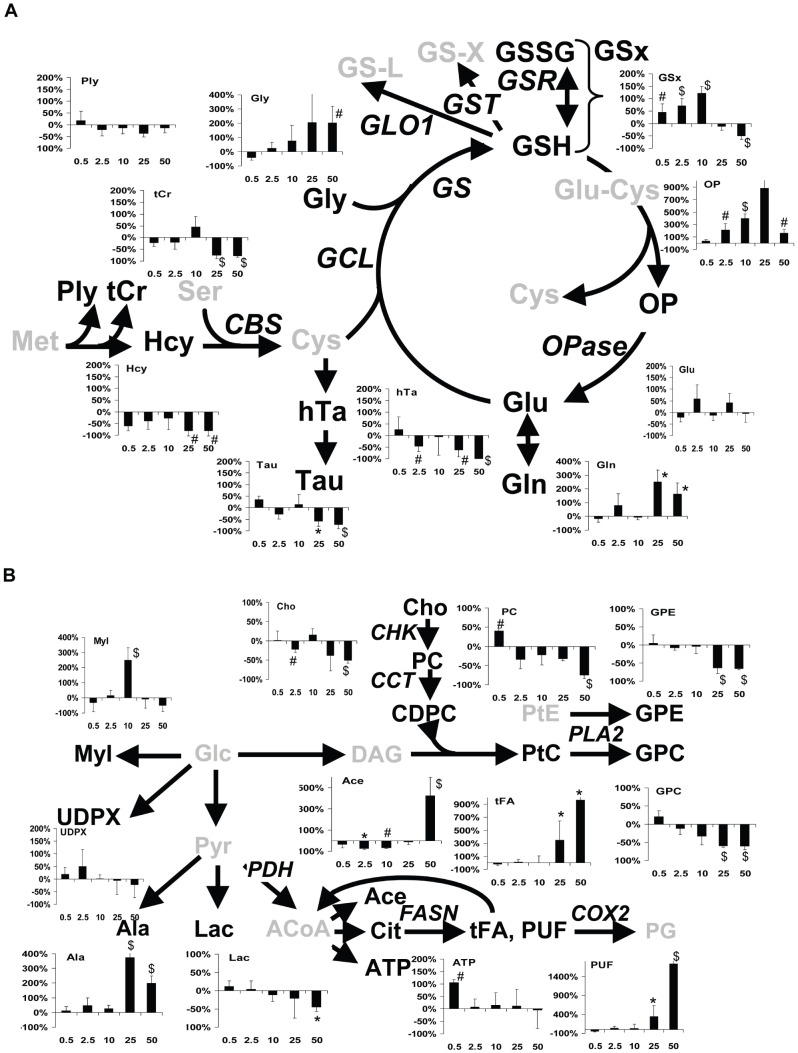
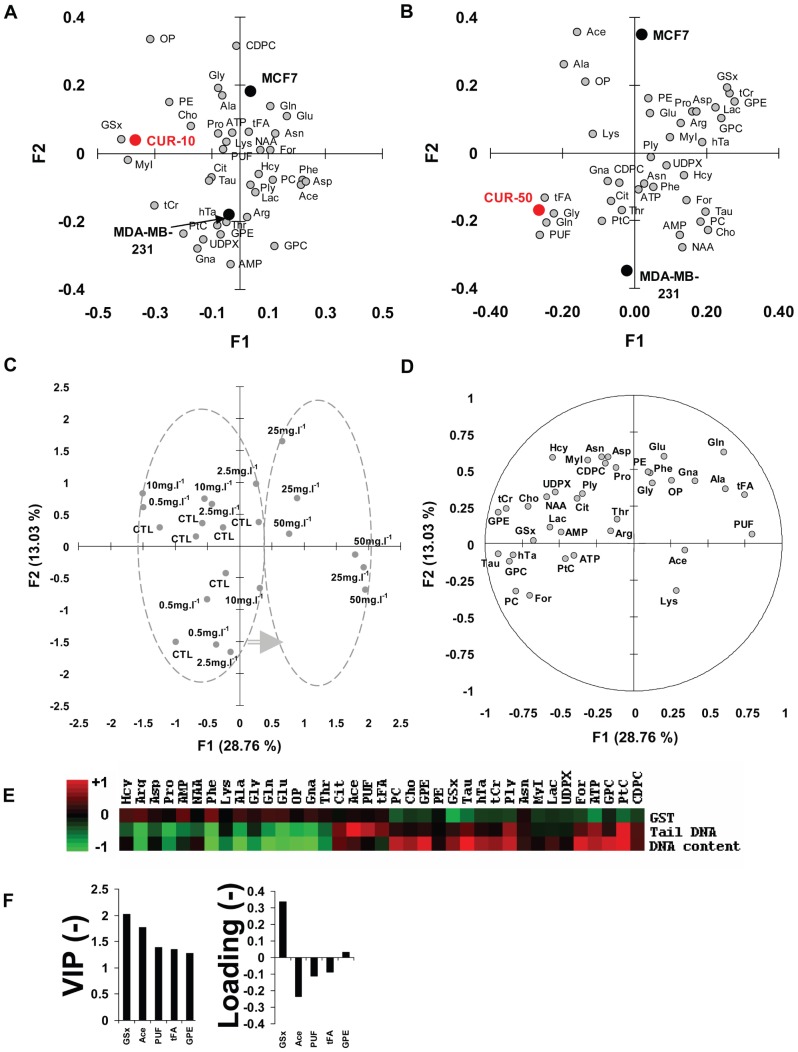
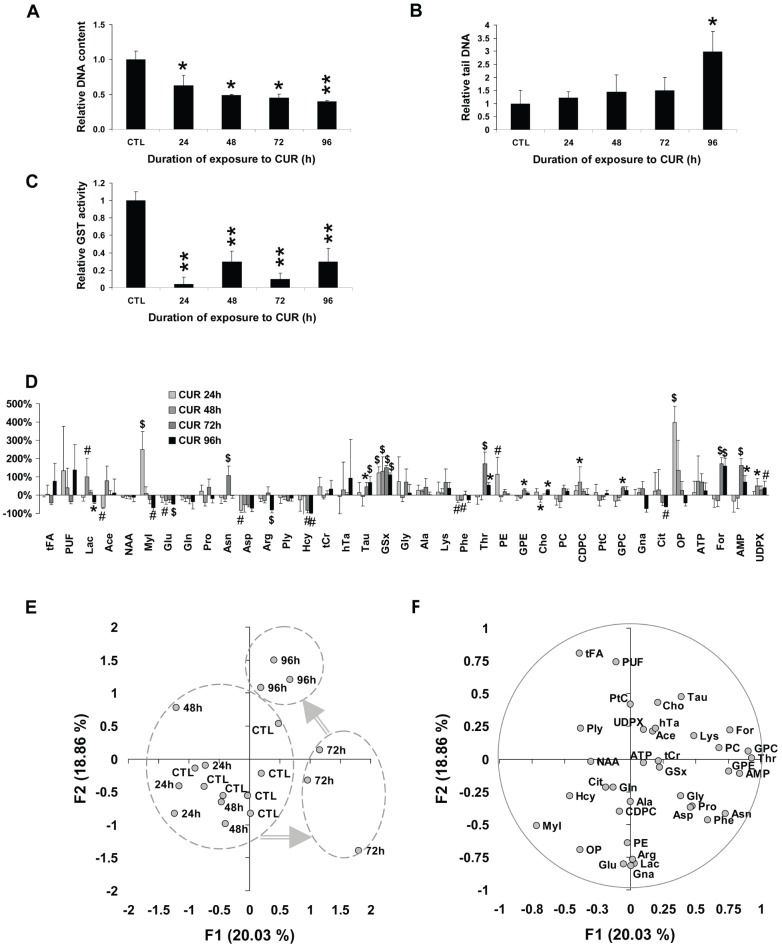
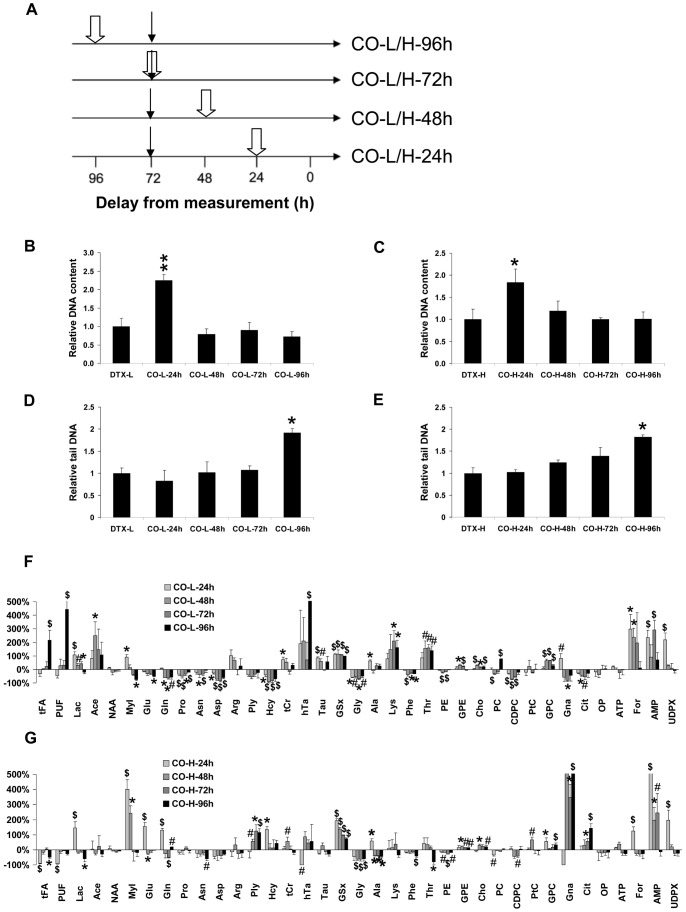
METHODOLOGY/PRINCIPAL FINDINGS: (1)H-NMR spectroscopy-based metabolomics was applied to get novel insight into responses of MCF7 and MDA-MB-231 breast cancer cells to CUR alone, and MCF7 cells to CUR in cotreatment with docetaxel (DTX). In both cell types, a major target of CUR was glutathione metabolism. Total glutathione (GSx) increased at low dose CUR (≤ 10 mg.l(-1)-28 µM-) (up to +121% in MCF7 cells, P<0.01, and +138% in MDA-MB-231 cells, P<0.01), but decreased at high dose (≥ 25 mg.l(-1) -70 µM-) (-49%, in MCF7 cells, P<0.02, and -56% in MDA-MB-231 cells, P<0.025). At high dose, in both cell types, GSx-related metabolites decreased, including homocystein, creatine and taurine (-60 to -80%, all, P<0.05). Together with glutathione-S-transferase actvity, data established that GSx biosynthesis was upregulated at low dose, and GSx consumption activated at high dose. Another major target, in both cell types, was lipid metabolism involving, at high doses, accumulation of polyunsaturated and total free fatty acids (between ×4.5 and ×11, P<0.025), and decrease of glycerophospho-ethanolamine and -choline (about -60%, P<0.025). Multivariate statistical analyses showed a metabolic transition, even a biphasic behavior of some metabolites including GSx, between low and high doses. In addition, CUR at 10 mg.l(-1) in cotreatment with DTX induced modifications in glutathione metabolism, lipid metabolism, and glucose utilization. Some of these changes were biphasic depending on the duration of exposure to CUR.
CONCLUSIONS/SIGNIFICANCE: Metabolomics reveals major metabolic targets of CUR in breast cancer cells, and biphasic responses that challenge the widely accepted beneficial effects of the phytochemical.
姜黄素(CUR)因其抗炎特性而受到广泛研究,对包括癌症在内的人类疾病具有重要意义。然而,肿瘤细胞的多效性甚至矛盾反应已经被报道,CUR 的作用机制仍不完全清楚。
方法/主要发现:(1)采用基于'H-NMR 光谱的代谢组学方法,深入了解 MCF7 和 MDA-MB-231 乳腺癌细胞对 CUR 单独作用以及 MCF7 细胞与多西紫杉醇(DTX)联合作用的反应。在这两种细胞类型中,CUR 的主要靶点是谷胱甘肽代谢。低剂量 CUR(≤10mg.l(-1)-28μM-)时总谷胱甘肽(GSx)增加(MCF7 细胞增加 121%,P<0.01,MDA-MB-231 细胞增加 138%,P<0.01),但高剂量(≥25mg.l(-1)-70μM-)时则降低(MCF7 细胞降低 49%,P<0.02,MDA-MB-231 细胞降低 56%,P<0.025)。在两种细胞类型中,GSx 相关代谢物均减少,包括同型半胱氨酸、肌酸和牛磺酸(均减少 60%至 80%,均 P<0.05)。与谷胱甘肽-S-转移酶活性一起,数据表明低剂量时 GSx 生物合成上调,高剂量时 GSx 消耗激活。另一个主要靶点是脂代谢,涉及高剂量时多不饱和和总游离脂肪酸的积累(×4.5 至 ×11,P<0.025),以及甘油磷酸乙醇胺和胆碱的减少(约 60%,P<0.025)。多变量统计分析显示,包括 GSx 在内的一些代谢物在低剂量和高剂量之间存在代谢转变,甚至存在双相行为。此外,CUR 在 10mg.l(-1)与 DTX 联合作用时诱导谷胱甘肽代谢、脂代谢和葡萄糖利用的改变。这些变化中的一些取决于暴露于 CUR 的时间长短而呈现双相性。
结论/意义:代谢组学揭示了 CUR 在乳腺癌细胞中的主要代谢靶点,以及双相反应,这对该植物化学物质的广泛接受的有益作用提出了挑战。