Department of Bacteriology, University of Wisconsin, Madison, WI, USA.
Plasmid. 2013 May;69(3):231-42. doi: 10.1016/j.plasmid.2013.02.003. Epub 2013 Mar 5.
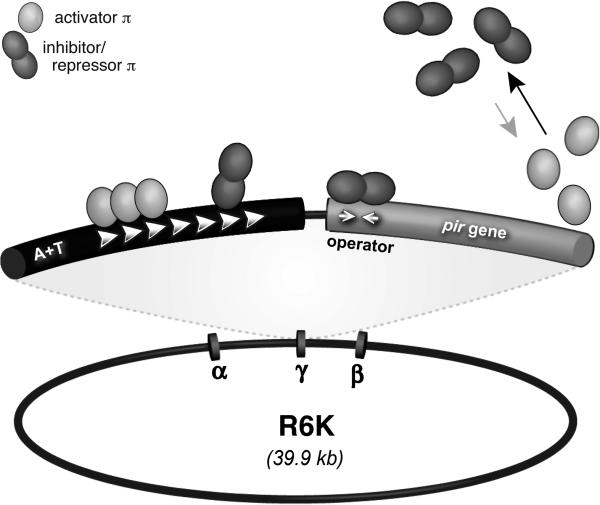
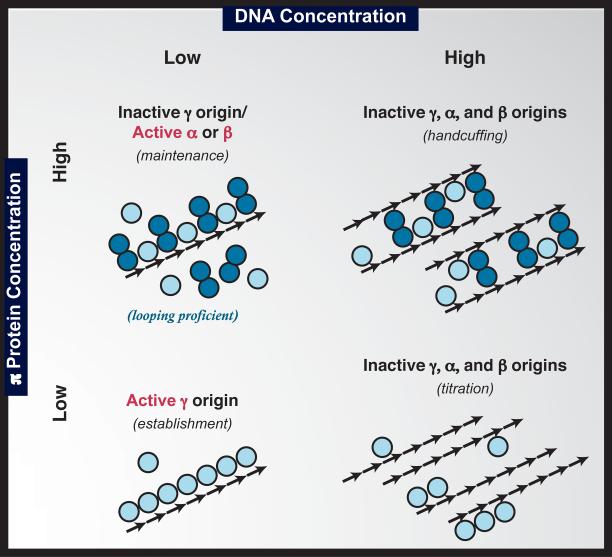
The focus of this minireview is the replication control of the 39.9-kb plasmid R6K and its derivatives. Historically, this plasmid was thought to have a narrow host range but more recent findings indicate that its derivatives can replicate in a variety of enteric and non-enteric bacterial species (Wild et al., 2004). In the four-plus decades since it was first described, R6K has proven to be an excellent model for studies of plasmid DNA replication. In part this is because of its similarities to other systems in which replication is activated and regulated by Rep protein and iteron-containing DNA. However its apparent idiosynchracies have also added to its significance (e.g., independent and co-dependent replication origins, and Rep dimers that stably bind iterons). Here, we survey the current state of knowledge regarding R6K replication and place individual regulatory elements into a proposed homeostatic model with implications for the biological significance of R6K and its multiple origins of replication.
本篇综述的重点是 39.9kb 质粒 R6K 及其衍生物的复制控制。从历史上看,人们认为这种质粒宿主范围较窄,但最近的研究结果表明,其衍生物可以在多种肠内和非肠内细菌物种中复制(Wild 等人,2004 年)。自首次描述以来的四十多年里,R6K 已被证明是研究质粒 DNA 复制的绝佳模型。部分原因是它与其他系统相似,其中复制由 Rep 蛋白和含有回文序列的 DNA 激活和调节。然而,它明显的特殊性也增加了它的重要性(例如,独立和共同依赖的复制起点,以及稳定结合回文序列的 Rep 二聚体)。在这里,我们调查了关于 R6K 复制的现有知识状态,并将单个调节元件置于一个拟议的动态平衡模型中,这对 R6K 及其多个复制起点的生物学意义具有重要意义。