Stronach Research Unit for Complementary and Integrative Laser Medicine, Research Unit of Biomedical Engineering in Anesthesia and Intensive Care Medicine and TCM Research Center Graz, Medical University of Graz, Auenbruggerplatz 29, 8036 Graz, Austria ; Department of Meridians, Institute of Acupuncture and Moxibustion, China Academy of Chinese Medical Sciences, Beijing 100700, China.
Evid Based Complement Alternat Med. 2013;2013:370341. doi: 10.1155/2013/370341. Epub 2013 Feb 7.
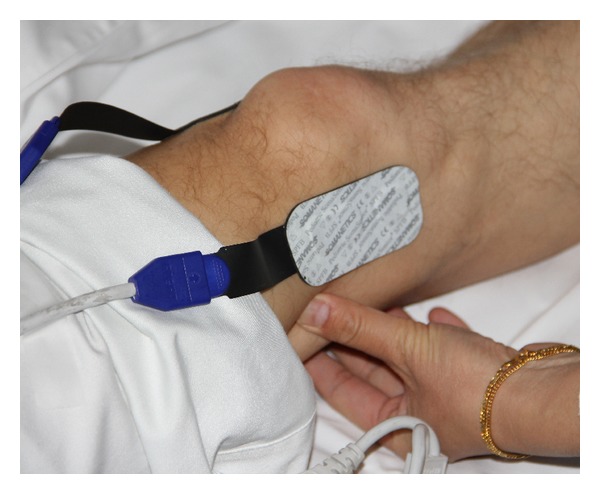
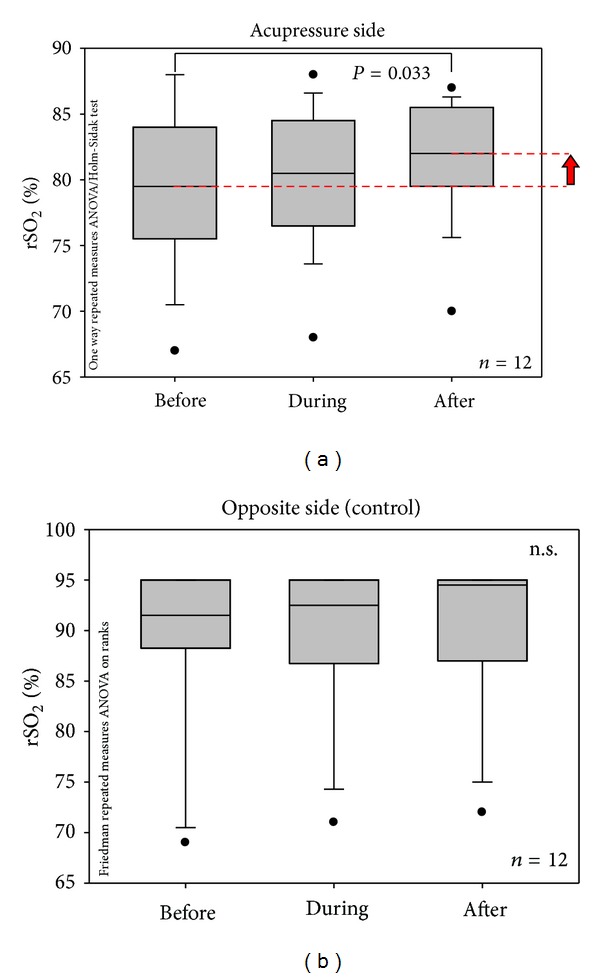
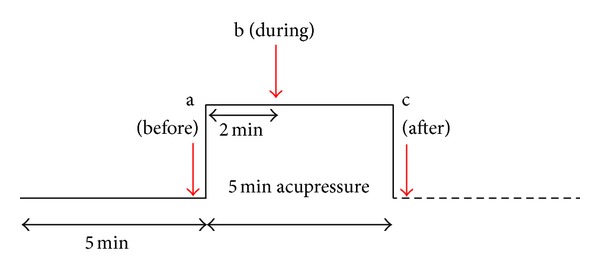
Up to now, it is still unknown whether microcirculation of deeper peripheral tissue (knee) can be modulated by acupuncture or acupressure on a meridian acupoint. The goal of this pilot study was to investigate possible effects of acupressure at the Xiyangguan acupoint (GB33) on the regional oxygen saturation of the deeper knee tissues by near-infrared spectroscopy (NIRS). Twelve healthy volunteers with a mean age of 23.8 ± 1.6 years were investigated. Acupressure stimulation was performed for 5 minutes at the Xiyangguan acupoint. The results of the controlled study showed a significant increase of the values of regional oxygen saturation on the stimulated side of the knee (P = 0.033), whereas the opposite side on the same knee showed insignificant changes. These results may serve as a valuable basis for monitoring a possible therapeutic effect (e.g., after Khalifa therapy) in patients with knee problems.
到目前为止,尚不清楚针刺或经穴按压是否能调节更深层外周组织(膝部)的微循环。本初步研究的目的是通过近红外光谱(NIRS)来探讨膝部深层组织经穴按压(GB33)对膝部局部氧饱和度的可能影响。12 名健康志愿者的平均年龄为 23.8 ± 1.6 岁。在膝部的膝阳关穴进行 5 分钟的经穴按压刺激。对照研究的结果显示,膝部受刺激侧的局部氧饱和度值显著增加(P = 0.033),而同一膝部的对侧则没有明显变化。这些结果可能为监测膝部问题患者(例如 Khalifa 治疗后)的可能治疗效果提供有价值的基础。