Department of Biochemistry, University of Zürich, CH-8057 Zürich, Switzerland.
J Gen Physiol. 2013 Apr;141(4):479-91. doi: 10.1085/jgp.201210927. Epub 2013 Mar 11.
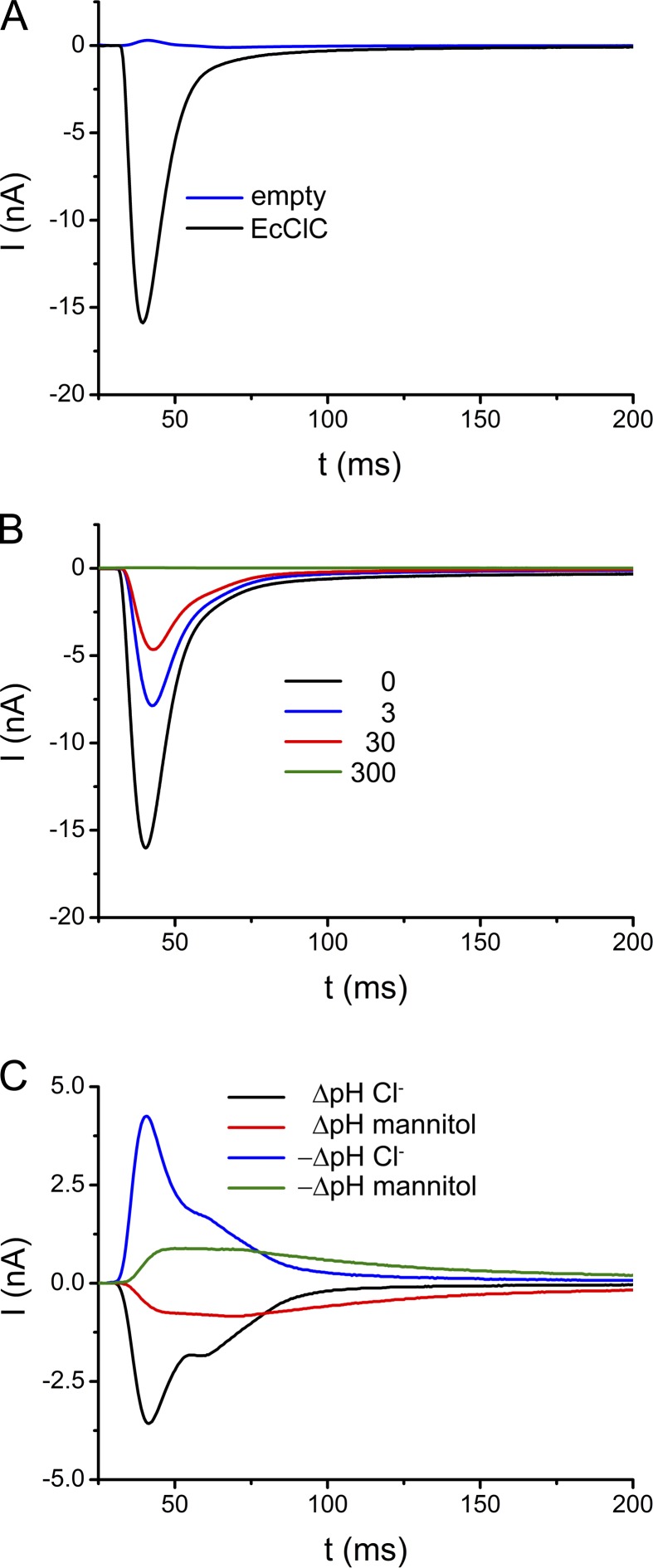
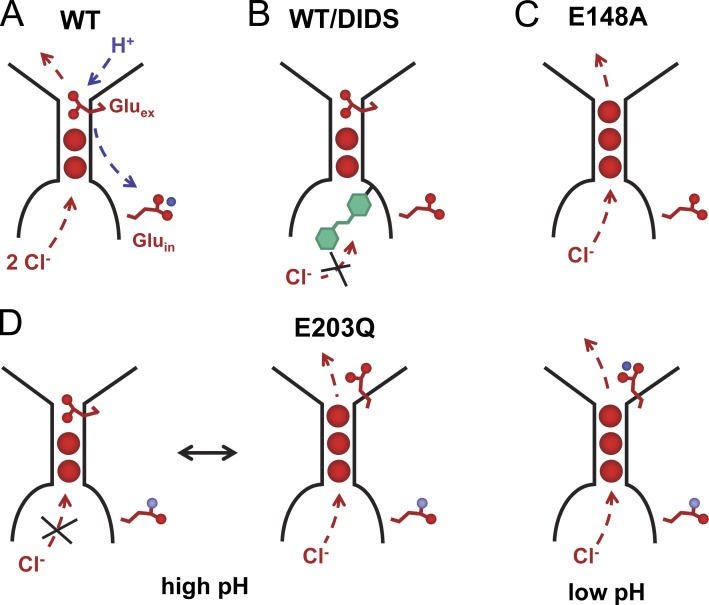
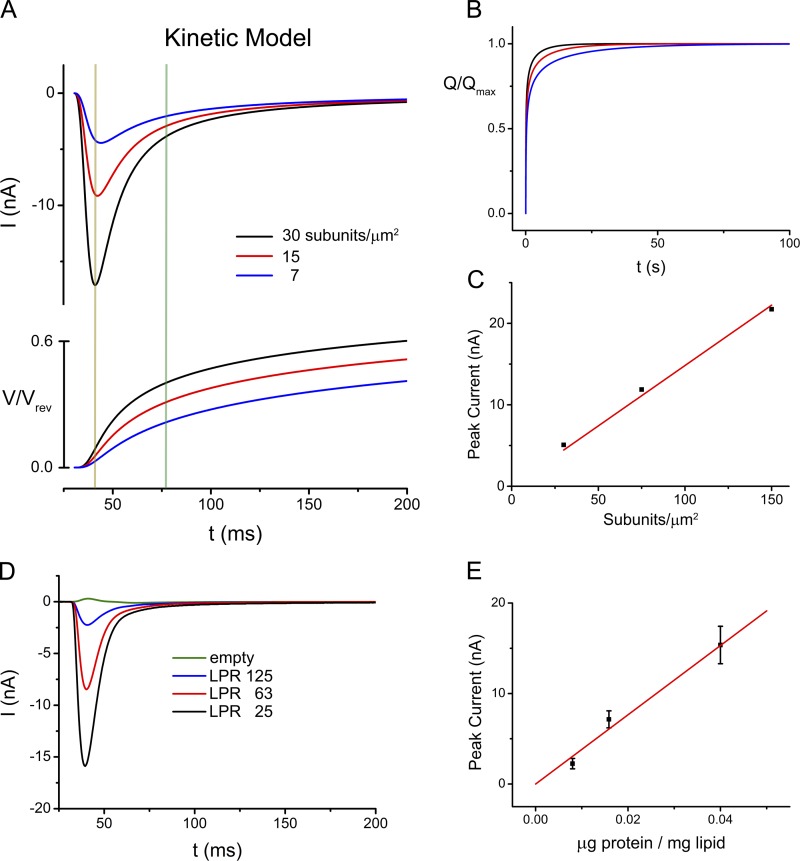
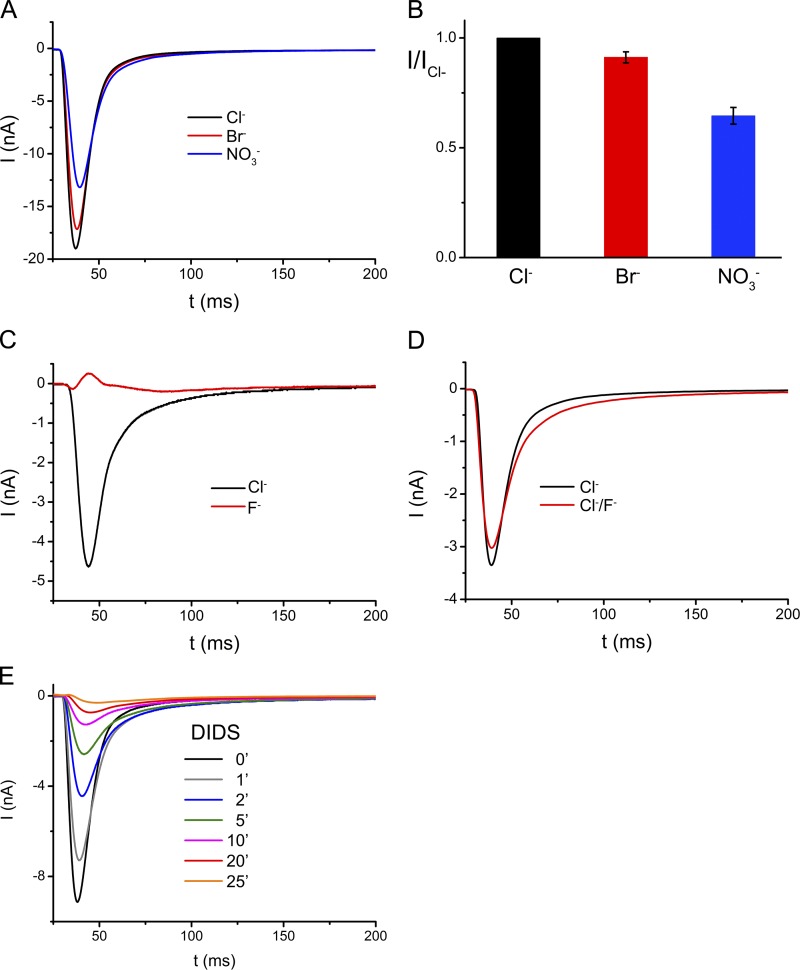
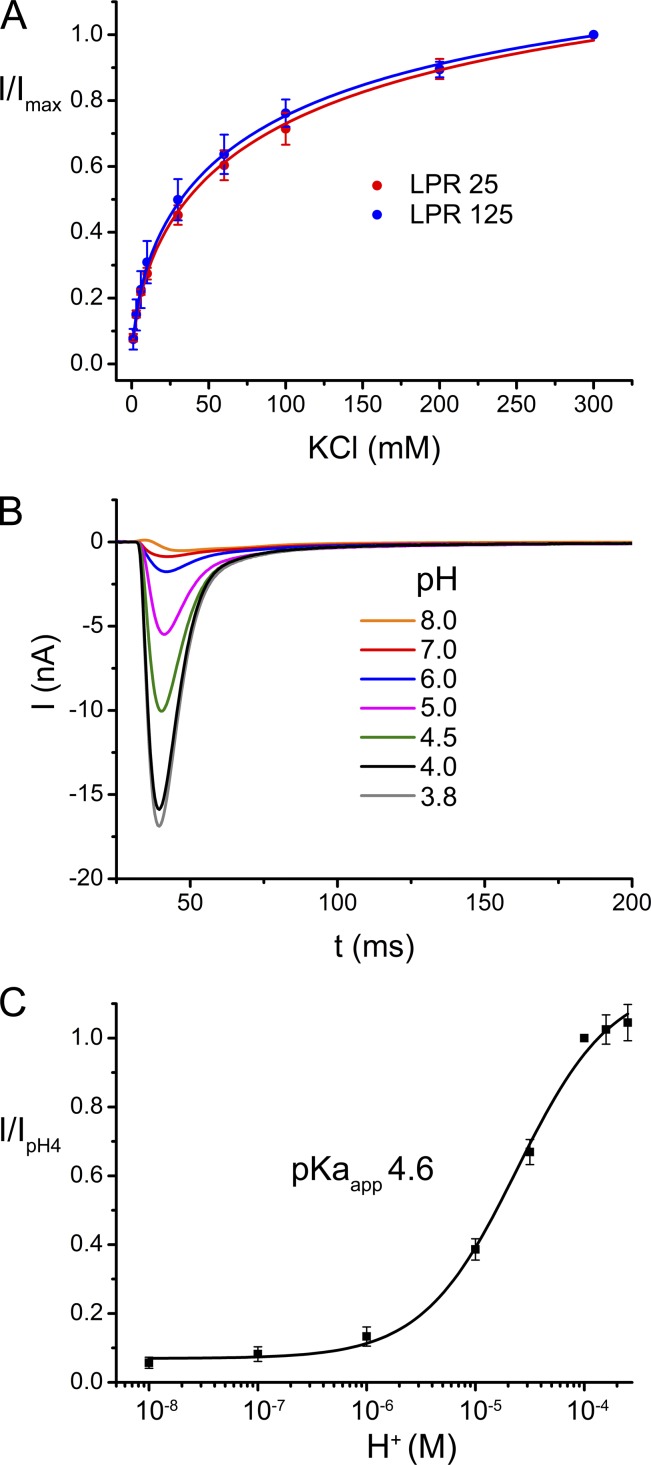
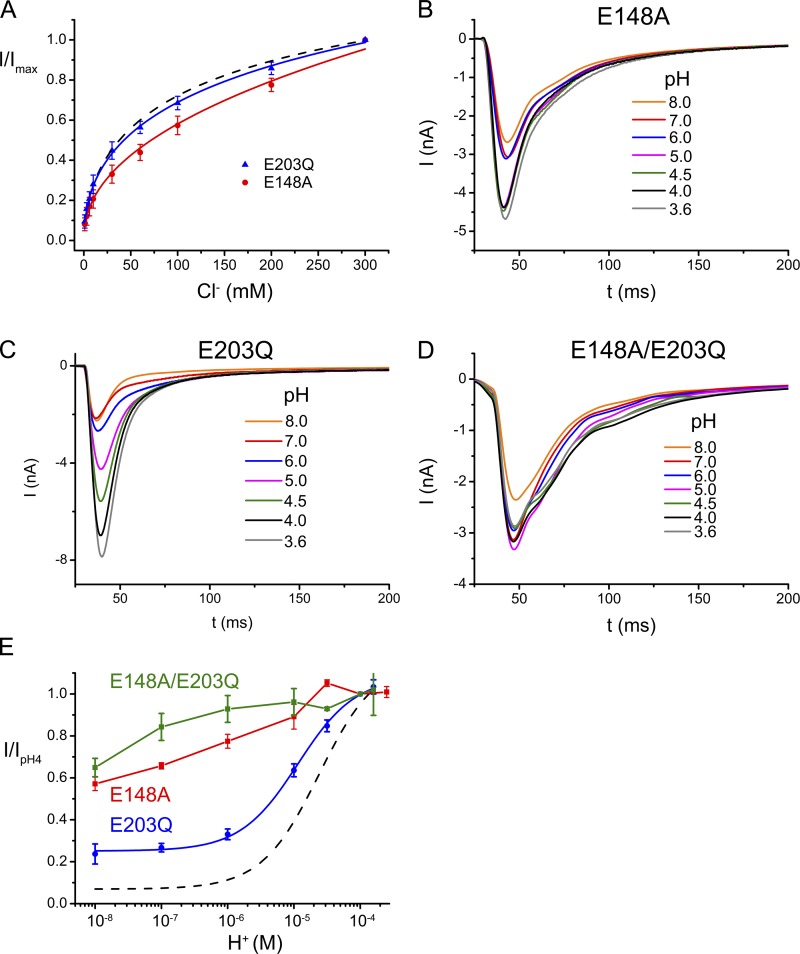
EcClC, a prokaryotic member of the ClC family of chloride channels and transporters, works as coupled H(+)/Cl(-) exchanger. With a known structure and the possibility of investigating its behavior with different biochemical and biophysical techniques, the protein has become an important model system for the family. Although many aspects of its function have been previously characterized, it was difficult to measure transport on the same sample under different environmental conditions. To overcome this experimental limitation, we have studied EcClC by solid-supported membrane electrophysiology. The large transport-related transient currents and a simple way of relating transport rates to the measured signal have allowed a thorough investigation of ion selectivity, inhibition, and the dependence of transport on changes in ion concentration and pH. Our results confirm that the protein transports larger anions with about similar rates, whereas the smaller fluoride is not a substrate. We also show that 4,4'-diisothiocyano-2,2'-stilbenedisulfonic acid (DIDS), a known inhibitor of other anion transport protein, irreversibly inhibits EcClC from the intracellular side. The chloride dependence shows an apparent saturation at millimolar concentrations that resembles a similar behavior in eukaryotic ClC channels. Our experiments have also allowed us to quantify the pH dependence of transport. EcClC shows a strong activation at low pH with an apparent pKa of 4.6. The pronounced pH dependence is lost by the mutation of a conserved glutamate facing the extracellular solution that was previously shown to be an acceptor for transported protons, whereas it is largely retained by the mutation of an equivalent residue at the intracellular side. Our results have provided a quantitative basis for the transport behavior of EcClC, and they will serve as a reference for future investigations of novel electrogenic transporters with still-uncharacterized properties.
EcClC 是 ClC 家族中一种原核氯化物通道和转运蛋白,作为偶联的 H(+) / Cl(-) 交换体发挥作用。由于其具有已知的结构,并且可以使用不同的生化和生物物理技术来研究其行为,因此该蛋白已成为该家族的重要模型系统。尽管其功能的许多方面已经得到了先前的表征,但很难在不同的环境条件下对同一样品进行运输测量。为了克服这一实验限制,我们通过固相支持膜电生理学研究了 EcClC。大的转运相关瞬态电流以及将转运速率与测量信号相关联的简单方法,使我们能够彻底研究离子选择性、抑制作用以及转运对离子浓度和 pH 变化的依赖性。我们的结果证实,该蛋白以相似的速率转运较大的阴离子,而较小的氟化物则不是底物。我们还表明,4,4'-二异硫氰基-2,2'-二苯乙烯二磺酸(DIDS),一种已知的其他阴离子转运蛋白抑制剂,不可逆地从细胞内侧面抑制 EcClC。氯离子依赖性在毫摩尔浓度下表现出明显的饱和,类似于真核 ClC 通道的类似行为。我们的实验还使我们能够量化转运的 pH 依赖性。EcClC 在低 pH 下表现出强烈的激活,表观 pKa 值为 4.6。突变面对细胞外溶液的保守谷氨酸会导致明显的 pH 依赖性丧失,该谷氨酸先前被证明是转运质子的受体,而突变其在细胞内的等效残基则在很大程度上保留了这种依赖性。我们的结果为 EcClC 的转运行为提供了定量基础,并将为未来对具有尚未表征特性的新型电致转运蛋白的研究提供参考。