Department of Cell Biology, Emory University School of Medicine, Atlanta, Georgia, USA.
Prog Mol Biol Transl Sci. 2013;116:95-118. doi: 10.1016/B978-0-12-394311-8.00005-4.
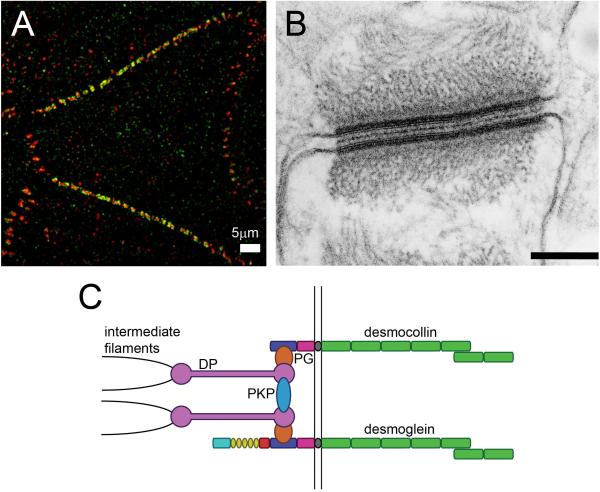
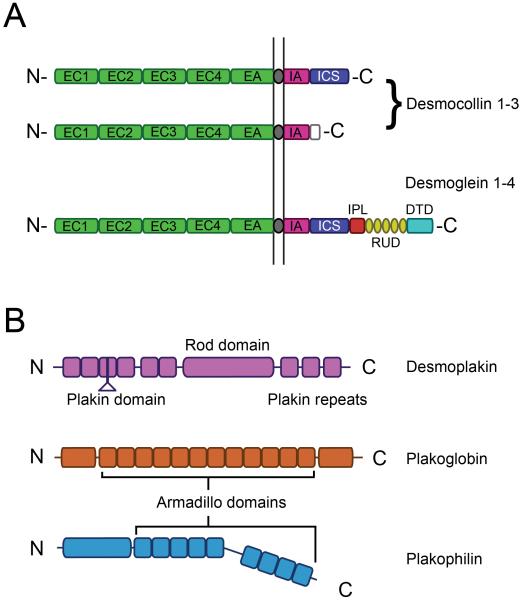
Desmosomes are adhesive intercellular junctions that mechanically integrate adjacent cells by coupling adhesive interactions mediated by desmosomal cadherins to the intermediate filament cytoskeletal network. Desmosomal cadherins are connected to intermediate filaments by densely clustered cytoplasmic plaque proteins comprising members of the armadillo gene family, including plakoglobin and plakophilins, and members of the plakin family of cytolinkers, such as desmoplakin. The importance of desmosomes in tissue integrity is highlighted by human diseases caused by mutations in desmosomal genes, autoantibody attack of desmosomal cadherins, and bacterial toxins that selectively target desmosomal cadherins. In addition to reviewing the well-known roles of desmosomal proteins in tissue integrity, this chapter also highlights the growing appreciation for how desmosomal proteins are integrated with cell signaling pathways to contribute to vertebrate tissue organization and differentiation.
桥粒是细胞间的黏附连接,通过将桥粒钙黏蛋白介导的黏附相互作用与中间丝细胞骨架网络偶联,机械地整合相邻细胞。桥粒钙黏蛋白通过富含桥粒斑蛋白的细胞质斑块与中间丝连接,桥粒斑蛋白包含多个卷曲蛋白基因家族成员,如桥连蛋白和 plakophilins,以及细胞连接蛋白 plakinin 家族的成员,如桥粒蛋白。由于桥粒基因的突变、桥粒钙黏蛋白的自身抗体攻击以及选择性靶向桥粒钙黏蛋白的细菌毒素,导致人类疾病,这些都突出了桥粒在组织完整性中的重要性。除了回顾桥粒蛋白在组织完整性中的众所周知的作用外,本章还强调了人们日益认识到桥粒蛋白如何与细胞信号通路整合,以促进脊椎动物组织的组织和分化。