Department of Population Medicine and Diagnostic Sciences, College of Veterinary Medicine, Cornell University, Ithaca, NY, USA.
Vet Res. 2013 Mar 11;44(1):16. doi: 10.1186/1297-9716-44-16.
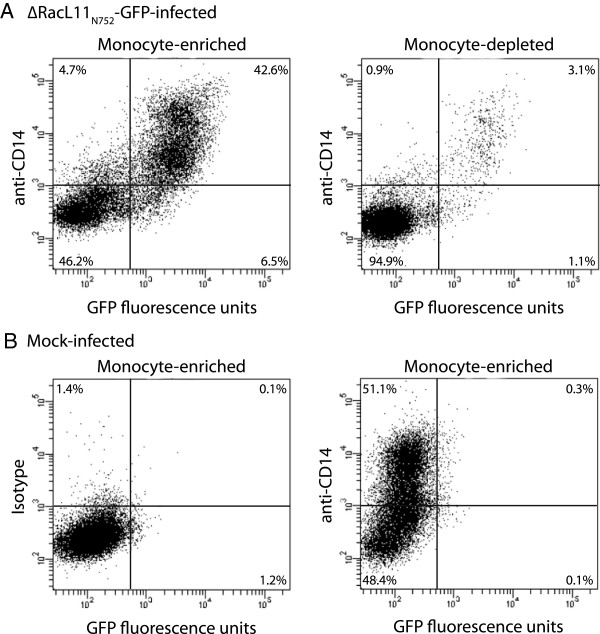
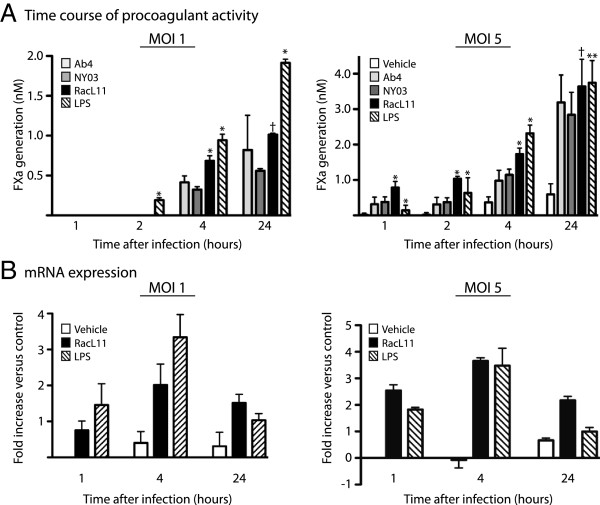
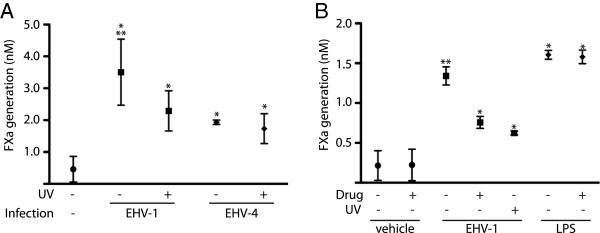
The alphaherpesvirus, equine herpesvirus type 1 (EHV-1), is a highly prevalent cause of equine infectious abortion and encephalomyelopathy. These syndromes have been attributed to ischemic necrosis from thrombosis in placental and neural vessels, although the mechanisms underlying thrombosis are unknown. After inhalation, EHV-1 establishes a peripheral blood mononuclear cell-associated viremia, with monocytes being a target of infection. Monocytes are also the main source of tissue factor (TF) in diseased states. Since TF is the primary activator of coagulation, increased monocyte TF expression could be involved in EHV-1-associated thrombosis. We hypothesized that EHV-1 infection would induce TF-dependent procoagulant activity in equine monocytes. Monocyte-enriched fractions of blood were infected with abortigenic (RacL11, NY03) and neuropathogenic (Ab4) EHV-1 strains. All strains induced procoagulant activity, to variable degrees, within 1 to 4 h, with maximal activity at 24 h, after infection. Virus-induced procoagulant activity was similar to that seen with lipopolysaccharide, a known stimulant of TF-mediated procoagulant responses. Virus-induced procoagulant activity was factor VIIa-dependent and temporally associated with TF gene transcription, implicating TF as the main driver of the activity. Procoagulant activity was mildly decreased (30-40%) when virus was inactivated by ultraviolet light or when infected cells were treated with aphidicolin, a virus DNA polymerase inhibitor, suggesting early events of virus infection (attachment, entry or intracellular trafficking) are the primary stimulus of procoagulant activity. Our results indicate that EHV-1 rapidly stimulates procoagulant activity in equine monocytes in vitro. The EHV-1-induced procoagulant activity in monocytes may contribute to clinical thrombosis in horses with EHV-1 infection.
α疱疹病毒,马疱疹病毒 1 型(EHV-1),是马传染性流产和脑脊髓炎的高度流行病因。这些综合征归因于胎盘和神经血管的血栓形成引起的缺血性坏死,尽管血栓形成的机制尚不清楚。吸入后,EHV-1 建立与外周血单核细胞相关的病毒血症,单核细胞是感染的靶标。单核细胞也是疾病状态下组织因子(TF)的主要来源。由于 TF 是凝血的主要激活剂,单核细胞 TF 表达增加可能与 EHV-1 相关的血栓形成有关。我们假设 EHV-1 感染会诱导马单核细胞中依赖 TF 的促凝血活性。用流产性(RacL11,NY03)和神经致病性(Ab4)EHV-1 株感染富含单核细胞的血液级分。所有株在感染后 1 至 4 小时内以不同程度诱导促凝血活性,在 24 小时时达到最大活性。病毒诱导的促凝血活性与脂多糖相似,脂多糖是 TF 介导的促凝血反应的已知刺激物。病毒诱导的促凝血活性依赖于因子 VIIa,并且与 TF 基因转录时间相关,暗示 TF 是该活性的主要驱动因素。当病毒通过紫外线失活或用病毒 DNA 聚合酶抑制剂阿非迪可林处理感染细胞时,促凝血活性轻度降低(30-40%),表明病毒感染的早期事件(附着、进入或细胞内运输)是促凝血活性的主要刺激物。我们的结果表明,EHV-1 可迅速刺激马单核细胞体外的促凝血活性。EHV-1 诱导的单核细胞促凝血活性可能导致 EHV-1 感染马的临床血栓形成。