Key Laboratory of Horticultural Plant Biology of Ministry of Education, Huazhong Agricultural University, Wuhan, Hubei, 430070, P,R, China.
BMC Plant Biol. 2013 Mar 16;13:44. doi: 10.1186/1471-2229-13-44.
From field harvest to the consumer's table, fresh citrus fruit spends a considerable amount of time in shipment and storage. During these processes, physiological disorders and pathological diseases are the main causes of fruit loss. Heat treatment (HT) has been widely used to maintain fruit quality during postharvest storage; however, limited molecular information related to this treatment is currently available at a systemic biological level.
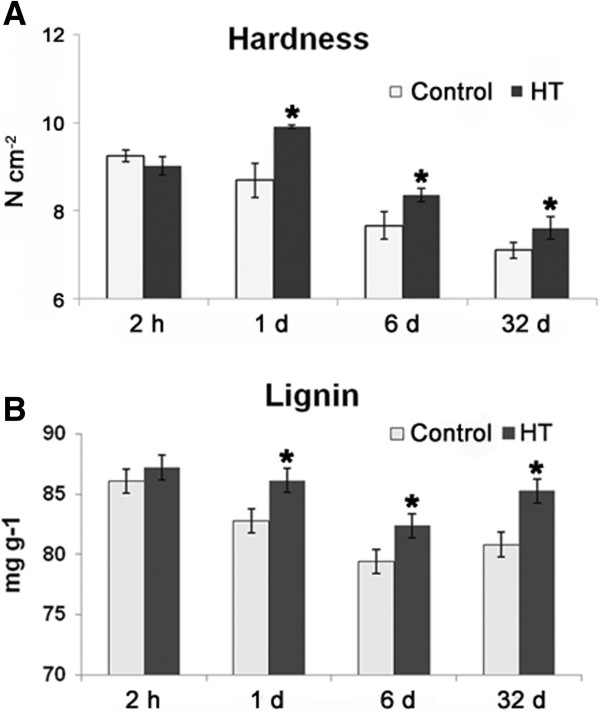
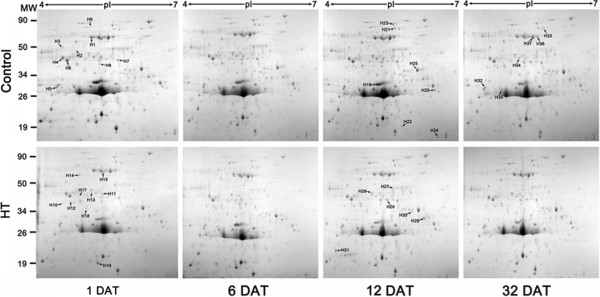
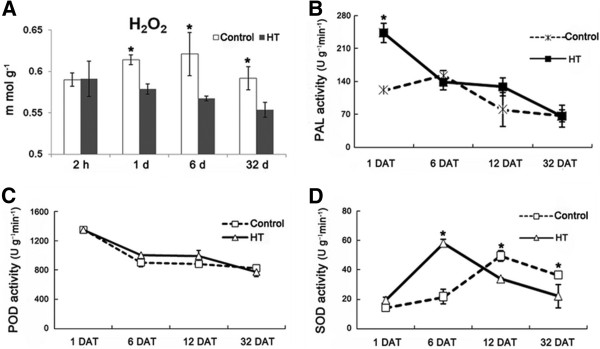
Mature 'Kamei' Satsuma mandarin (Citrus unshiu Marc.) fruits were selected for exploring the disease resistance mechanisms induced by HT during postharvest storage. Proteomic analyses based on two-dimensional gel electrophoresis (2-DE), and metabolomic research based on gas chromatography coupled to mass spectrometry (GC-MS), and liquid chromatography quadrupole time-of-flight mass spectrometry (LC-QToF-MS) were conducted. The results show resistance associated proteins were up-regulated in heat treated pericarp, such as beta-1, 3-glucanase, Class III chitinase, 17.7 kDa heat shock protein and low molecular weight heat-shock protein. Also, redox metabolism enzymes were down-regulated in heat treated pericarp, including isoflavone reductase, oxidoreductase and superoxide dismutase. Primary metabolic profiling revealed organic acids and amino acids were down-regulated in heat treated pericarp; but significant accumulation of metabolites, including tetradecanoic acid, oleic acid, ornithine, 2-keto-d-gluconic acid, succinic acid, turanose, sucrose, galactose, myo-inositol, glucose and fructose were detected. Noticeably, H2O2 content decreased, while, lignin content increased in heat treated pericarp compared to the control, which might increase fruit resistibility in response to external stress. Also, flavonoids, substances which are well-known to be effective in reducing external stress, were up-regulated in heat treated pericarp.
This study provides a broad picture of differential accumulation of proteins and metabolites in postharvest citrus fruit, and gives new insights into HT improved fruit disease resistance during subsequent storage of 'Kamei' Satsuma mandarin. Interpretation of the data for the proteins and metabolites revealed reactive oxygen species (ROS) and lignin play important roles in heat treatment induced fruit resistance to pathogens and physiological disorders.
从田间收获到消费者的餐桌,新鲜柑橘类水果在运输和储存过程中要花费相当长的时间。在这些过程中,生理失调和病理疾病是导致果实损失的主要原因。热处理(HT)已广泛用于维持收获后贮藏期间果实的品质;然而,目前在系统生物学水平上与该处理相关的分子信息有限。
选择成熟的“Kamei”温州蜜柑(Citrus unshiu Marc.)果实,以探索采后贮藏过程中 HT 诱导的抗病机制。基于二维凝胶电泳(2-DE)进行蛋白质组学分析,基于气相色谱-质谱联用(GC-MS)和液相色谱-四极杆飞行时间质谱联用(LC-QToF-MS)进行代谢组学研究。结果表明,热处理果皮中β-1,3-葡聚糖酶、III 类几丁质酶、17.7 kDa 热休克蛋白和低分子量热休克蛋白等与抗性相关的蛋白质上调。此外,热处理果皮中氧化还原代谢酶如异黄酮还原酶、氧化还原酶和超氧化物歧化酶下调。初级代谢物分析表明,热处理果皮中有机酸和氨基酸下调;但检测到十四烷酸、油酸、鸟氨酸、2-酮-D-葡萄糖酸、琥珀酸、棉子糖、蔗糖、半乳糖、肌醇、葡萄糖和果糖等代谢物显著积累。值得注意的是,与对照相比,热处理果皮中的 H2O2 含量降低,木质素含量增加,这可能会增加果实对外界胁迫的抵抗力。此外,热处理果皮中类黄酮等物质上调,类黄酮是众所周知的有效减轻外部应激的物质。
本研究提供了采后柑橘果实中蛋白质和代谢物差异积累的广泛图景,并为“Kamei”温州蜜柑热处理提高果实在后续贮藏过程中对病原菌和生理失调的抗性提供了新的见解。对蛋白质和代谢物数据的解释表明,活性氧(ROS)和木质素在热处理诱导果实对病原体和生理失调的抗性中起重要作用。