Division of Biotechnology, Dalian Institute of Chemical Physics, CAS, Dalian, 116023, PR China.
Biotechnol Biofuels. 2013 Mar 5;6(1):36. doi: 10.1186/1754-6834-6-36.
Microbial lipid production by using lignocellulosic biomass as the feedstock holds a great promise for biodiesel production and biorefinery. This usually involves hydrolysis of biomass into sugar-rich hydrolysates, which are then used by oleaginous microorganisms as the carbon and energy sources to produce lipids. However, the costs of microbial lipids remain prohibitively high for commercialization. More efficient and integrated processes are pivotal for better techno-economics of microbial lipid technology.
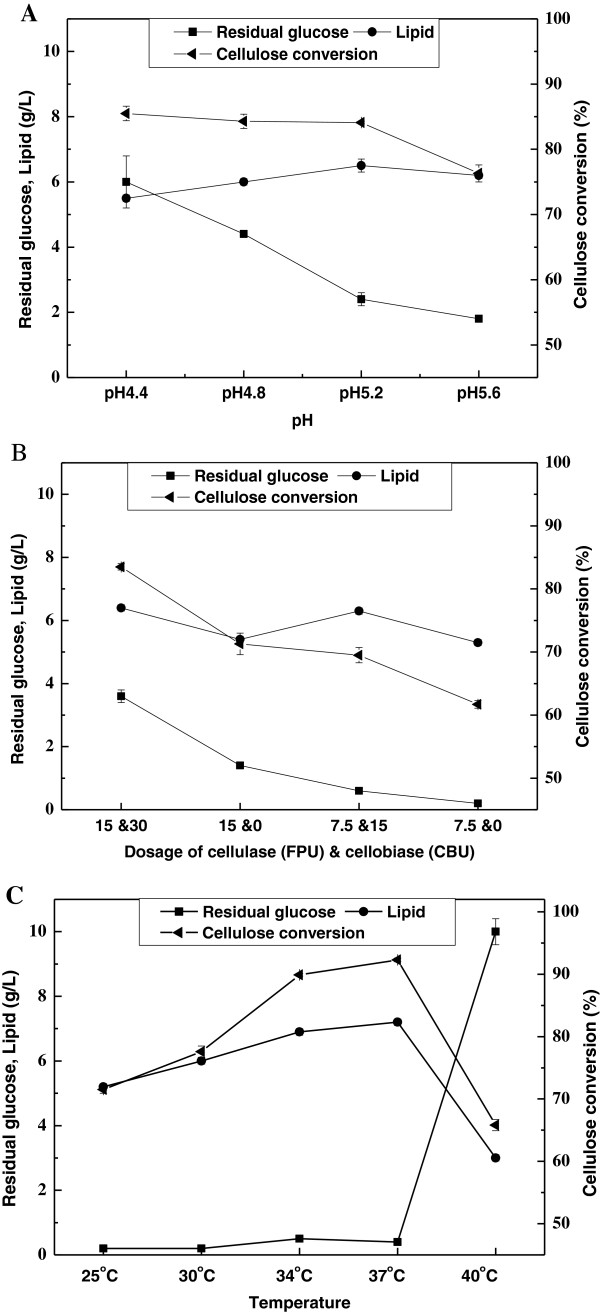
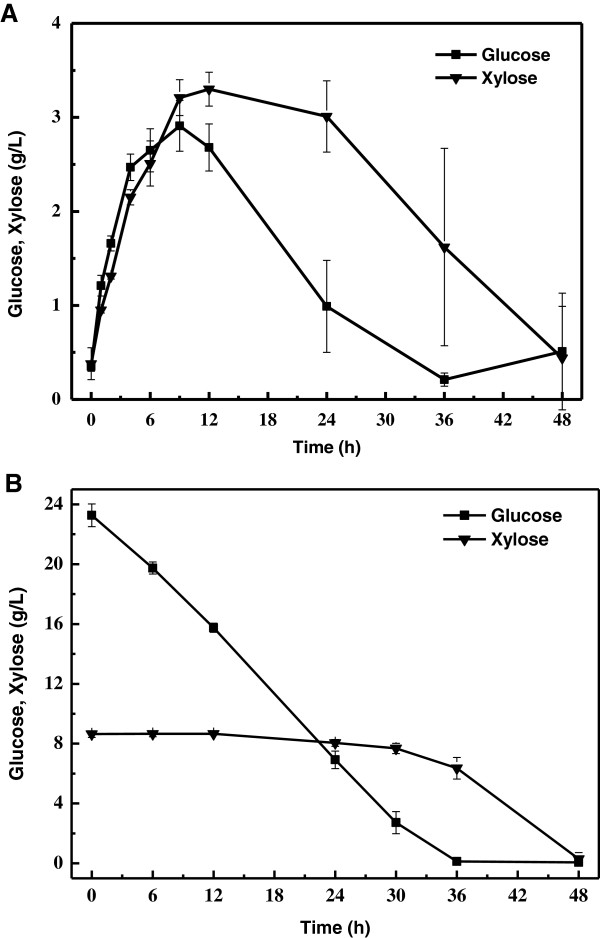
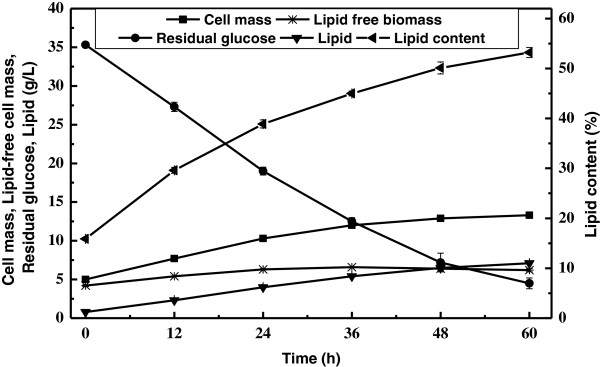
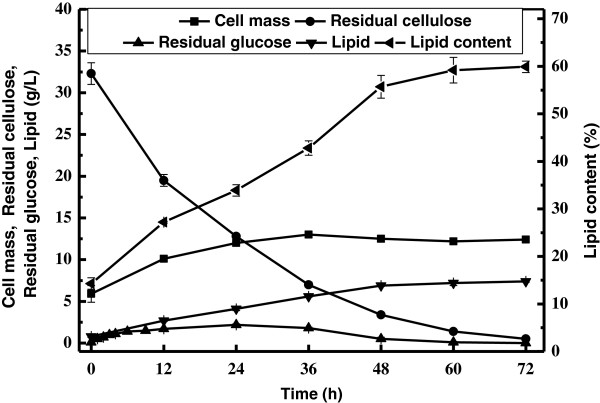
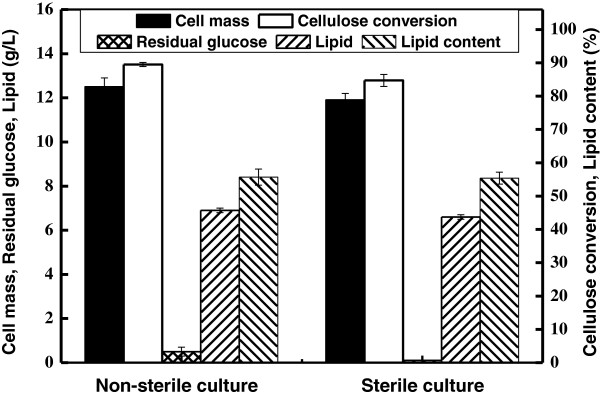
Here we describe the simultaneous saccharification and enhanced lipid production (SSELP) process that is highly advantageous in terms of converting cellulosic materials into lipids, as it integrates cellulose biomass hydrolysis and lipid biosynthesis. Specifically, Cryptococcus curvatus cells prepared in a nutrient-rich medium were inoculated at high dosage for lipid production in biomass suspension in the presence of hydrolytic enzymes without auxiliary nutrients. When cellulose was loaded at 32.3 g/L, cellulose conversion, cell mass, lipid content and lipid coefficient reached 98.5%, 12.4 g/L, 59.9% and 204 mg/g, respectively. Lipid yields of the SSELP process were higher than those obtained by using the conventional process where cellulose was hydrolyzed separately. When ionic liquid pretreated corn stover was used, both cellulose and hemicellulose were consumed simultaneously. No xylose was accumulated over time, indicating that glucose effect was circumvented. The lipid yield reached 112 mg/g regenerated corn stover. This process could be performed without sterilization because of the absence of auxiliary nutrients for bacterial contamination.
The SSELP process facilitates direct conversion of both cellulose and hemicellulose of lignocellulosic materials into microbial lipids. It greatly reduces time and capital costs while improves lipid coefficient. Optimization of the SSELP process at different levels should further improve the efficiency of microbial lipid technology, which in turn, promote the biotechnological production of fatty acid-derived products from lignocellulosic biomass.
以木质纤维素生物质为原料生产微生物油脂,为生物柴油生产和生物炼制带来了巨大的前景。这通常涉及将生物质水解成富含糖的水解产物,然后将其作为碳和能源源被产油微生物利用来生产油脂。然而,微生物油脂的成本仍然高得令人望而却步,无法实现商业化。更高效和集成的工艺对于改善微生物油脂技术的技术经济性至关重要。
在这里,我们描述了同步糖化和增强油脂生产(SSELP)工艺,该工艺在将纤维素材料转化为油脂方面具有很高的优势,因为它集成了纤维素生物质水解和脂质生物合成。具体来说,在存在水解酶的情况下,将在营养丰富的培养基中制备的厚垣节酵母细胞以高剂量接种到生物质悬浮液中进行油脂生产,而无需辅助营养物。当加载 32.3 g/L 的纤维素时,纤维素转化率、细胞量、油脂含量和油脂系数分别达到 98.5%、12.4 g/L、59.9%和 204 mg/g。SSELP 工艺的油脂产率高于单独水解纤维素时获得的常规工艺。当使用离子液体预处理的玉米秸秆时,纤维素和半纤维素同时被消耗。随着时间的推移,木糖没有积累,表明避免了葡萄糖效应。从再生玉米秸秆中获得的油脂产率达到 112 mg/g。由于没有辅助营养物来防止细菌污染,因此该过程可以在不进行灭菌的情况下进行。
SSELP 工艺促进了木质纤维素材料中纤维素和半纤维素的直接转化为微生物油脂。它大大减少了时间和资本成本,同时提高了油脂系数。在不同水平上优化 SSELP 工艺应进一步提高微生物油脂技术的效率,从而促进从木质纤维素生物质生产脂肪酸衍生产品的生物技术生产。