Department of Pharmaceutical Sciences, West Virginia University, Morgantown, WV, USA.
Food Chem. 2013 Jun 15;138(4):2099-107. doi: 10.1016/j.foodchem.2012.11.139. Epub 2012 Dec 28.
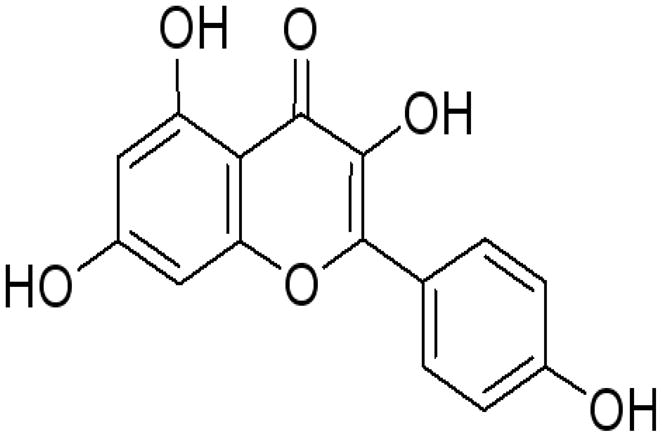
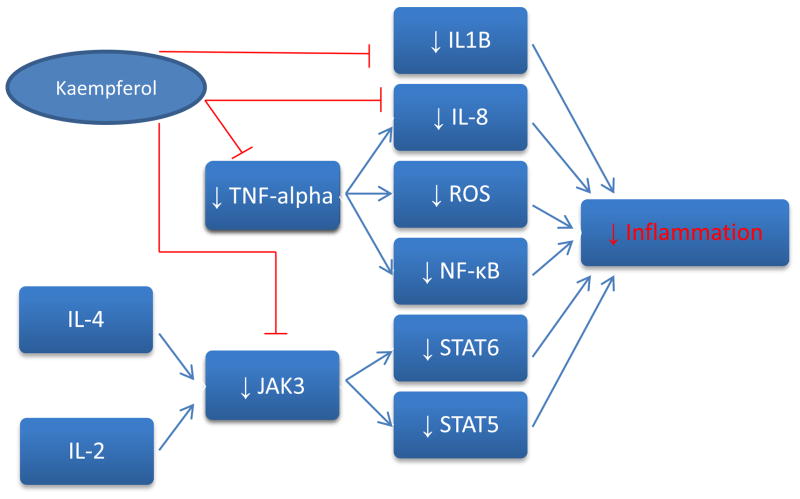
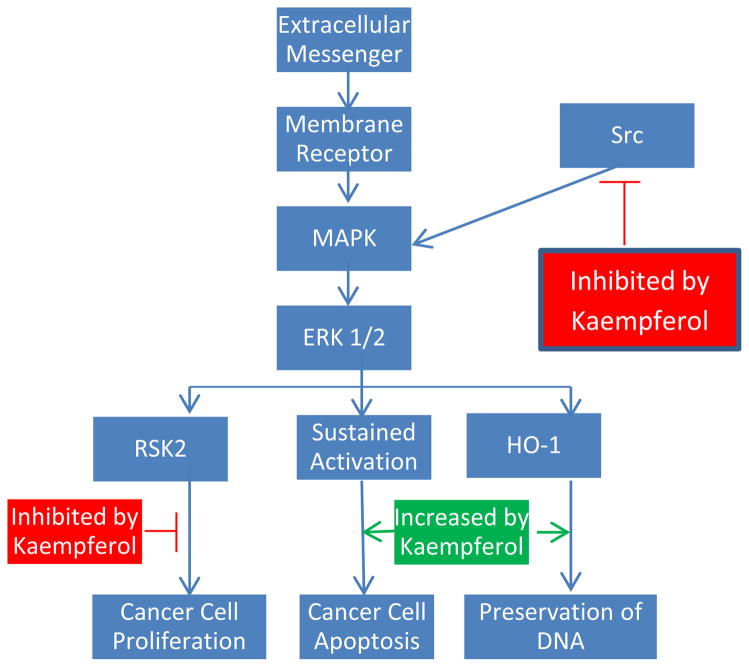
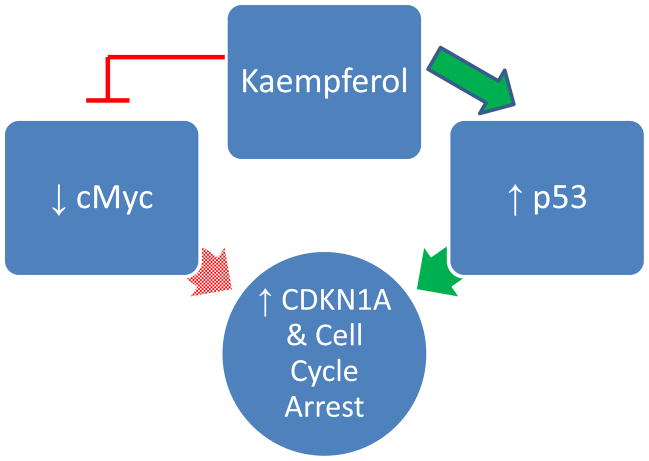
Kaempferol is a polyphenol antioxidant found in fruits and vegetables. Many studies have described the beneficial effects of dietary kaempferol in reducing the risk of chronic diseases, especially cancer. Epidemiological studies have shown an inverse relationship between kaempferol intake and cancer. Kaempferol may help by augmenting the body's antioxidant defence against free radicals, which promote the development of cancer. At the molecular level, kaempferol has been reported to modulate a number of key elements in cellular signal transduction pathways linked to apoptosis, angiogenesis, inflammation, and metastasis. Significantly, kaempferol inhibits cancer cell growth and angiogenesis and induces cancer cell apoptosis, but on the other hand, kaempferol appears to preserve normal cell viability, in some cases exerting a protective effect. The aim of this review is to synthesize information concerning the extraction of kaempferol, as well as to provide insights into the molecular basis of its potential chemo-preventative activities, with an emphasis on its ability to control intracellular signaling cascades that regulate the aforementioned processes. Chemoprevention using nanotechnology to improve the bioavailability of kaempferol is also discussed.
山柰酚是一种存在于水果和蔬菜中的多酚抗氧化剂。许多研究都描述了膳食中山柰酚在降低慢性病(尤其是癌症)风险方面的有益作用。流行病学研究表明,山柰酚的摄入量与癌症呈负相关。山柰酚可能通过增强机体对自由基的抗氧化防御来发挥作用,因为自由基会促进癌症的发展。在分子水平上,据报道,山柰酚可以调节与细胞凋亡、血管生成、炎症和转移相关的细胞信号转导通路中的许多关键因素。值得注意的是,山柰酚能抑制癌细胞生长和血管生成,并诱导癌细胞凋亡,但另一方面,山柰酚似乎能保持正常细胞的活力,在某些情况下发挥保护作用。本综述的目的是综合有关山柰酚提取的信息,并深入了解其潜在化学预防活性的分子基础,重点是控制调节上述过程的细胞内信号级联。还讨论了使用纳米技术提高山柰酚生物利用度的化学预防作用。