School of Life Sciences, Jiangxi Science and Technology Normal University, Nanchang 330013, China.
Biomed Res Int. 2013;2013:907170. doi: 10.1155/2013/907170. Epub 2012 Dec 26.
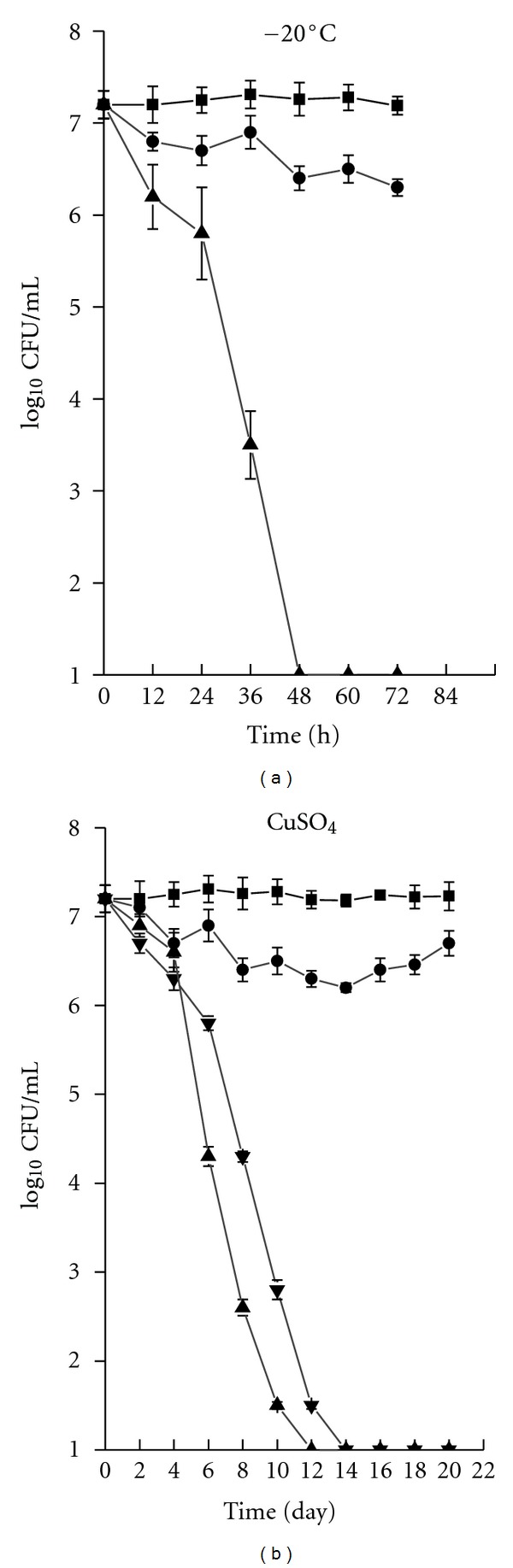
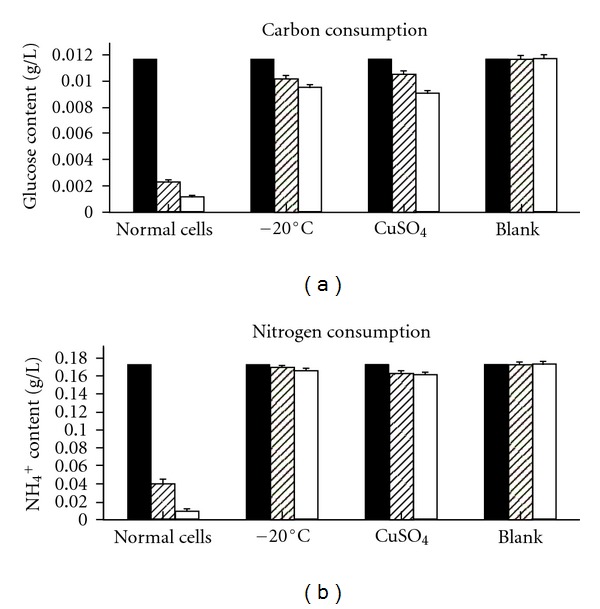
Salmonella typhi is a pathogen that causes the human disease of typhoid fever. The aim of this study was to investigate the viable but nonculturable (VBNC) state of S. typhi. Some samples were stimulated at 4°C or -20°C, while others were induced by different concentrations of CuSO4. Total cell counts remained constant throughout several days by acridine orange direct counting; however, plate counts declined to undetectable levels within 48 hours by plate counting at -20°C. The direct viable counts remained fairly constant at this level by direct viable counting. Carbon and nitrogen materials slowly decreased which indicated that a large population of cells existed in the VBNC state and entered the VBNC state in response to exposure to 0.01 or 0.015 mmol/L CuSO4 for more than 14 or 12 days, respectively. Adding 3% Tween 20 or 1% catalase enabled cells to become culturable again, with resuscitation times of 48 h and 24 h, respectively. The atomic force microscope results showed that cells gradually changed in shape from short rods to coccoids, and decreased in size when they entered the VBNC state. Further animal experiments suggested that resuscitated cells might regain pathogenicity.
伤寒沙门氏菌是一种引起人类伤寒病的病原体。本研究旨在研究伤寒沙门氏菌的活但非可培养状态(VBNC)。一些样品在 4°C 或-20°C 下受到刺激,而另一些则通过不同浓度的 CuSO4 诱导。吖啶橙直接计数显示,在几天内总细胞计数保持不变;然而,在-20°C 下通过平板计数,48 小时内平板计数降至不可检测水平。通过直接活菌计数,直接活菌计数保持在这一水平相当稳定。碳氮材料缓慢减少,表明大量细胞处于 VBNC 状态,并在暴露于 0.01 或 0.015 mmol/L CuSO4 超过 14 或 12 天后分别进入 VBNC 状态。添加 3%吐温 20 或 1%过氧化氢酶可使细胞再次可培养,复苏时间分别为 48 h 和 24 h。原子力显微镜结果表明,当细胞进入 VBNC 状态时,细胞形状逐渐从短杆状变为球菌状,大小减小。进一步的动物实验表明,复苏的细胞可能恢复了致病性。