Neuroscience Research Center (NSRC), Imam Reza Hospital, Tabriz University of Medical Sciences, Tabriz, Iran.
Daru. 2013 Mar 20;21(1):26. doi: 10.1186/2008-2231-21-26.
Considering the role of inflammation in acute cerebrovascular accidents, anti-inflammatory treatment has been considered as an option in cerebrovascular diseases. Regarding the properties of Setarud (IMOD™) in immune regulation, the aim of the present study was to evaluate the role of this medication in treating patients with acute ischemic stroke.
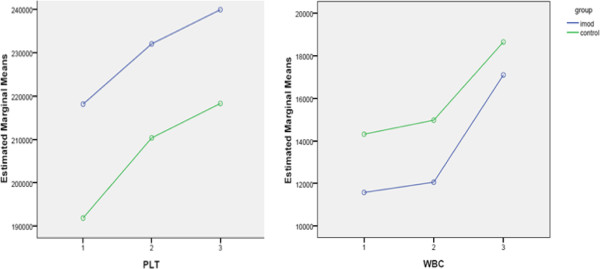
In this randomized clinical trial, 99 patients with their first ever acute ischemic stroke were divided into two groups of IMOD™ (n = 49) and control (n = 50). The control group underwent routine treatment and the intervention group underwent routine treatment plus daily intermittent infusion of IMOD™ (250mg on the first day and then 375mg into DW5% serum during a 30-minute period for 7 days). The serum levels of inflammatory markers were evaluated on the first day (baseline) and on 4th and 7th days. Data were analyzed and the results were compared.
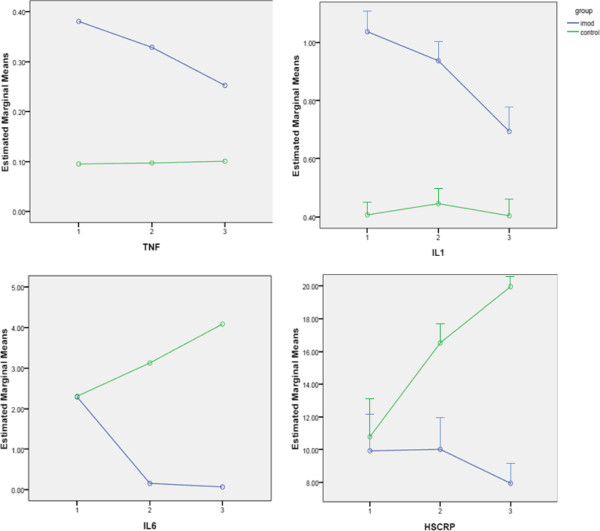
58 males (58.6%) and 41 females (41.4%) with a mean age of 67.00 ± 8.82 years, who had their first ever stroke attack, were enrolled in this trial. Treatment with IMOD™ showed a decreasing trend in IL-6 levels compared to the control group (p = 0.04). In addition, the treatment resulted in the control of increasing serum levels of hsCRP after 7 days compared to the control group (p = 0.02). There was an insignificant decrease in TNF-α and IL-1 levels in the IMOD™ group. Considering the prominent role of inflammation after an ischemic cerebral damage, it appears that treatment with IMOD™ improves the inflammatory profile. Therefore, IMOD™ (Setarud) might be considered as a therapeutic option in the acute ischemic stroke. However, future studies are necessary on its long-term results and clinical efficacy.
鉴于炎症在急性脑血管病中的作用,抗炎治疗已被认为是脑血管病的一种治疗选择。鉴于 Setarud(IMOD™)在免疫调节方面的特性,本研究旨在评估该药物在治疗急性缺血性脑卒中患者中的作用。
在这项随机临床试验中,99 名首次发生急性缺血性脑卒中的患者被分为两组:IMOD™(n=49)组和对照组(n=50)。对照组接受常规治疗,干预组在常规治疗的基础上每日间歇性输注 IMOD™(第 1 天 250mg,然后在 30 分钟内输注 375mg 至 DW5%血清中,持续 7 天)。在第 1 天(基线)、第 4 天和第 7 天评估血清炎症标志物水平。对数据进行分析并比较结果。
本试验共纳入 58 名男性(58.6%)和 41 名女性(41.4%),平均年龄为 67.00±8.82 岁,均为首次发生卒中发作。与对照组相比,IMOD™治疗组的 IL-6 水平呈下降趋势(p=0.04)。此外,与对照组相比,IMOD™治疗组在第 7 天可控制 hsCRP 血清水平升高(p=0.02)。IMOD™组 TNF-α和 IL-1 水平无明显下降。鉴于缺血性脑损伤后炎症的显著作用,IMOD™治疗似乎改善了炎症谱。因此,IMOD™(Setarud)可能被认为是急性缺血性脑卒中的一种治疗选择。然而,需要进一步研究其长期结果和临床疗效。