Davis Janet L, Haft Payman, Hartley Kristen
Bascom Palmer Eye Institute, University of Miami Miller School of Medicine, 900 NW 17th ST, Miami, FL 33136, USA.
J Ophthalmic Inflamm Infect. 2013 Jan 21;3(1):17. doi: 10.1186/1869-5760-3-17.
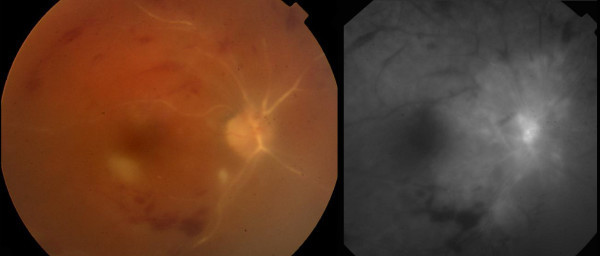
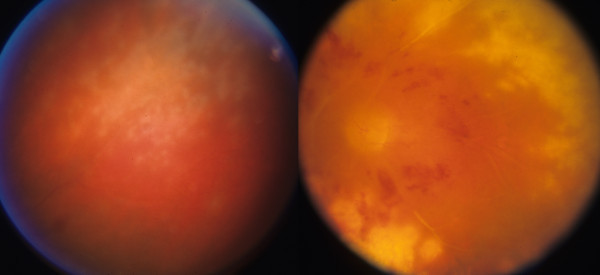
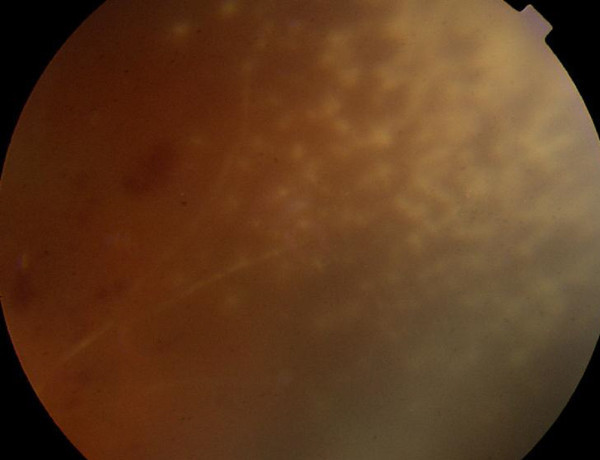
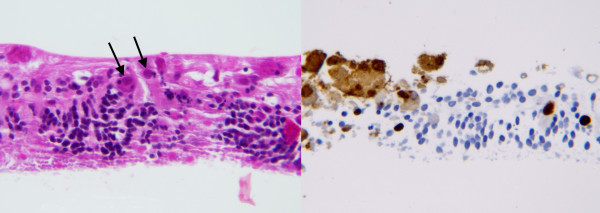
Five of 7 (71%) elderly immunocompetent patients with cytomegalovirus retinitis had retinal arteriolar occlusions versus 2 of 8 (25%) elderly immunocompromised patients and 1 of 19 (5%) younger HIV-infected patients. Compared to HIV-infected patients, elderly patients were more likely to have occlusive events, neovascularization or hemorrhage, and underlying vasculopathy. The purpose of this study is to report the novel finding of extensive retinal arteriolar occlusions and neovascularization in immunocompetent patients with cytomegalovirus retinitis. This is a retrospective observational cohort study of cytomegalovirus retinitis (CMVR) in a university setting. Seven patients were elderly but not immunocompromised, 8 were elderly and iatrogenically immunocompromised, and 16 were HIV-infected. All patients underwent polymerase chain reaction testing of intraocular fluid. Primary outcome measure was visual acuity. Secondary outcome measures were vascular occlusions, ischemic complications, and response to treatment.
Mean age was 73, 70, and 41 years for immunocompetent, immunocompromised, and HIV-infected patients, respectively. Diabetes and vascular disease were common in the elderly. Vision loss to less than 5/200 occurred in 50% of the immunocompetent elderly patients, and 17% of CMV eyes in immunocompromised and HIV patients. Occlusion of the entire retinal vasculature occurred in 4/7 (57%) of immunocompetent patients despite lack of Zone I involvement, and rubeosis occurred in three, disc neovascularization in one, and vitreous hemorrhage in two patients. Vascular occlusive events were less common in immunocompromised patients and rare in the HIV-infected.
CMVR in non-HIV-infected elderly patients is associated with retinal arteriolar occlusions. An intact host immune response may increase damage to retinal vessels. Prompt diagnosis may avert catastrophic vision loss.
7例(71%)免疫功能正常的老年巨细胞病毒性视网膜炎患者中有5例发生视网膜小动脉阻塞,而8例免疫功能低下的老年患者中有2例(25%),19例年轻的HIV感染患者中有1例(5%)。与HIV感染患者相比,老年患者更易发生阻塞性事件、新生血管形成或出血以及潜在的血管病变。本研究的目的是报告免疫功能正常的巨细胞病毒性视网膜炎患者中广泛存在视网膜小动脉阻塞和新生血管形成这一新颖发现。这是一项在大学环境中对巨细胞病毒性视网膜炎(CMVR)进行的回顾性观察队列研究。7例患者为老年但免疫功能正常,8例为老年且医源性免疫功能低下,16例为HIV感染。所有患者均接受了眼内液的聚合酶链反应检测。主要结局指标是视力。次要结局指标是血管阻塞、缺血性并发症以及对治疗的反应。
免疫功能正常、免疫功能低下和HIV感染患者的平均年龄分别为73岁、70岁和41岁。糖尿病和血管疾病在老年人中很常见。免疫功能正常的老年患者中有50%视力丧失至低于5/200,免疫功能低下和HIV感染患者的CMV感染眼中有17%出现这种情况。尽管未累及I区,但4/7(57%)免疫功能正常的患者发生了整个视网膜血管系统的阻塞,3例出现虹膜新生血管,1例出现视盘新生血管,2例出现玻璃体积血。血管阻塞事件在免疫功能低下的患者中较少见,在HIV感染患者中罕见。
非HIV感染的老年患者中的CMVR与视网膜小动脉阻塞有关。完整的宿主免疫反应可能会增加对视网膜血管的损害。及时诊断可避免灾难性的视力丧失。