Whitney G Adam, Mera Hisashi, Weidenbecher Mark, Awadallah Amad, Mansour Joseph M, Dennis James E
Department of Biomedical Engineering, Case Western Reserve University , Cleveland, Ohio. ; Department of Orthopaedics, Case Western Reserve University , Cleveland, Ohio. ; Hope Heart Matrix Biology Program, Benaroya Research Institute , Seattle, Washington.
Biores Open Access. 2012 Aug;1(4):157-65. doi: 10.1089/biores.2012.0231.
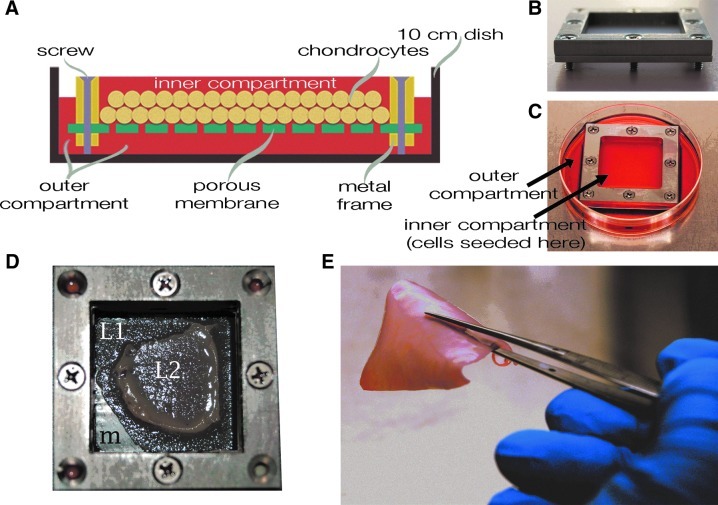
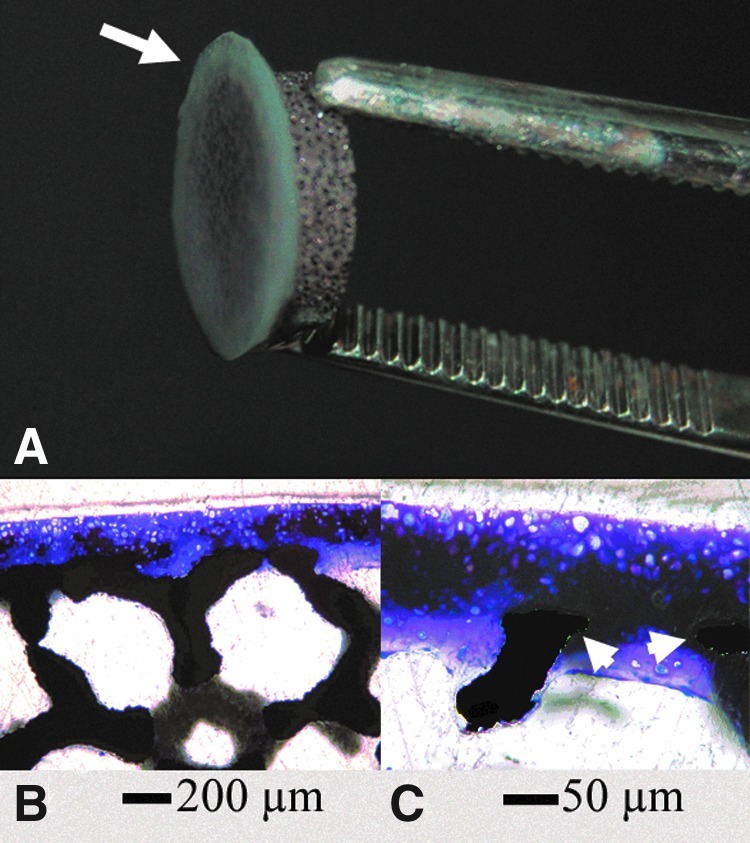
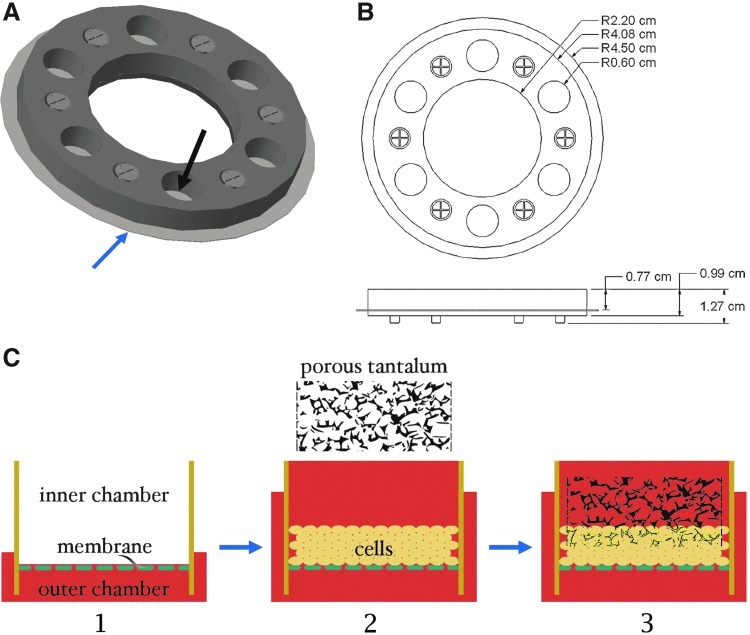
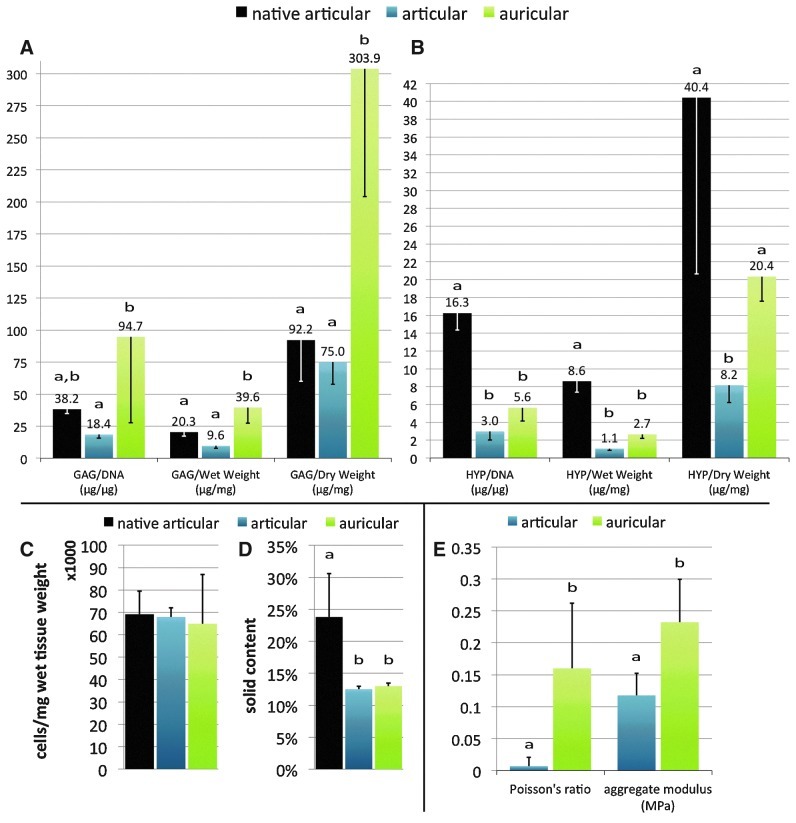
Scaffold-free cartilage engineering techniques may provide a simple alternative to traditional methods employing scaffolds. We previously reported auricular chondrocyte-derived constructs for use in an engineered trachea model; however, the construct generation methods were not reported in detail. In this study, methods for cartilage construct generation from auricular and articular cell sources are described in detail, and the resulting constructs are compared for use in a joint resurfacing model. Attachment of cartilage sheets to porous tantalum is also investigated as a potential vehicle for future attachment to subchondral bone. Large scaffold-free cartilage constructs were produced from culture-expanded chondrocytes from skeletally mature rabbits, and redifferentiated in a chemically-defined culture medium. Auricular constructs contained more glycosaminoglycan (39.6±12.7 vs. 9.7±1.9 μg/mg wet weight, mean and standard deviation) and collagen (2.7±0.45 vs. 1.1±0.2 μg/mg wet weight, mean and standard deviation) than articular constructs. Aggregate modulus was also higher for auricular constructs vs. articular constructs (0.23±0.07 vs. 0.12±0.03 MPa, mean and standard deviation). Attachment of constructs to porous tantalum was achieved by neocartilage ingrowth into tantalum pores. These results demonstrate that large scaffold-free neocartilage constructs can be produced from mature culture-expanded chondrocytes in a chemically-defined medium, and that these constructs can be attached to porous tantalum.
无支架软骨工程技术可能为采用支架的传统方法提供一种简单的替代方案。我们之前报道了用于工程化气管模型的耳廓软骨细胞衍生构建体;然而,构建体的生成方法并未详细报道。在本研究中,详细描述了从耳廓和关节细胞来源生成软骨构建体的方法,并比较了所得构建体在关节表面置换模型中的应用。还研究了软骨片与多孔钽的附着情况,将其作为未来附着于软骨下骨的潜在载体。从骨骼成熟兔子的培养扩增软骨细胞中制备了大型无支架软骨构建体,并在化学成分明确的培养基中进行再分化。耳廓构建体比关节构建体含有更多的糖胺聚糖(湿重分别为39.6±12.7与9.7±1.9μg/mg,均值和标准差)和胶原蛋白(湿重分别为2.7±0.45与1.1±0.2μg/mg,均值和标准差)。耳廓构建体的聚合模量也高于关节构建体(分别为0.23±0.07与0.12±0.03MPa,均值和标准差)。通过新软骨向内生长到钽孔中实现构建体与多孔钽的附着。这些结果表明,大型无支架新软骨构建体可以在化学成分明确的培养基中由成熟的培养扩增软骨细胞产生,并且这些构建体可以附着于多孔钽。