Department of Neurosurgery, Qilu Hospital, Shandong University, Jinan, People's Republic of China.
PLoS One. 2013;8(3):e58490. doi: 10.1371/journal.pone.0058490. Epub 2013 Mar 14.
SPARC is a key determinant of invasion and metastasis in some tumors, such as gliomas, melanomas and prostate tumors. SPARC can change the composition and structure of the matrix and promote angiogenesis; these effects are closely related to clinical stage and the prognosis of tumors such as meningiomas. However, little is known about the expression of SPARC in intracranial aneurysms. The goal of this study was to establish the role of SPARC in human intracranial aneurysms.
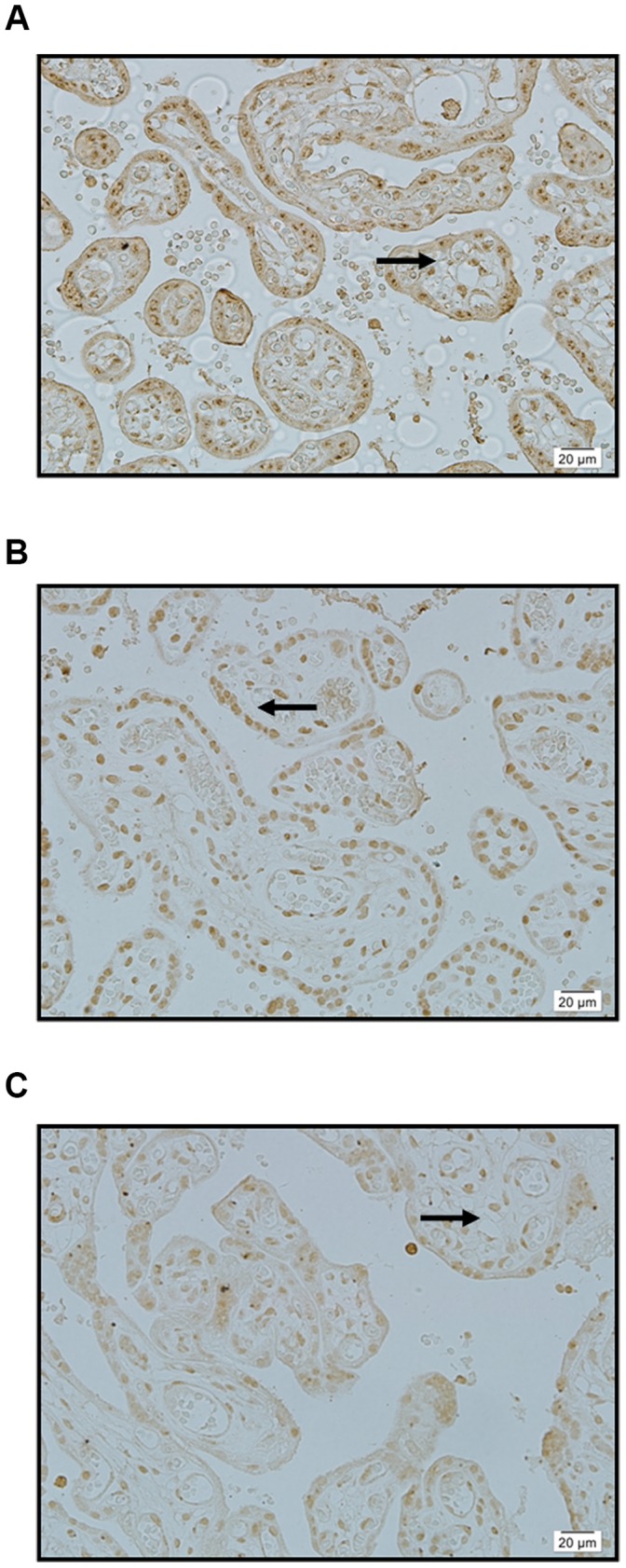
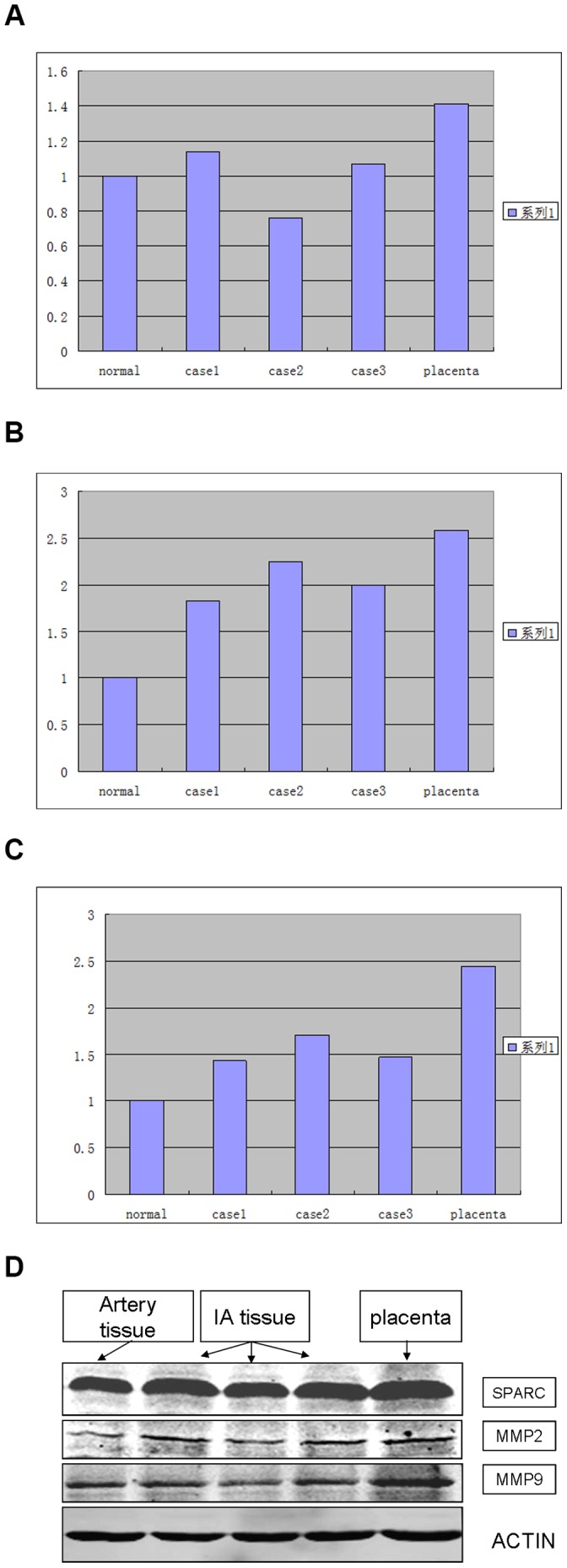
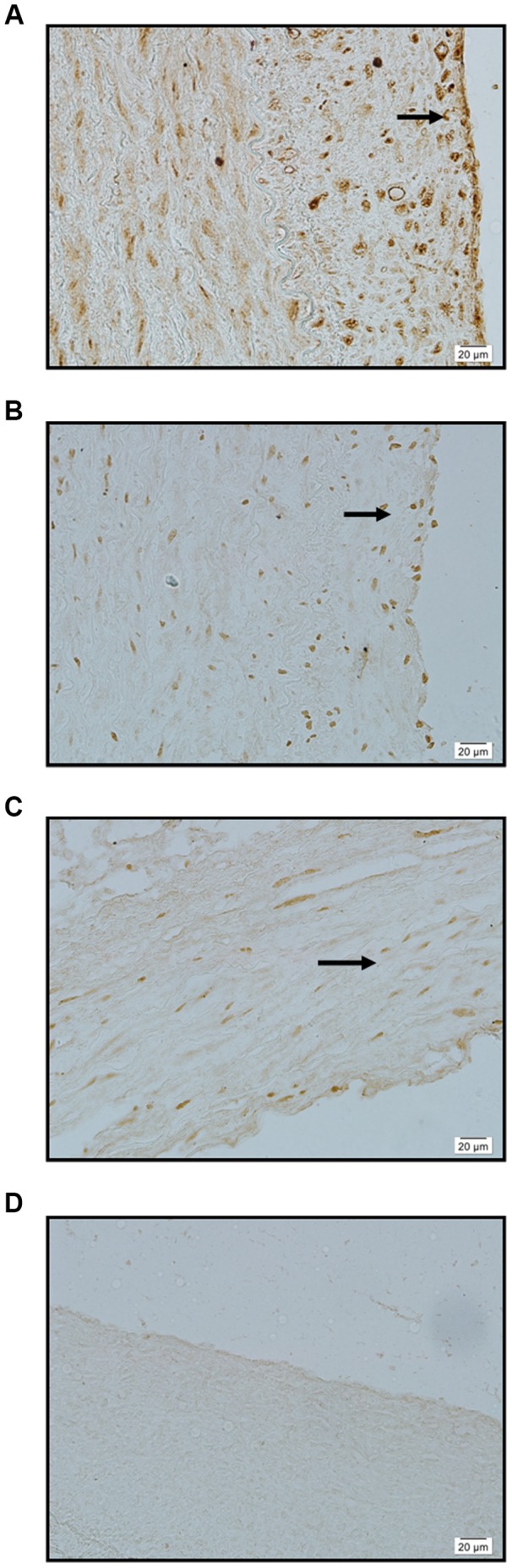
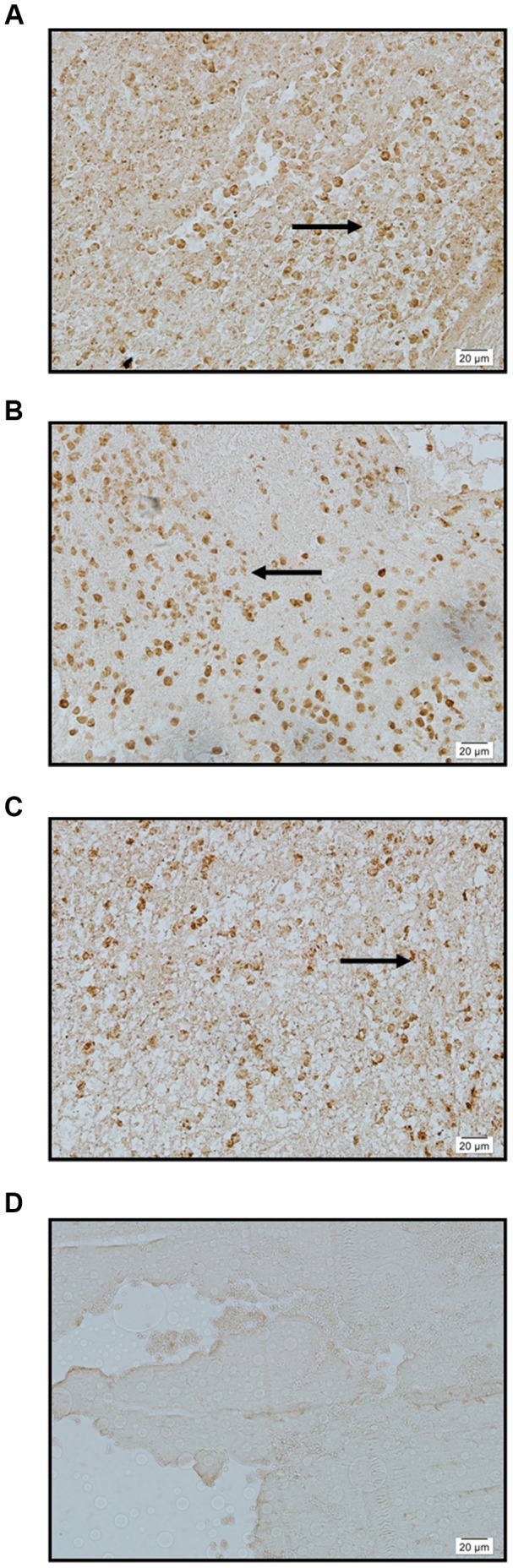
Thirty-one intracranial aneurysms were immunohistochemically stained for SPARC, MMP-2 and MMP-9. As controls, normal Circle of Willis arteries were similarly immunostained. All specimens were retrieved during autopsies and were embedded in paraffin. To evaluate the expression levels of SPARC, MMP-2 and MMP-9, western blotting was also performed in three available intracranial aneurysm specimens. The limited availability of fresh intracranial aneurysm tissue was the result of the majority of patients choosing endovascular embolization.
The results showed that SPARC, MMP-2 and MMP-9 were strongly expressed in intracranial aneurysm tissues; however, these proteins were expressed minimally or not at all in normal Circle of Willis arteries. The western blot results showed that the expression levels of SPARC, MMP-2 and MMP-9 were significantly up-regulated in intracranial aneurysms relative to the expression levels in the normal Circle of Willis arteries. Data analysis showed that SPARC was significantly correlated with MMP-2 and MMP-9, also with age and risk factors but not with the Hunt-Hess grade or with sex.
The results indicate that SPARC is widely expressed in human intracranial aneurysms, and its expression correlates with MMP-2 and MMP-9 expression, age and risk factors but not with the Hunt-Hess grade. The results of this study suggest that SPARC has a pathogenic role in the alteration of the extracellular matrix of intracranial arteries during aneurysm formation.
在一些肿瘤中,如神经胶质瘤、黑色素瘤和前列腺肿瘤,富含半胱氨酸的酸性分泌蛋白(SPARC)是侵袭和转移的关键决定因素。SPARC 可以改变基质的组成和结构并促进血管生成;这些作用与脑膜瘤等肿瘤的临床分期和预后密切相关。然而,关于 SPARC 在颅内动脉瘤中的表达知之甚少。本研究旨在确定 SPARC 在人脑内动脉瘤中的作用。
对 31 例颅内动脉瘤进行 SPARC、MMP-2 和 MMP-9 的免疫组织化学染色。正常Willis 环动脉作为对照,同样进行免疫染色。所有标本均取自尸检,并石蜡包埋。为了评估 SPARC、MMP-2 和 MMP-9 的表达水平,还对 3 例可获得的颅内动脉瘤标本进行了 Western blot 检测。由于大多数患者选择血管内栓塞治疗,因此只能获得有限的新鲜颅内动脉瘤组织。
结果显示 SPARC、MMP-2 和 MMP-9 在颅内动脉瘤组织中表达强烈;然而,这些蛋白在正常 Willis 环动脉中表达极少或不表达。Western blot 结果显示,颅内动脉瘤中 SPARC、MMP-2 和 MMP-9 的表达水平明显高于正常 Willis 环动脉。数据分析表明,SPARC 与 MMP-2 和 MMP-9 显著相关,与年龄和危险因素相关,但与 Hunt-Hess 分级或性别无关。
研究结果表明 SPARC 在人脑内动脉瘤中广泛表达,其表达与 MMP-2 和 MMP-9 表达、年龄和危险因素相关,但与 Hunt-Hess 分级无关。本研究结果提示 SPARC 在颅内动脉细胞外基质改变过程中可能具有致病作用,导致动脉瘤形成。