Institute of Environmental, Health, Oregon Health and Sciences University, Beaverton, Oregon 97006, USA.
Biochemistry. 2013 Apr 16;52(15):2586-96. doi: 10.1021/bi4002248. Epub 2013 Apr 5.
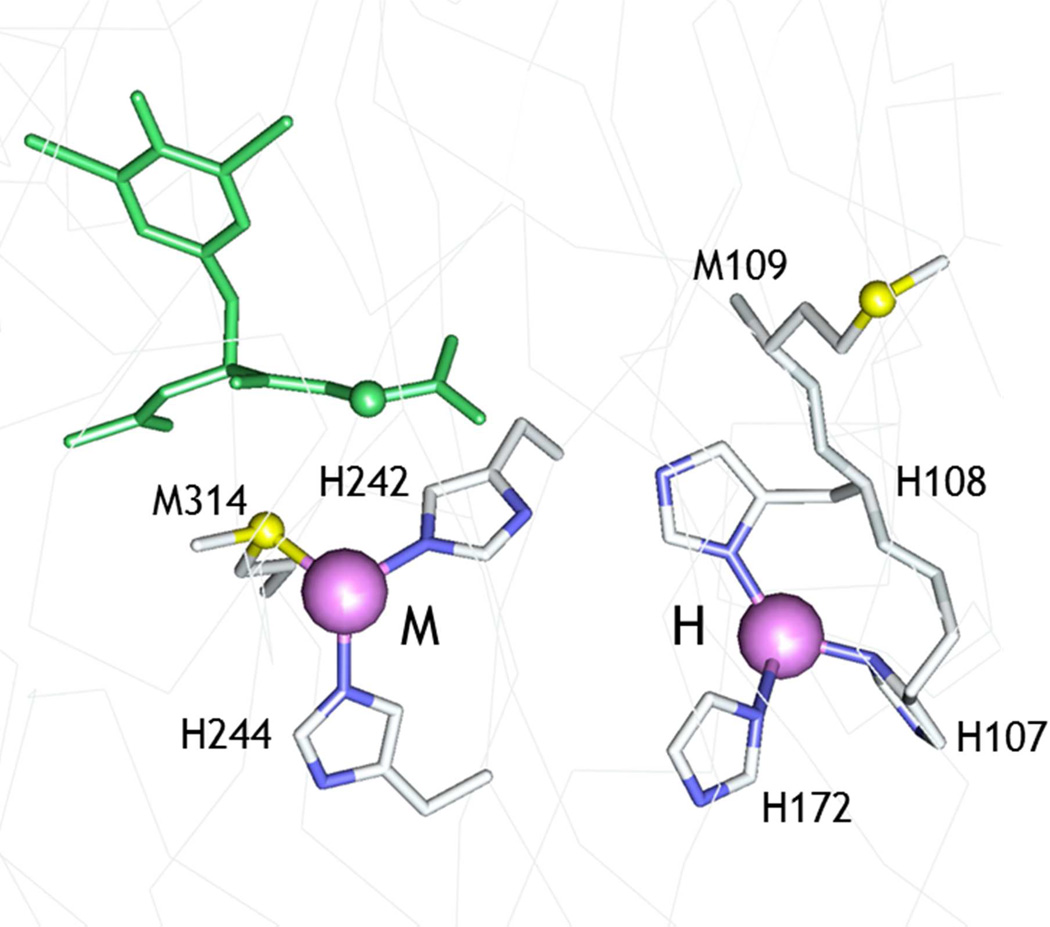
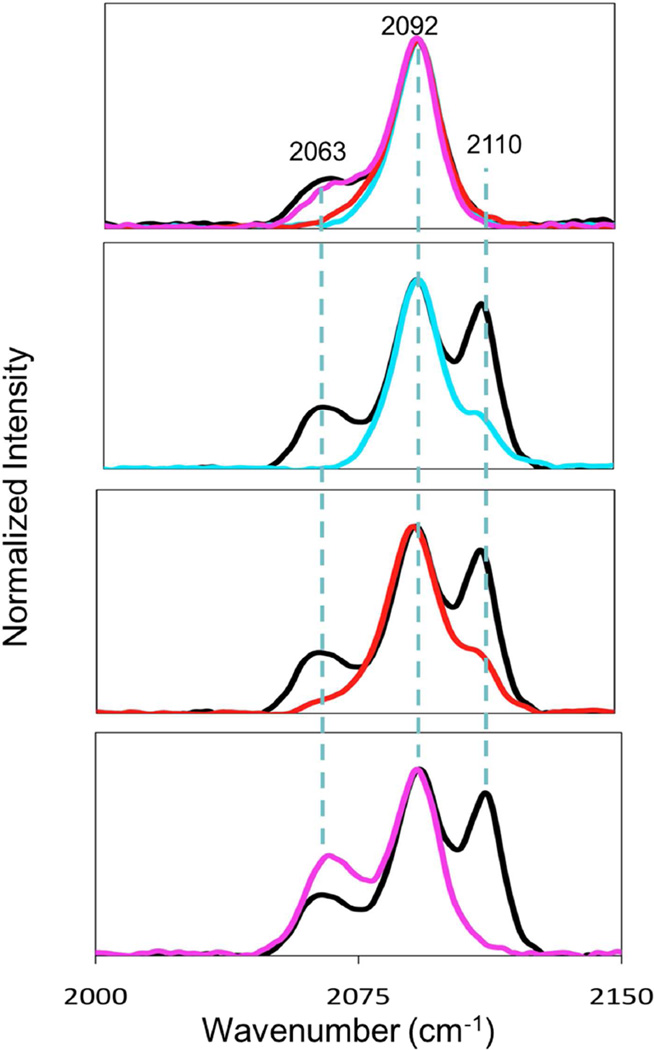
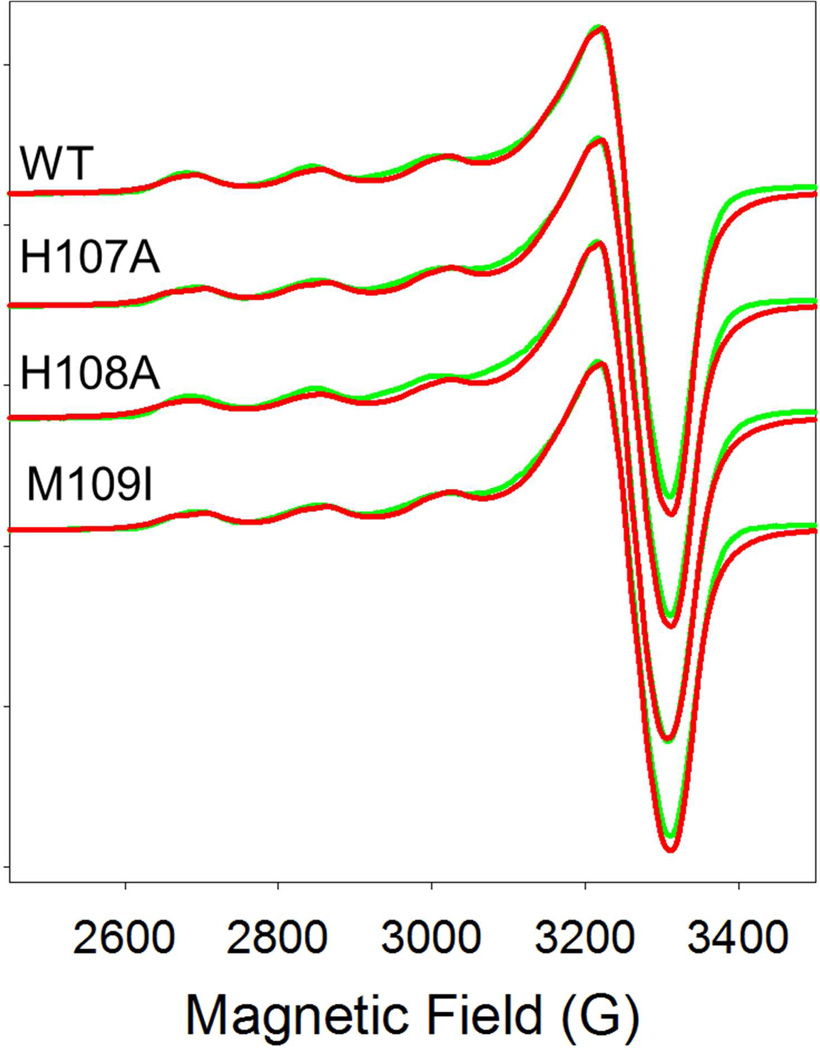
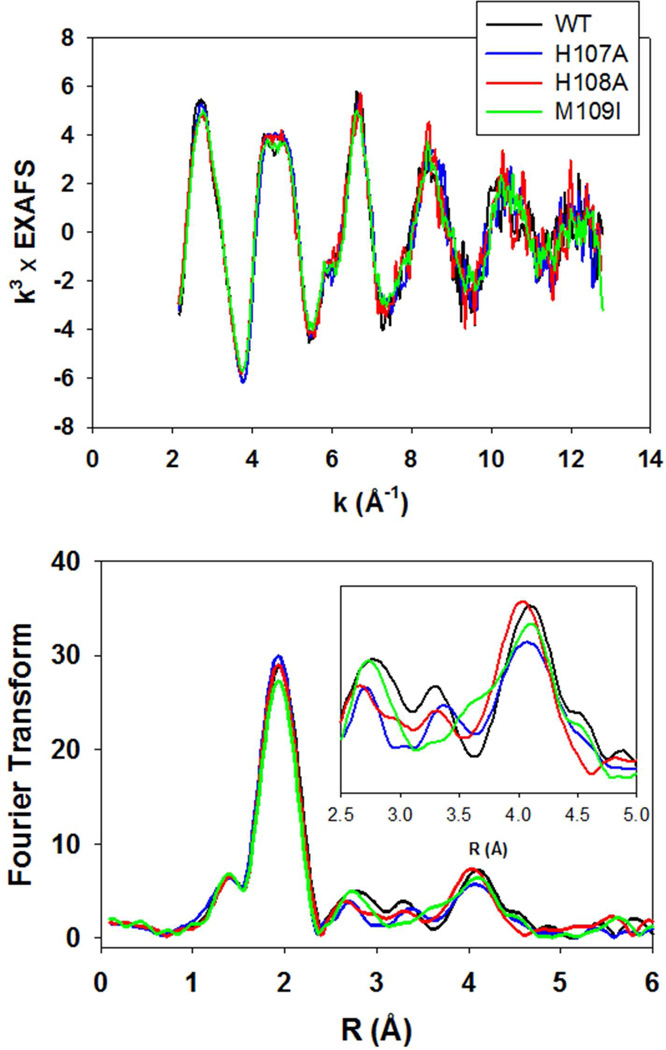
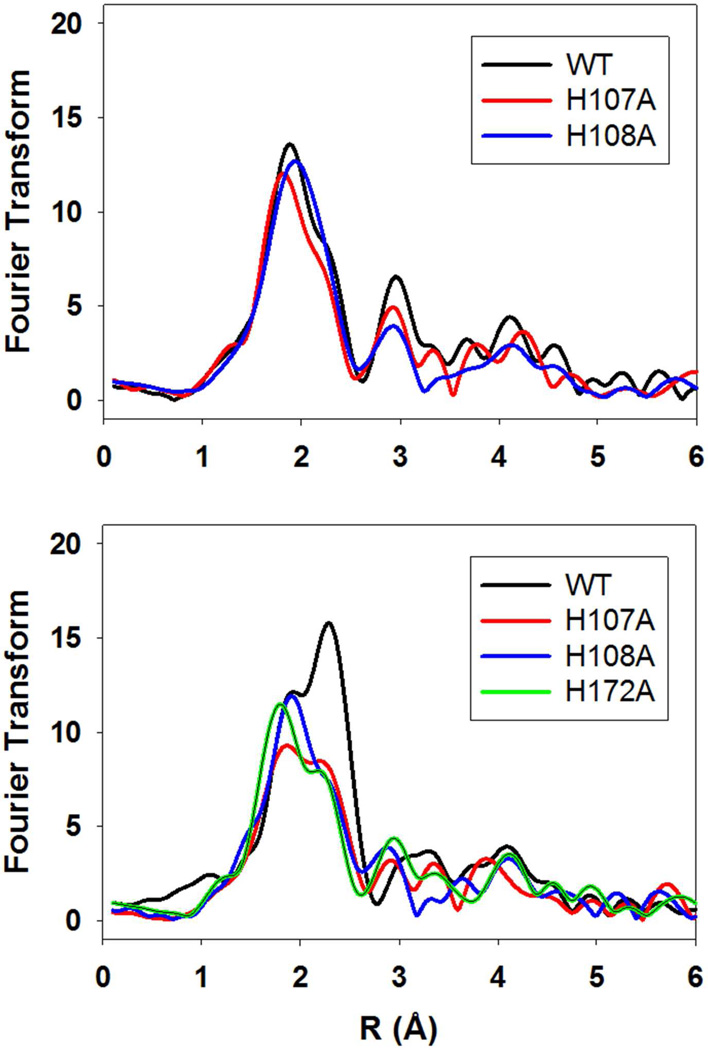
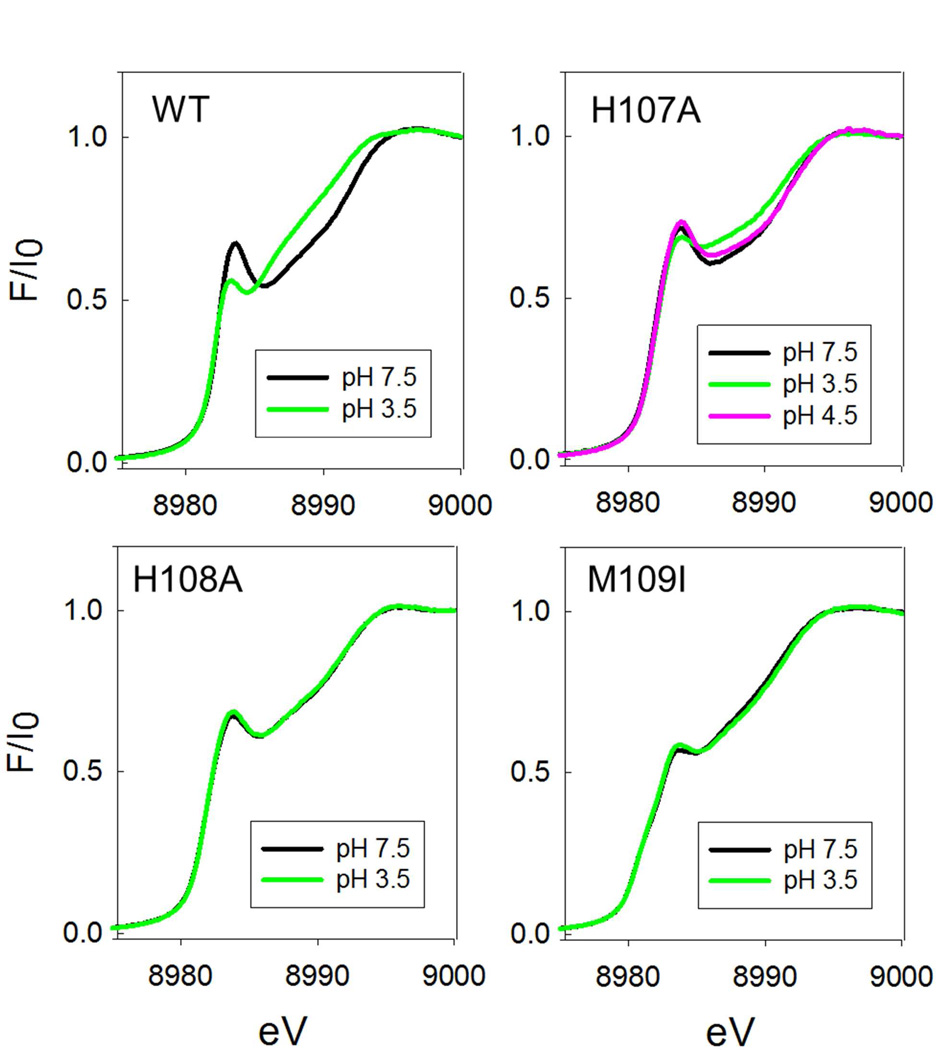
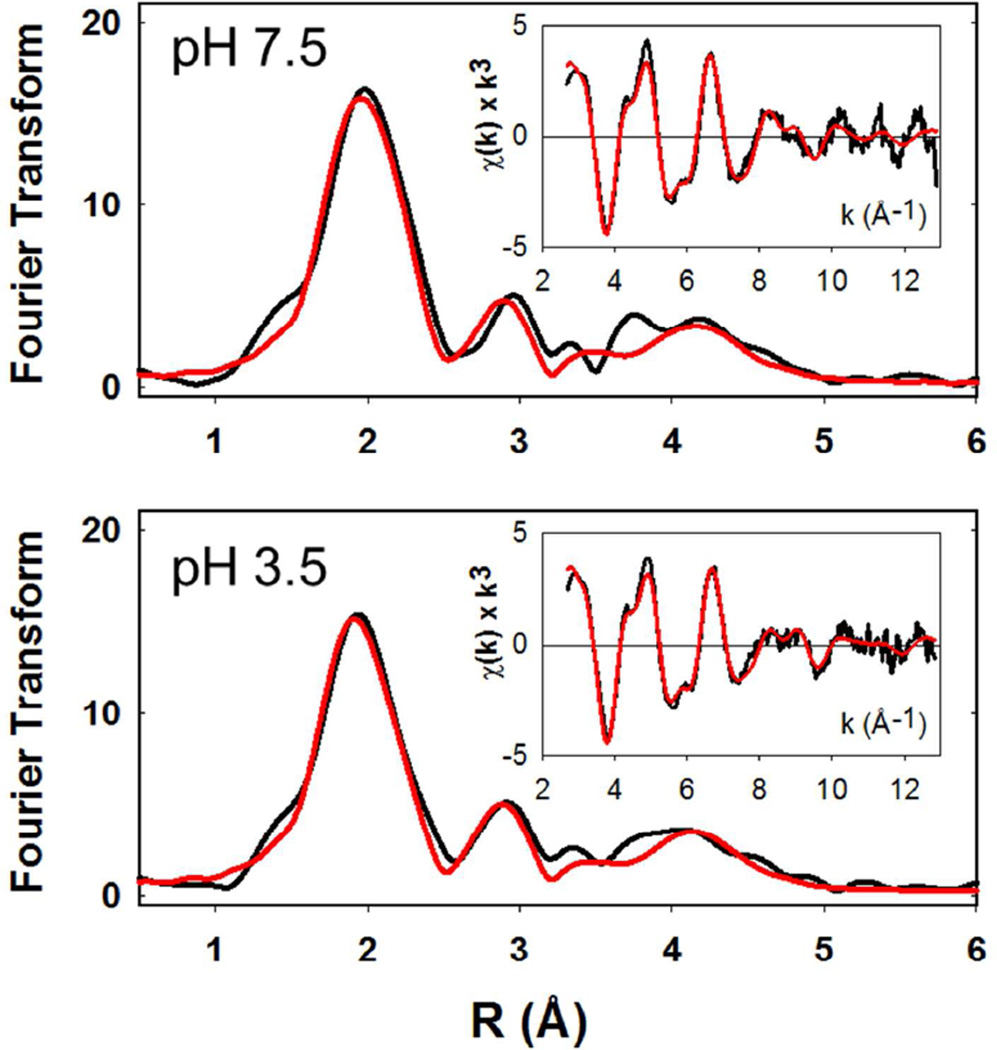
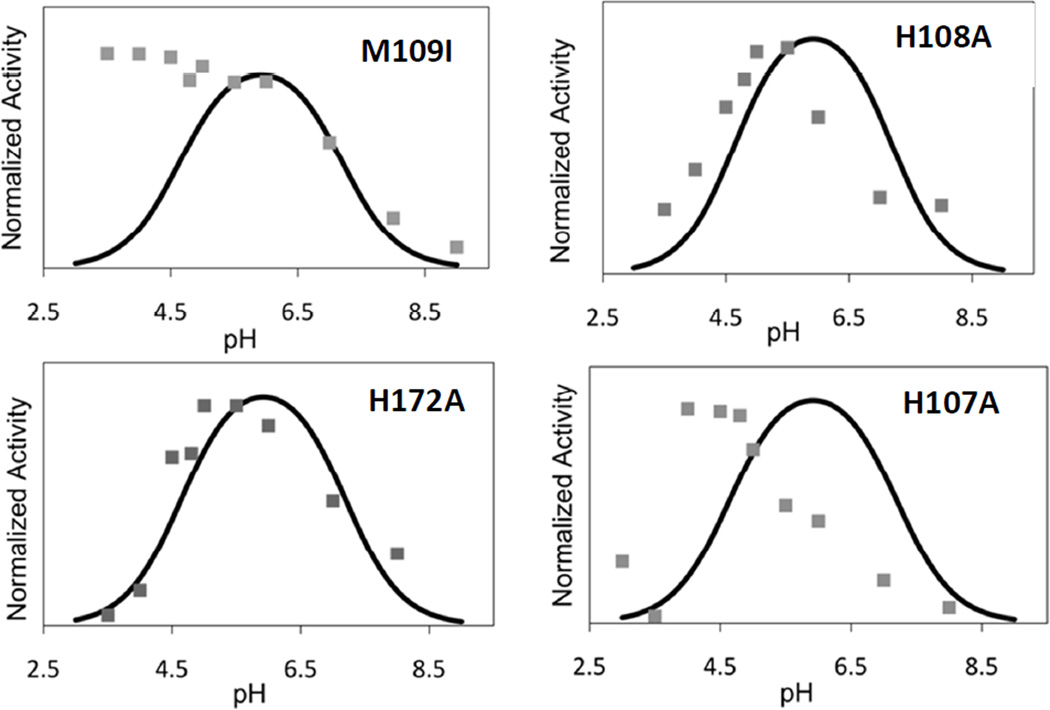
Peptidylglycine monooxygenase is a copper-containing enzyme that catalyzes the amidation of neuropeptides hormones, the first step of which is the conversion of a glycine-extended pro-peptide to its α-hydroxyglcine intermediate. The enzyme contains two mononuclear Cu centers termed CuM (ligated to imidazole nitrogens of H242, H244 and the thioether S of M314) and CuH (ligated to imidazole nitrogens of H107, H108, and H172) with a Cu-Cu separation of 11 Å. During catalysis, the M site binds oxygen and substrate, and the H site donates the second electron required for hydroxylation. The WT enzyme shows maximum catalytic activity at pH 5.8 and undergoes loss of activity at lower pHs due to a protonation event with a pKA of 4.6. Low pH also causes a unique structural transition in which a new S ligand coordinates to copper with an identical pKA, manifest by a large increase in Cu-S intensity in the X- ray absorption spectroscopy. In previous work (Bauman, A. T., Broers, B. A., Kline, C. D., and Blackburn, N. J. (2011) Biochemistry 50, 10819-10828), we tentatively assigned the new Cu-S interaction to binding of M109 to the H-site (part of an HHM conserved motif common to all but one member of the family). Here we follow up on these findings via studies on the catalytic activity, pH-activity profiles, and spectroscopic (electron paramagnetic resonance, XAS, and Fourier transform infrared) properties of a number of H-site variants, including H107A, H108A, H172A, and M109I. Our results establish that M109 is indeed the coordinating ligand and confirm the prediction that the low pH structural transition with associated loss of activity is abrogated when the M109 thioether is absent. The histidine mutants show more complex behavior, but the almost complete lack of activity in all three variants coupled with only minor differences in their spectroscopic properties suggests that unique structural elements at H are critical for functionality. The data suggest a more general utility for the HHM motif as a copper- and pH-dependent conformational switch.
肽基甘氨酸单加氧酶是一种含铜酶,能够催化神经肽激素的酰胺化,其第一步是将甘氨酸延伸的前肽转化为α-羟甘氨酸中间体。该酶包含两个单核铜中心,分别称为 CuM(与 H242、H244 的咪唑氮和 M314 的硫醚结合)和 CuH(与 H107、H108 和 H172 的咪唑氮结合),铜-铜分离距离为 11 Å。在催化过程中,M 位点结合氧和底物,而 H 位点提供羟化所需的第二个电子。WT 酶在 pH 5.8 时表现出最大的催化活性,但由于质子化事件,在较低 pH 值下活性丧失,质子化 pKA 为 4.6。低 pH 值还会导致一种独特的结构转变,其中一个新的 S 配体与铜配位,具有相同的 pKA,表现在 X 射线吸收光谱中 Cu-S 强度的大幅增加。在之前的工作中(Bauman, A. T., Broers, B. A., Kline, C. D., and Blackburn, N. J. (2011) Biochemistry 50, 10819-10828),我们暂定将新的 Cu-S 相互作用归因于 M109 与 H 位点的结合(这是一个 HHM 保守基序的一部分,该基序存在于该家族除一个成员之外的所有成员中)。在这里,我们通过对 H 位点变体(包括 H107A、H108A、H172A 和 M109I)的催化活性、pH 活性曲线和光谱(电子顺磁共振、X 射线吸收光谱和傅里叶变换红外光谱)特性的研究,对这些发现进行了跟进。我们的结果证实了 M109 确实是配位配体,并证实了当 M109 硫醚不存在时,低 pH 值结构转变及其相关的活性丧失会被消除的预测。组氨酸突变体表现出更复杂的行为,但在所有三个变体中几乎完全缺乏活性,并且其光谱特性只有很小的差异,这表明 H 处的独特结构元素对于功能至关重要。数据表明,HHM 基序作为一种铜依赖性和 pH 依赖性构象开关具有更普遍的用途。