Geethanjali S, Subash Anitha
Department of Biochemistry, Biotechnology and Bioinformatics, Avinashilingam Institute of Home Science and Higher Education for Women, Coimbatore, Tamil Nadu 641 043, India.
Enzyme Res. 2013;2013:874050. doi: 10.1155/2013/874050. Epub 2013 Feb 27.
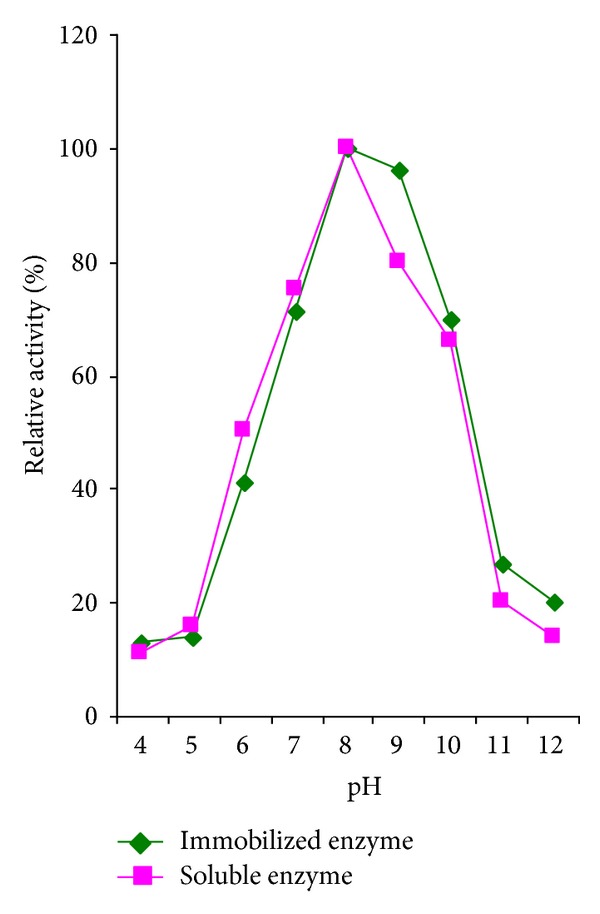
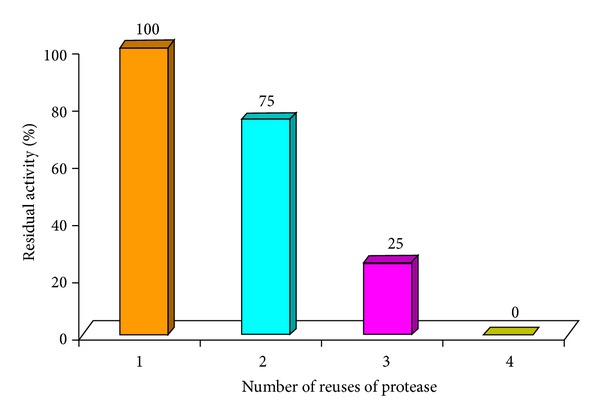
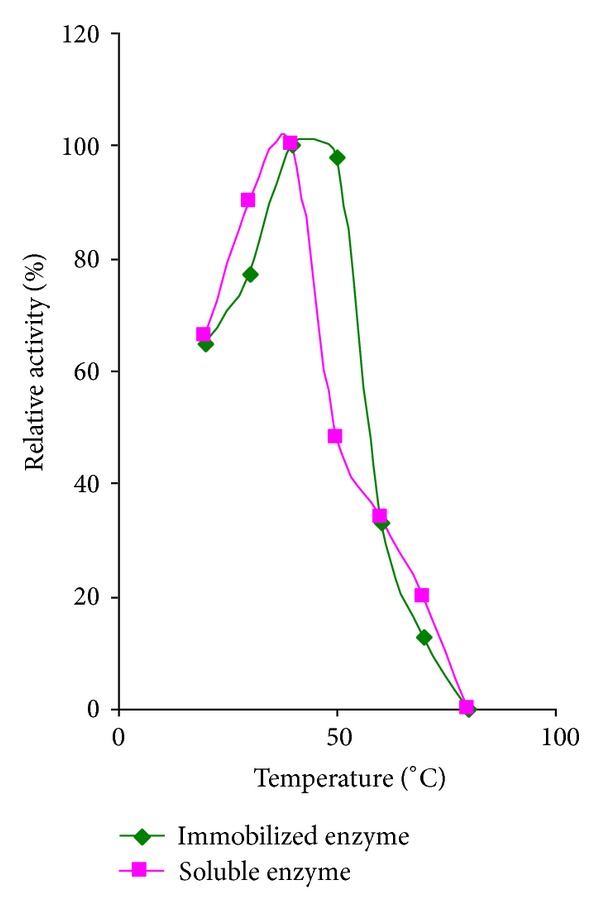
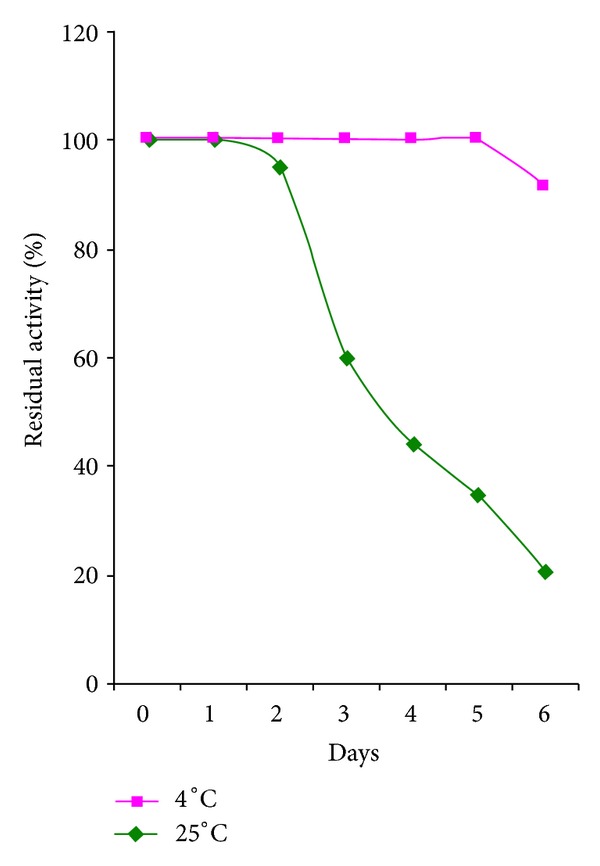
The purified fish visceral protease enzyme was immobilized by using various concentrations of sodium alginate and calcium chloride to optimize the best concentration for the formation of the beads. Then it was characterized by assaying the optimal pH, temperature, storage stability and reusability. The results on immobilization with sodium alginate and calcium chloride showed that a combination of 2% sodium alginate and 0.3 M calcium chloride weas found to be the optimum concentration for the formation of spherical and stable beads, this gave a maximal entrapped activity of 48.31%, and there was no change in the optimum pH 8.0 and temperature 40°C of protease before and after entrapment. The results on stability and reusability indicated that it was stable at 4°C retaining 100% residual activity after 5 days of storage and 67% loss of activity after ten days of storage and it retained 100% residual activity on the first reuse, 75% residual activity on the second reuse, 25% residual activity on the third use and complete loss in the activity on the fourth reuse.
使用不同浓度的海藻酸钠和氯化钙固定纯化的鱼内脏蛋白酶,以优化形成珠子的最佳浓度。然后通过测定最佳pH值、温度、储存稳定性和可重复使用性对其进行表征。用海藻酸钠和氯化钙固定的结果表明,发现2%海藻酸钠和0.3M氯化钙的组合是形成球形且稳定珠子的最佳浓度,这给出了48.31%的最大包埋活性,并且包埋前后蛋白酶的最佳pH值8.0和温度40°C没有变化。稳定性和可重复使用性的结果表明,它在4°C下稳定,储存5天后保留100%的残余活性,储存10天后活性损失67%,第一次重复使用时保留100%的残余活性,第二次重复使用时保留75%的残余活性,第三次使用时保留25%的残余活性,第四次重复使用时活性完全丧失。