Jimbow Kowichi, Ishii-Osai Yasue, Ito Shosuke, Tamura Yasuaki, Ito Akira, Yoneta Akihiro, Kamiya Takafumi, Yamashita Toshiharu, Honda Hiroyuki, Wakamatsu Kazumasa, Murase Katsutoshi, Nohara Satoshi, Nakayama Eiichi, Hasegawa Takeo, Yamamoto Itsuo, Kobayashi Takeshi
Institute of Dermatology & Cutaneous Sciences, 1-27 Odori West 17, Chuo-ku, Sapporo 060-0042, Japan ; Department of Dermatology, School of Medicine, Sapporo Medical University, South 1 West 16, Chuo-ku, Sapporo 060-8556, Japan.
J Skin Cancer. 2013;2013:742925. doi: 10.1155/2013/742925. Epub 2013 Feb 21.
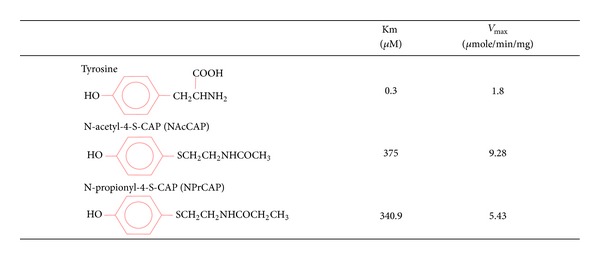
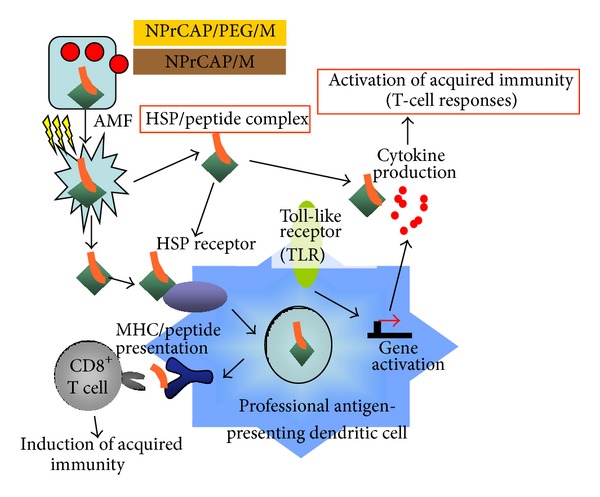
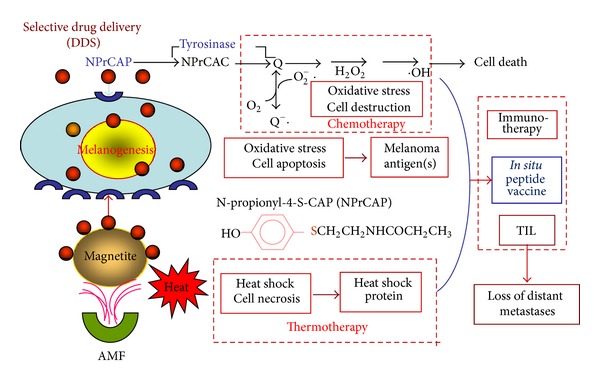
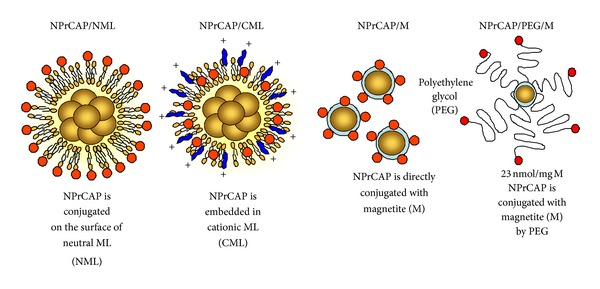
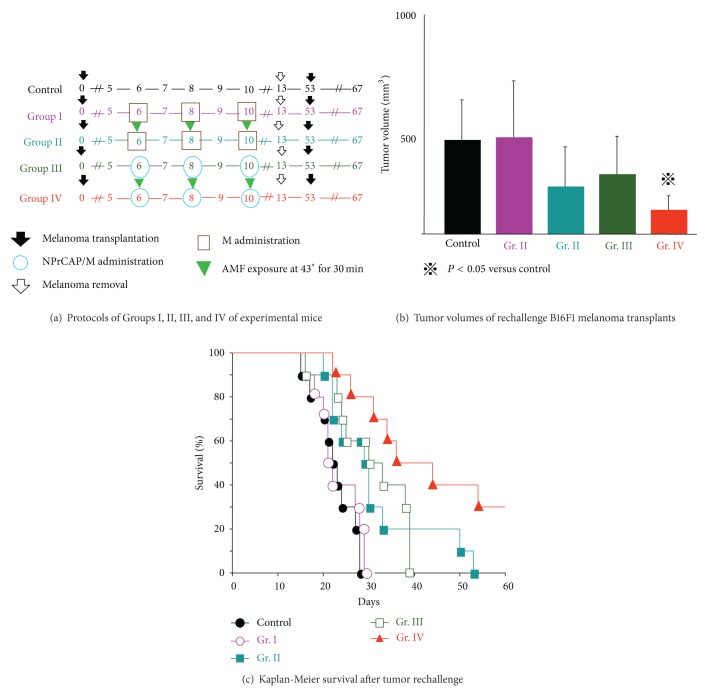
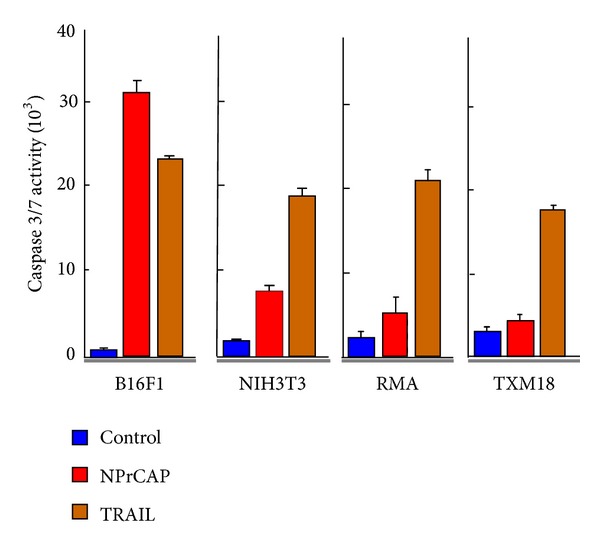
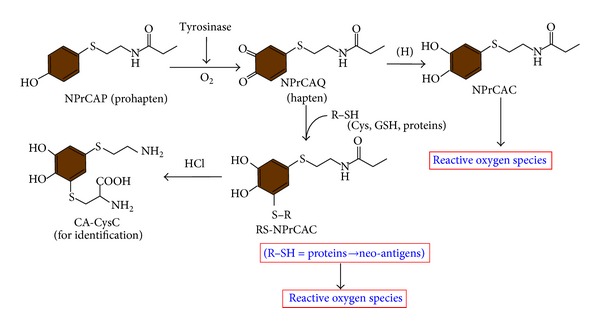
Exploitation of biological properties unique to cancer cells may provide a novel approach to overcome difficult challenges to the treatment of advanced melanoma. In order to develop melanoma-targeted chemothermoimmunotherapy, a melanogenesis substrate, N-propionyl-4-S-cysteaminylphenol (NPrCAP), sulfur-amine analogue of tyrosine, was conjugated with magnetite nanoparticles. NPrCAP was exploited from melanogenesis substrates, which are expected to be selectively incorporated into melanoma cells and produce highly reactive free radicals through reacting with tyrosinase, resulting in chemotherapeutic and immunotherapeutic effects by oxidative stress and apoptotic cell death. Magnetite nanoparticles were conjugated with NPrCAP to introduce thermotherapeutic and immunotherapeutic effects through nonapoptotic cell death and generation of heat shock protein (HSP) upon exposure to alternating magnetic field (AMF). During these therapeutic processes, NPrCAP was also expected to provide melanoma-targeted drug delivery system.
利用癌细胞特有的生物学特性可能为克服晚期黑色素瘤治疗中的难题提供一种新方法。为了开发针对黑色素瘤的化学热免疫疗法,将一种黑色素生成底物N-丙酰基-4-S-半胱氨酰苯酚(NPrCAP),即酪氨酸的硫胺类似物,与磁铁矿纳米颗粒偶联。NPrCAP是从黑色素生成底物中开发出来的,预计它会被选择性地纳入黑色素瘤细胞,并通过与酪氨酸酶反应产生高活性自由基,通过氧化应激和凋亡性细胞死亡产生化疗和免疫治疗效果。磁铁矿纳米颗粒与NPrCAP偶联,通过非凋亡性细胞死亡以及在暴露于交变磁场(AMF)时产生热休克蛋白(HSP)来引入热疗和免疫治疗效果。在这些治疗过程中,NPrCAP还有望提供针对黑色素瘤的药物递送系统。