Department of Gastroenterology, Hepatology & Nutrition, The University of Texas MD Anderson Cancer Center, Houston, TX 77030, USA.
Cancer Res. 2013 Apr 1;73(7):2159-69. doi: 10.1158/0008-5472.CAN-12-1962. Epub 2013 Mar 27.
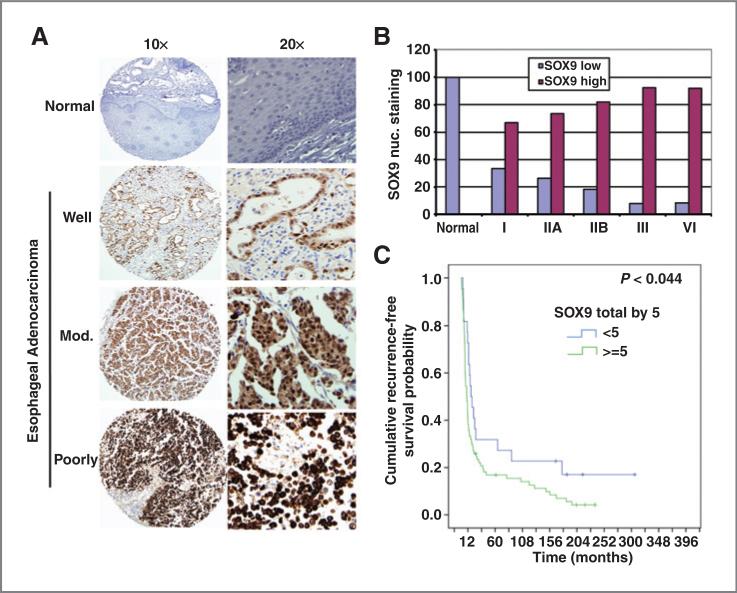
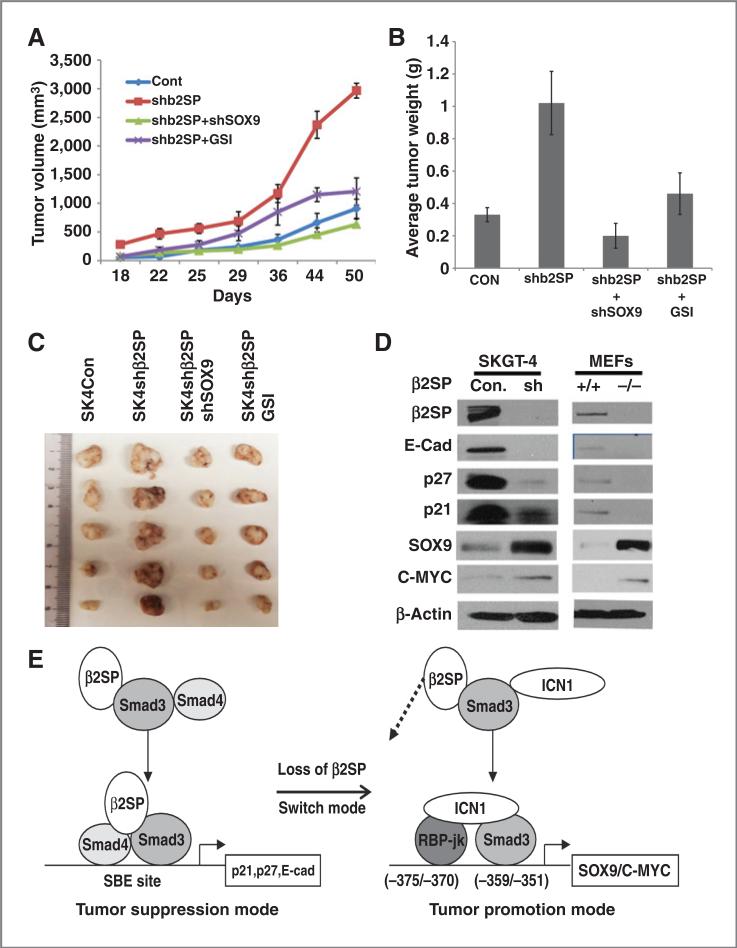
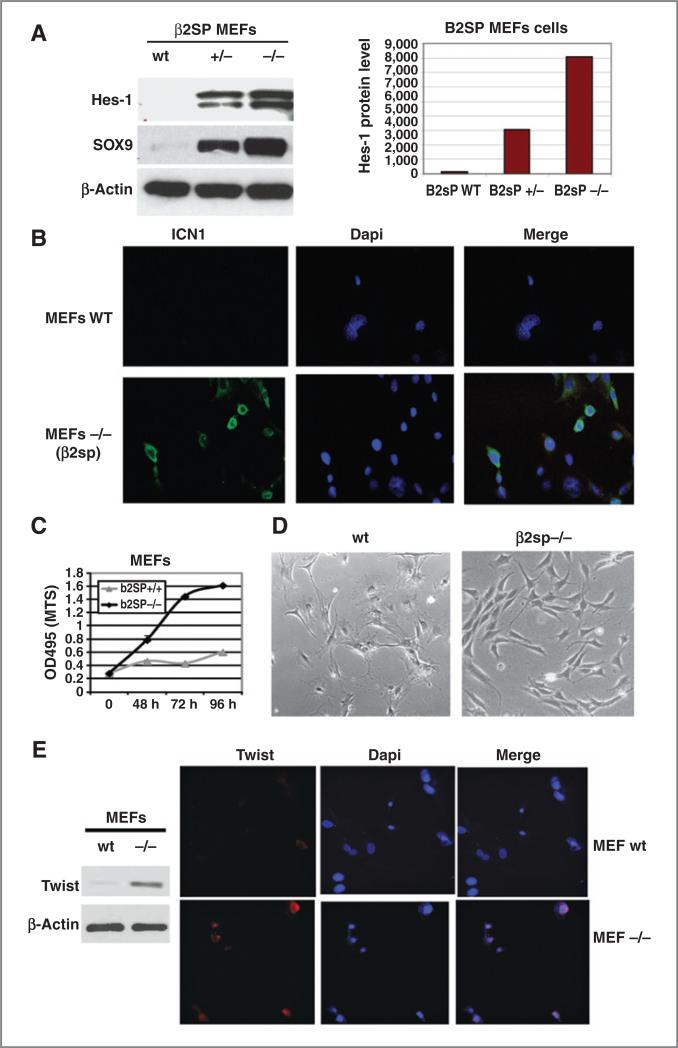
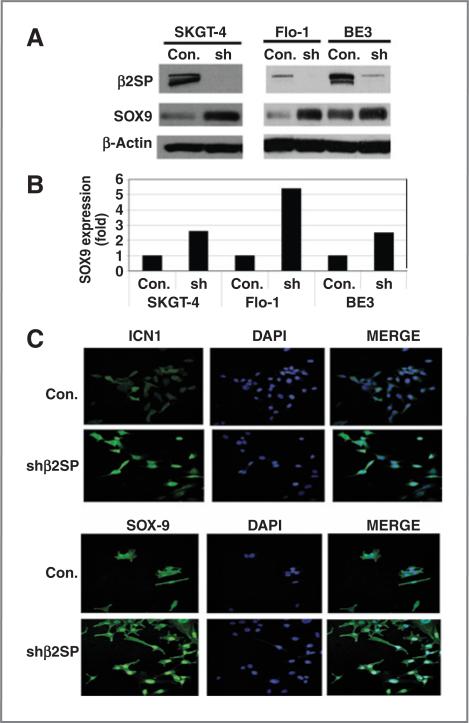
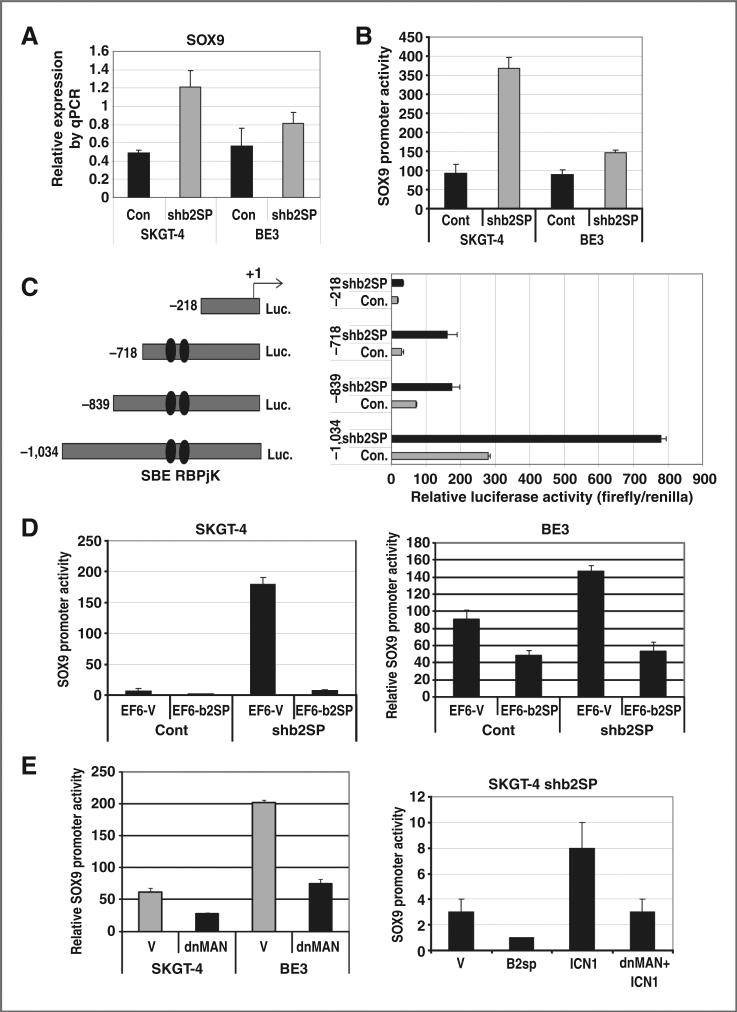
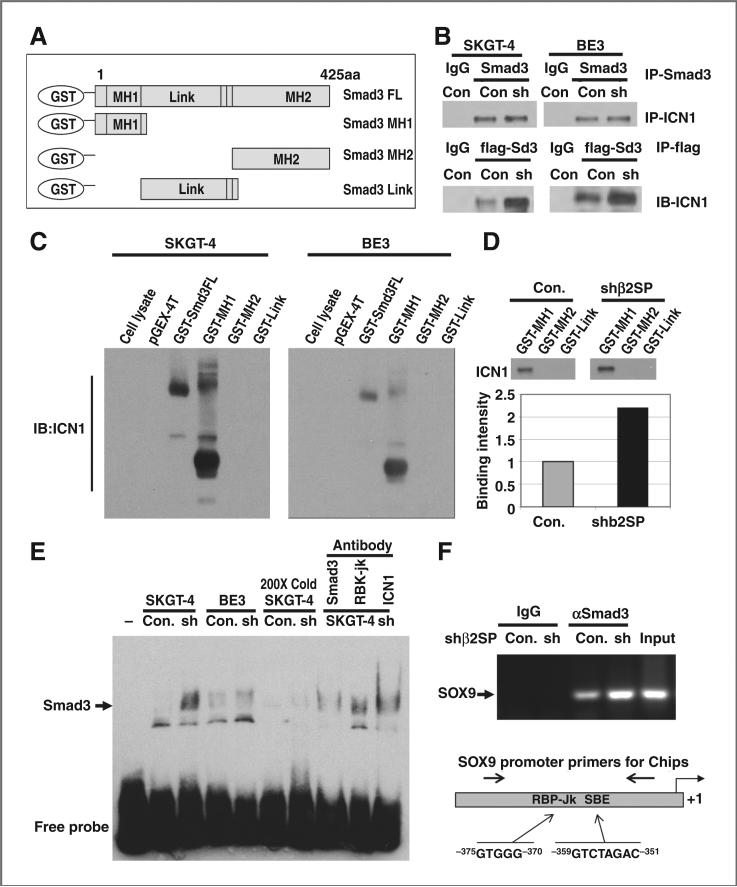
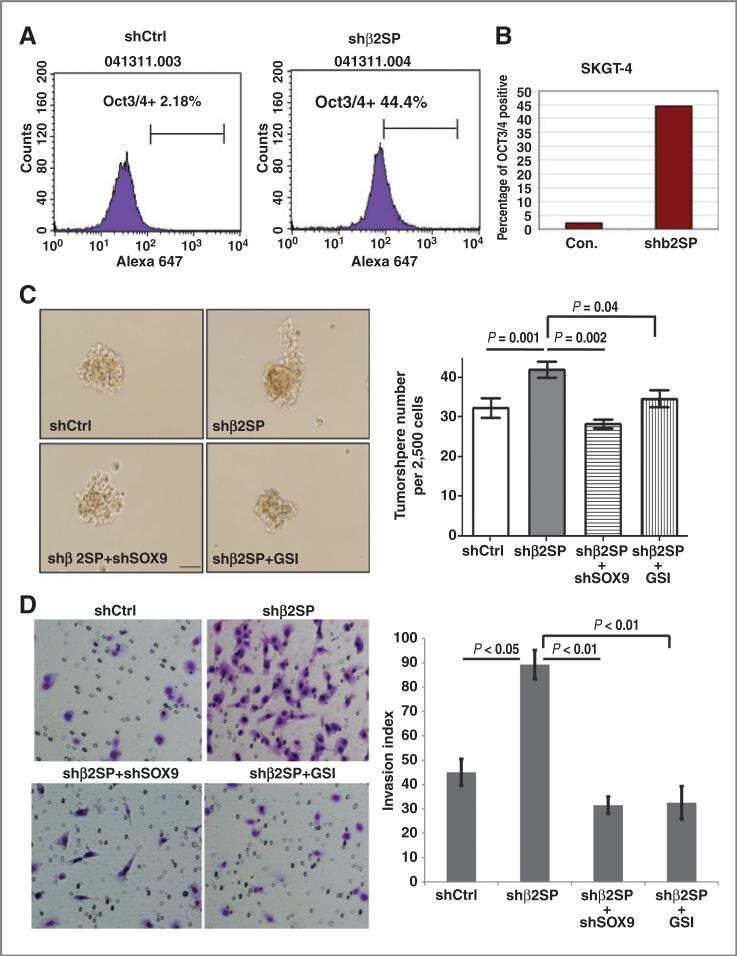
TGF-β and Notch signaling pathways play important roles in regulating self-renewal of stem cells and gastrointestinal carcinogenesis. Loss of TGF-β signaling components activates Notch signaling in esophageal adenocarcinoma, but the basis for this effect has been unclear. Here we report that loss of TGF-β adapter β2SP (SPNB2) activates Notch signaling and its target SOX9 in primary fibroblasts or esophageal adenocarcinoma cells. Expression of the stem cell marker SOX9 was markedly higher in esophageal adenocarcinoma tumor tissues than normal tissues, and its higher nuclear staining in tumors correlated with poorer survival and lymph node invasion in esophageal adenocarcinoma patients. Downregulation of β2SP by lentivirus short hairpin RNA increased SOX9 transcription and expression, enhancing nuclear localization for both active Notch1 (intracellular Notch1, ICN1) and SOX9. In contrast, reintroduction into esophageal adenocarcinoma cells of β2SP and a dominant-negative mutant of the Notch coactivator mastermind-like (dnMAN) decreased SOX9 promoter activity. Tumor sphere formation and invasive capacity in vitro and tumor growth in vivo were increased in β2SP-silenced esophageal adenocarcinoma cells. Conversely, SOX9 silencing rescued the phenotype of esophageal adenocarcinoma cells with loss of β2SP. Interaction between Smad3 and ICN1 via Smad3 MH1 domain was also observed, with loss of β2SP increasing the binding between these proteins, inducing expression of Notch targets SOX9 and C-MYC, and decreasing expression of TGF-β targets p21(CDKN1A), p27 (CDKN1B), and E-cadherin. Taken together, our findings suggest that loss of β2SP switches TGF-β signaling from tumor suppression to tumor promotion by engaging Notch signaling and activating SOX9.
TGF-β 和 Notch 信号通路在调节干细胞自我更新和胃肠道癌发生中发挥重要作用。食管腺癌中 TGF-β 信号成分的缺失会激活 Notch 信号,但这种效应的基础尚不清楚。在这里,我们报告原发性成纤维细胞或食管腺癌细胞中 TGF-β 接头β2SP(SPNB2)的缺失会激活 Notch 信号及其靶基因 SOX9。与正常组织相比,食管腺癌肿瘤组织中干细胞标志物 SOX9 的表达明显更高,其在肿瘤中的核染色更高与食管腺癌患者的生存和淋巴结浸润不良相关。慢病毒短发夹 RNA 下调β2SP 增加了 SOX9 的转录和表达,增强了活性 Notch1(细胞内 Notch1,ICN1)和 SOX9 的核定位。相比之下,β2SP 的重新引入和 Notch 共激活剂主样蛋白(dnMAN)的显性失活突变降低了 SOX9 启动子活性。β2SP 沉默的食管腺癌细胞中体外肿瘤球形成和侵袭能力以及体内肿瘤生长增加。相反,SOX9 的沉默挽救了β2SP 缺失的食管腺癌细胞的表型。Smad3 MH1 结构域与 ICN1 之间也观察到 Smad3 的相互作用,β2SP 的缺失增加了这些蛋白之间的结合,诱导 Notch 靶基因 SOX9 和 C-MYC 的表达,并降低 TGF-β 靶基因 p21(CDKN1A)、p27(CDKN1B)和 E-钙黏蛋白的表达。总之,我们的研究结果表明,β2SP 的缺失通过结合 Notch 信号并激活 SOX9,将 TGF-β 信号从肿瘤抑制转变为肿瘤促进。