Capaccione Kathleen M, Hong Xuehui, Morgan Katherine M, Liu Wenyu, Bishop J Michael, Liu LianXin, Markert Elke, Deen Malik, Minerowicz Christine, Bertino Joseph R, Allen Thaddeus, Pine Sharon R
Department of Pharmacology, Rutgers Graduate School of Biomedical Science, Piscataway, New Jersey; Rutgers Cancer Institute of New Jersey, New Brunswick, New Jersey.
Department of Pharmacology, Rutgers Graduate School of Biomedical Science, Piscataway, New Jersey; Rutgers Cancer Institute of New Jersey, New Brunswick, New Jersey; Department of Medicine, Robert Wood Johnson Medical School, New Brunswick, New Jersey.
Oncotarget. 2014 Jun 15;5(11):3636-50. doi: 10.18632/oncotarget.1970.
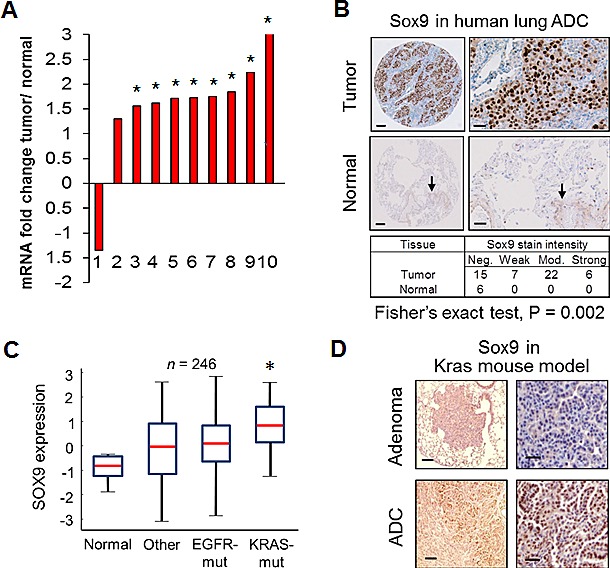
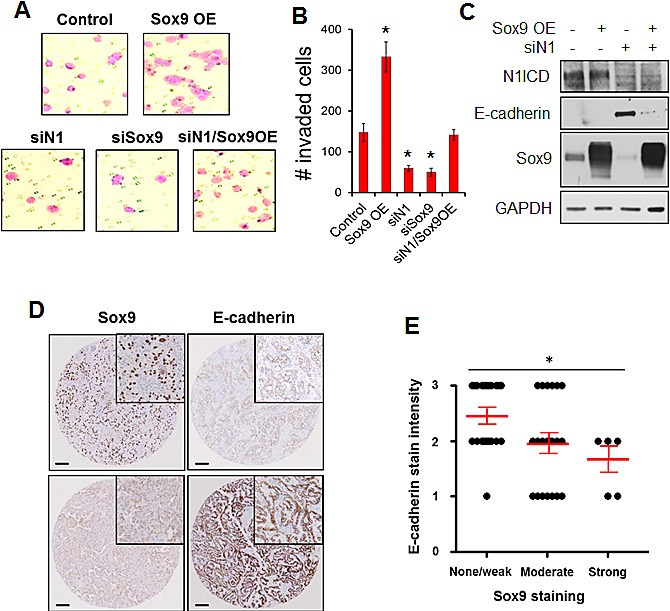
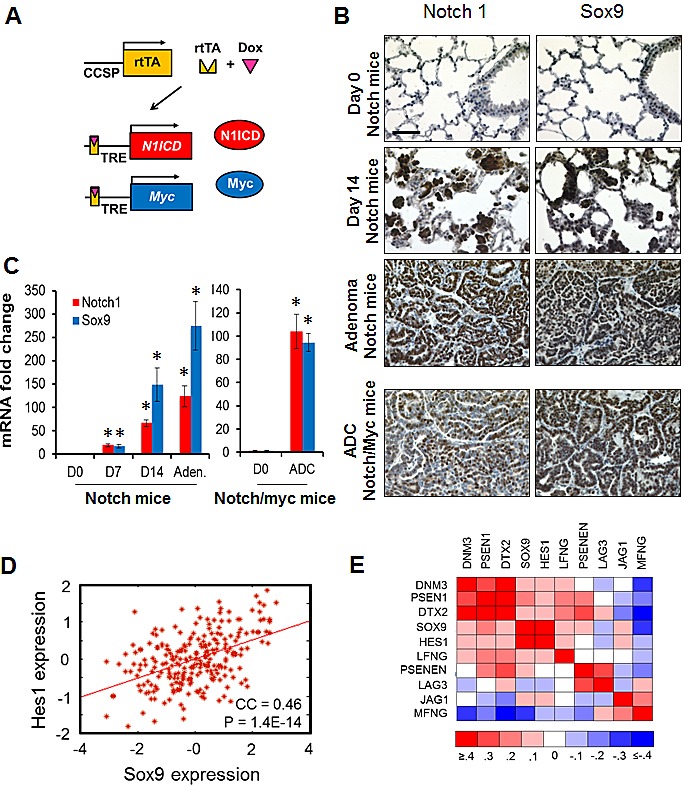
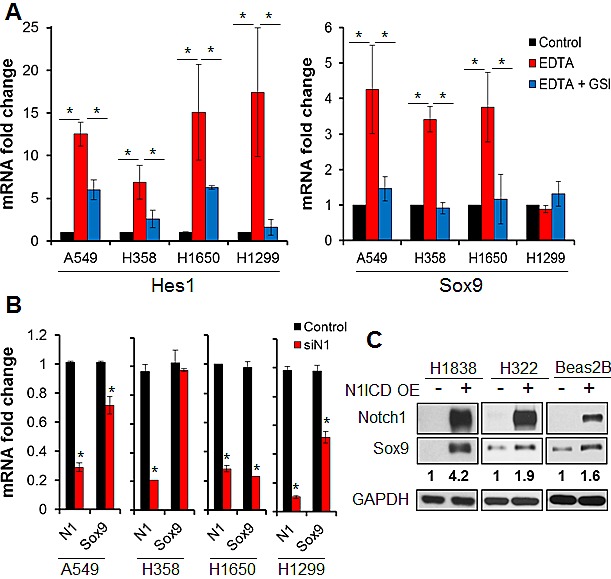
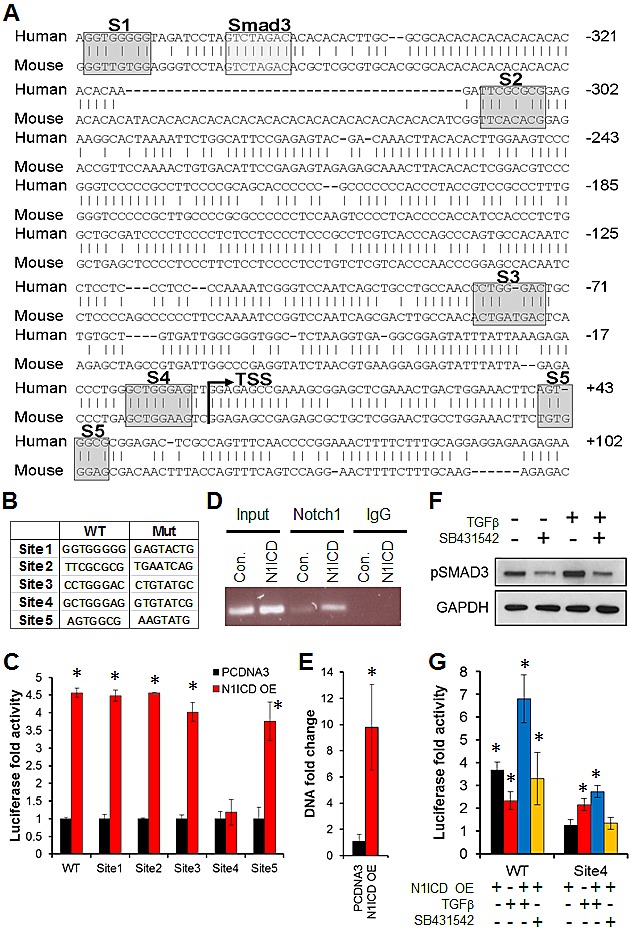
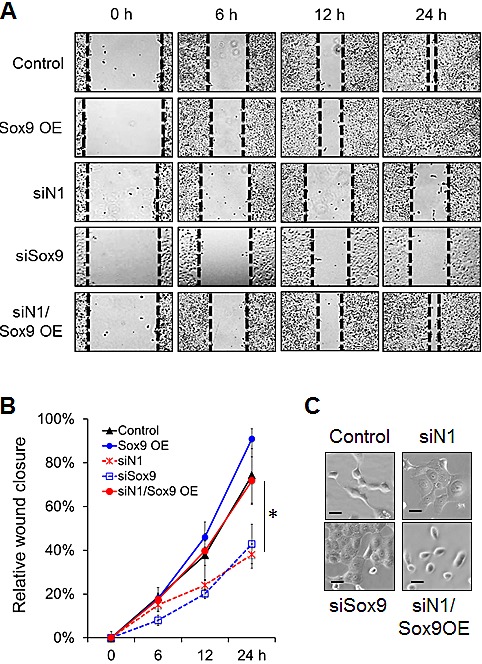
Sox9 has gained increasing importance both functionally and as a prognostic factor in cancer. We demonstrate a functional role for Sox9 in inducing a mesenchymal phenotype in lung ADC. We show that Sox9 mRNA and protein are overexpressed in lung ADC, particularly those with KRAS mutations. Sox9 expression correlated with the Notch target gene Hes1, and numerous other Notch pathway components. We observed that Sox9 is a potent inducer of lung cancer cell motility and invasion, and a negative regulator of E-cadherin, a key protein that is lost during epithelial-mesenchymal transition (EMT). Moreover, we show that Notch1 signaling directly regulates Sox9 expression through a SOX9 promoter binding site, independently of the TGF-β pathway, and that Sox9 participates in Notch-1 induced cell motility, cell invasion, and loss of E-cadherin expression. Together, the results identify a new functional role for a Notch1-Sox9 signaling axis in lung ADC that may explain the correlation of Sox9 with tumor progression, higher tumor grade, and poor lung cancer survival. In addition to Notch and TGF-β, Sox9 also acts downstream of NF-κB, BMP, EGFR, and Wnt/β-catenin signaling. Thus, Sox9 could potentially act as a hub to mediate cross-talk among key oncogenic pathways in lung ADC. Targeting Sox9 expression or transcriptional activity could potentially reduce resistance to targeted therapy for lung ADC caused by pathway redundancy.
Sox9在癌症中的功能及作为预后因素的重要性日益凸显。我们证明了Sox9在诱导肺腺癌间充质表型中发挥功能作用。我们发现Sox9 mRNA和蛋白在肺腺癌中过度表达,尤其是那些具有KRAS突变的肿瘤。Sox9表达与Notch靶基因Hes1以及许多其他Notch信号通路成分相关。我们观察到Sox9是肺癌细胞迁移和侵袭的强力诱导剂,也是E-钙黏蛋白的负调节因子,E-钙黏蛋白是上皮-间充质转化(EMT)过程中丢失的关键蛋白。此外,我们表明Notch1信号通过SOX9启动子结合位点直接调节Sox9表达,独立于TGF-β信号通路,并且Sox9参与Notch-1诱导的细胞迁移、细胞侵袭以及E-钙黏蛋白表达的丧失。总之,这些结果确定了Notch1-Sox9信号轴在肺腺癌中的新功能作用,这可能解释了Sox9与肿瘤进展、更高肿瘤分级及肺癌不良生存的相关性。除了Notch和TGF-β,Sox9还在NF-κB、BMP、EGFR和Wnt/β-连环蛋白信号下游发挥作用。因此,Sox9可能潜在地作为一个枢纽来介导肺腺癌关键致癌信号通路之间的相互作用。靶向Sox9表达或转录活性可能潜在地降低因信号通路冗余导致的肺腺癌靶向治疗耐药性。