Key Laboratory of Plant Resources Conservation and Sustainable Utilization, South China Botanical Garden, Chinese Academy of Sciences, Guangzhou 510650, P R China.
BMC Plant Biol. 2013 Apr 2;13:55. doi: 10.1186/1471-2229-13-55.
Recent studies have demonstrated that cellular energy is a key factor switching on ripening and senescence of fruit. However, the factors that influence fruit energy status remain largely unknown.
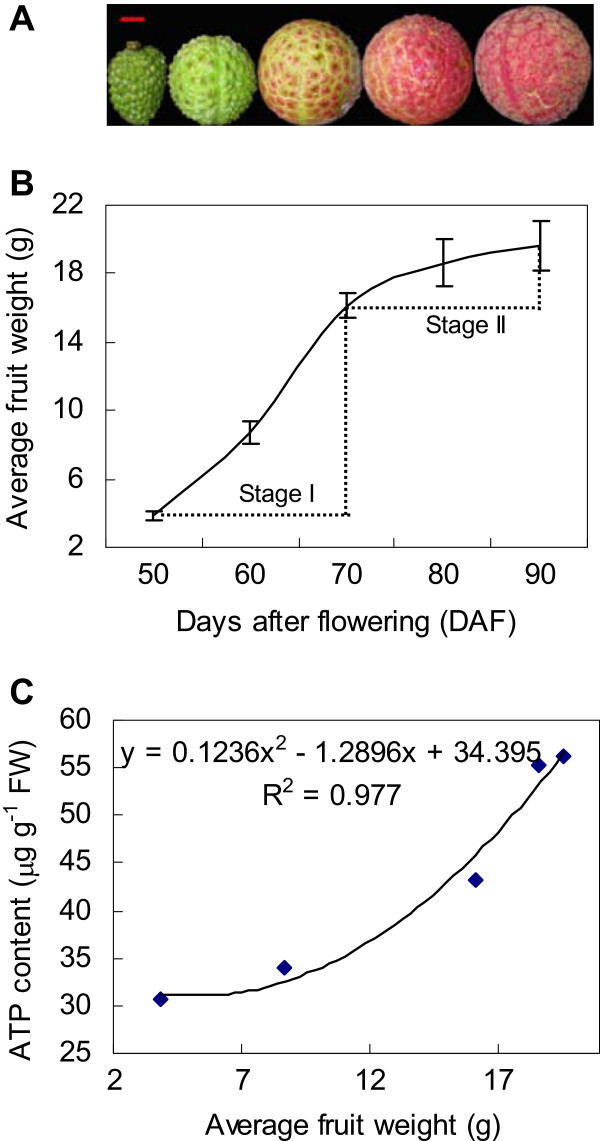
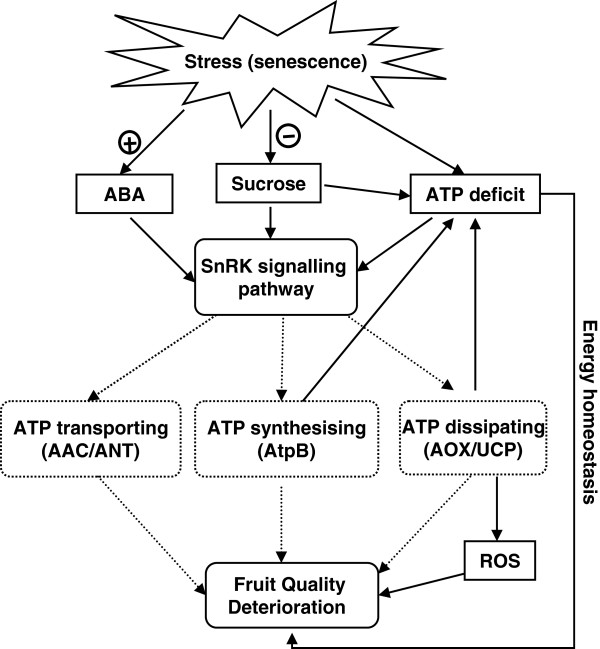
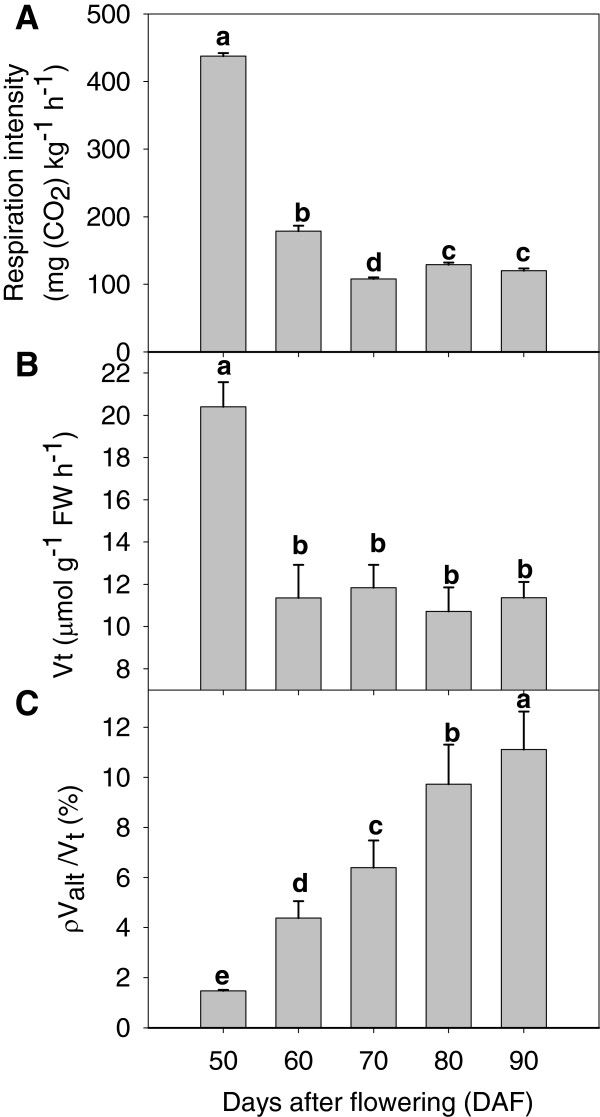
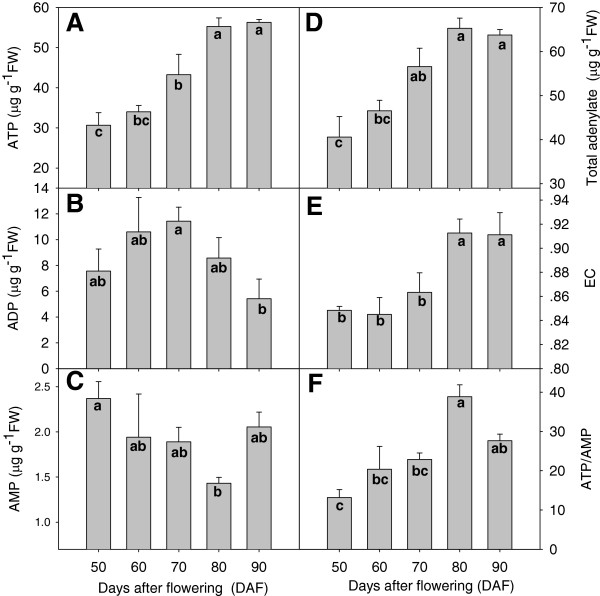
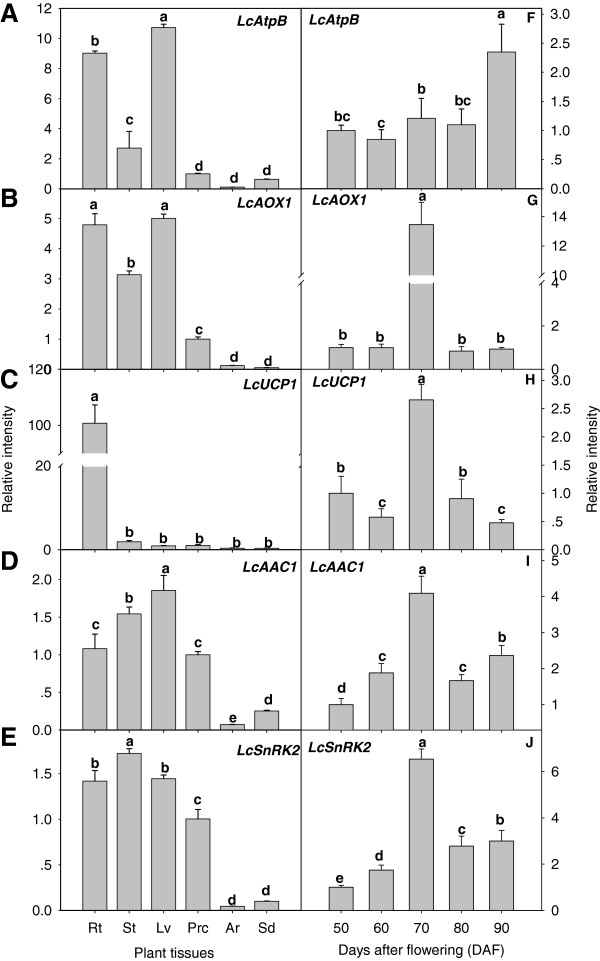
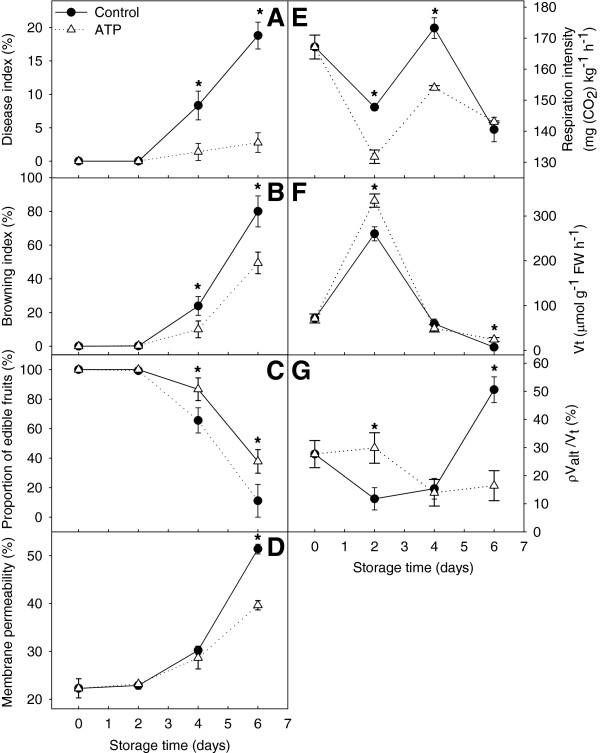
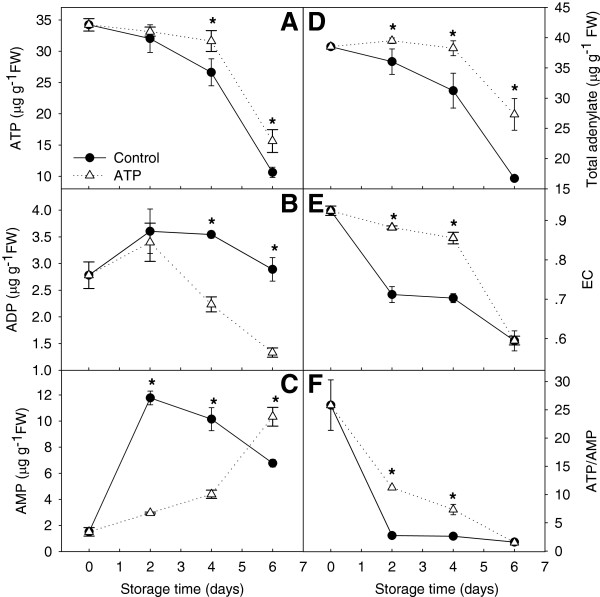
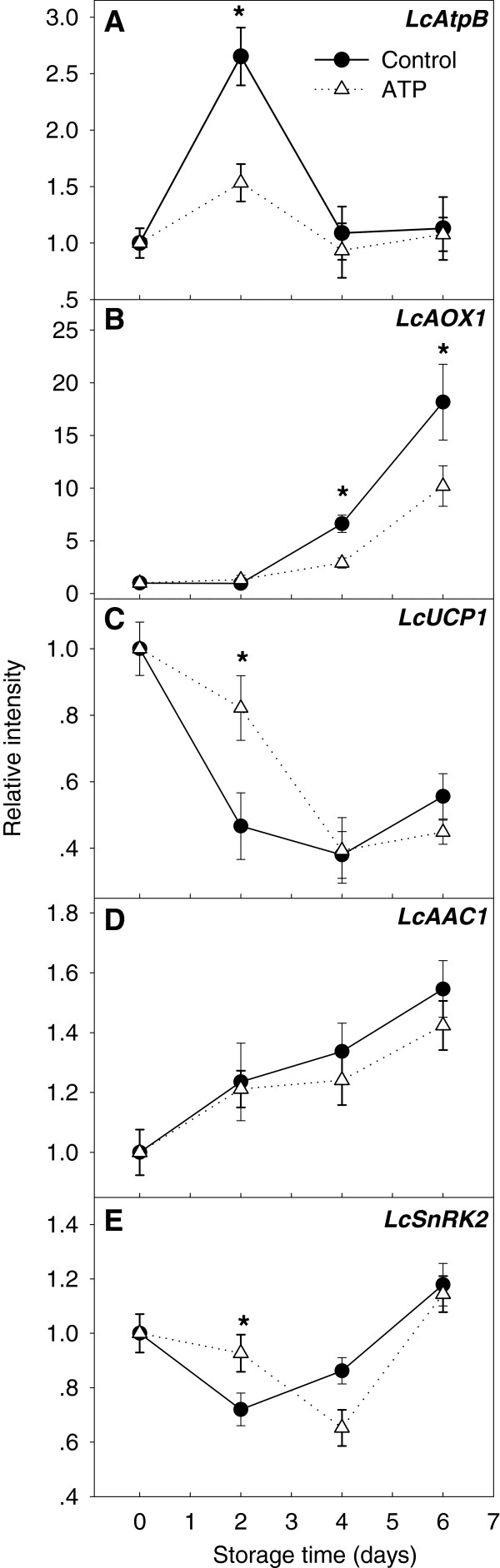
HPLC profiling showed that ATP abundance increased significantly in developing preharvest litchi fruit and was strongly correlated with fruit fresh weight. In contrast, ATP levels declined significantly during postharvest fruit senescence and were correlated with the decrease in the proportion of edible fruit. The five gene transcripts isolated from the litchi fruit pericarp were highly expressed in vegetative tissues and peaked at 70 days after flowering (DAF) consistent with fruit ADP concentrations, except for uncoupling mitochondrial protein 1 (UCP1), which was predominantly expressed in the root, and ATP synthase beta subunit (AtpB), which was up-regulated significantly before harvest and peaked 2 days after storage. These results indicated that the color-breaker stage at 70 DAF and 2 days after storage may be key turning points in fruit energy metabolism. Transcript abundance of alternative oxidase 1 (AOX1) increased after 2 days of storage to significantly higher levels than those of LcAtpB, and was down-regulated significantly by exogenous ATP. ATP supplementation had no significant effect on transcript abundance of ADP/ATP carrier 1 (AAC1) and slowed the changes in sucrose non-fermenting-1-related kinase 2 (SnRK2) expression, but maintained ATP and energy charge levels, which were correlated with delayed senescence.
Our results suggest that senescence of litchi fruit is closely related with energy. A surge of LcAtpB expression marked the beginning of fruit senescence. The findings may provide a new strategy to extend fruit shelf life by regulating its energy level.
最近的研究表明,细胞能量是启动果实成熟和衰老的关键因素。然而,影响果实能量状态的因素在很大程度上仍不清楚。
高效液相色谱法分析表明,ATP 丰度在发育中的荔枝果实采前显著增加,并与果实鲜重呈强正相关。相比之下,ATP 水平在采后果实衰老过程中显著下降,与可食用果实比例的下降呈正相关。从荔枝果皮中分离得到的 5 个基因转录本在营养组织中高度表达,在花后 70 天(DAF)达到峰值,与果实 ADP 浓度一致,除了解偶联线粒体蛋白 1(UCP1)主要在根中表达,以及 ATP 合酶β亚基(AtpB)在收获前显著上调,并在贮藏 2 天后达到峰值。这些结果表明,70 DAF 的破色期和贮藏 2 天后可能是果实能量代谢的关键转折点。贮藏 2 天后,交替氧化酶 1(AOX1)的转录丰度增加,明显高于 LcAtpB 的转录丰度,并被外源 ATP 显著下调。ATP 补充对 ADP/ATP 载体 1(AAC1)的转录丰度没有显著影响,并减缓蔗糖非发酵-1 相关激酶 2(SnRK2)表达的变化,但维持 ATP 和能量电荷水平,这与延缓衰老有关。
我们的结果表明,荔枝果实的衰老与能量密切相关。LcAtpB 表达的激增标志着果实衰老的开始。这些发现可能为通过调节其能量水平来延长果实货架期提供新的策略。