Microbiology Group, Rowett Institute of Nutrition and Health, University of Aberdeen, Aberdeen, UK.
Gut Microbes. 2013 May-Jun;4(3):236-40. doi: 10.4161/gmic.23998. Epub 2013 Apr 2.
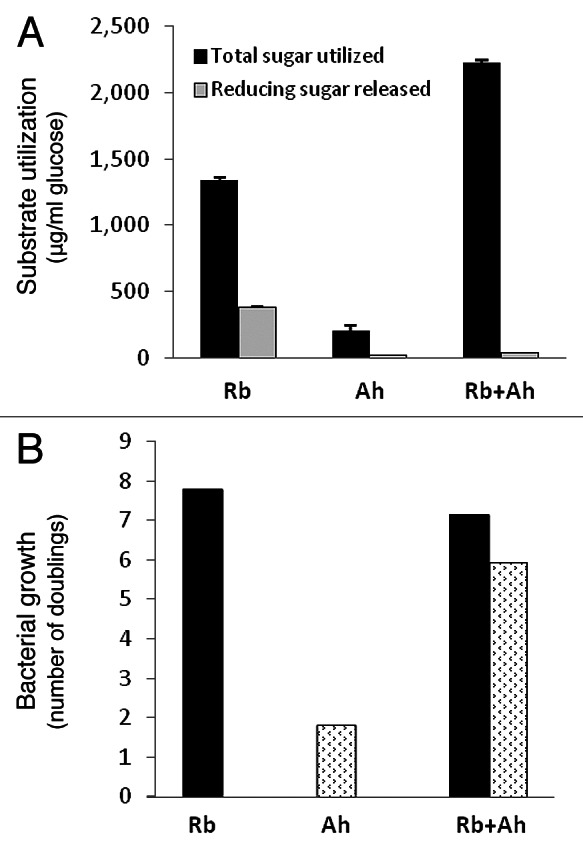
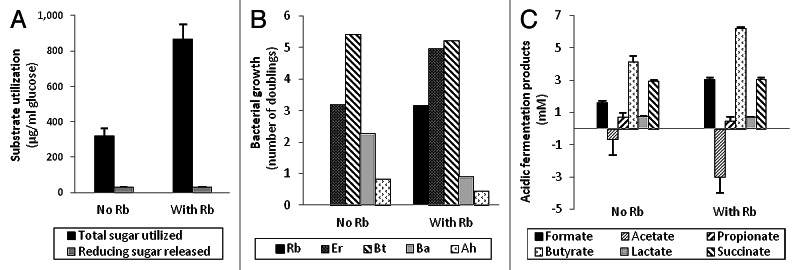
The microbial communities found in the mammalian large intestine and rumen efficiently degrade many recalcitrant substrates that are resistant to the host's digestive enzymes. These communities are known from molecular profiling to be highly diverse at the species and strain level, but it may be that only certain specialized organisms ("keystone species") have the ability to initiate degradation of such substrates, thus releasing energy on which the rest of the community depends. We have recently reported that Ruminococcus bromii has a superior ability to degrade certain forms of particulate resistant starch (RS) when compared with other highly abundant species of amylolytic bacteria found in the human colon and have presented evidence that this bacterium provides an example of a keystone species within the microbial community with respect to RS fermentation. The concept of keystone species can be equally relevant to other activities, e.g., those involved in stabilizing the community.
哺乳动物的大肠和瘤胃中的微生物群落能够有效地降解许多抗消化酶的顽固性基质。从分子分析可知,这些群落的物种和菌株水平具有高度的多样性,但可能只有某些特定的生物体(“关键物种”)具有起始这些基质降解的能力,从而释放出能量,而其余的微生物群落则依赖于这些能量。我们最近报道,与人类结肠中发现的其他大量淀粉分解菌相比,瘤胃球菌(Ruminococcus bromii)具有优越的降解某些形式的颗粒抗性淀粉(RS)的能力,并提供了证据表明,这种细菌是 RS 发酵过程中微生物群落中关键物种的一个例子。关键物种的概念同样适用于其他活动,例如稳定群落的活动。