Center for Cell Engineering, Molecular Pharmacology and Chemistry Program, and Department of Medicine, Memorial Sloan-Kettering Cancer Center, New York, New York 10065, USA.
Cancer Discov. 2013 Apr;3(4):388-98. doi: 10.1158/2159-8290.CD-12-0548. Epub 2013 Apr 2.
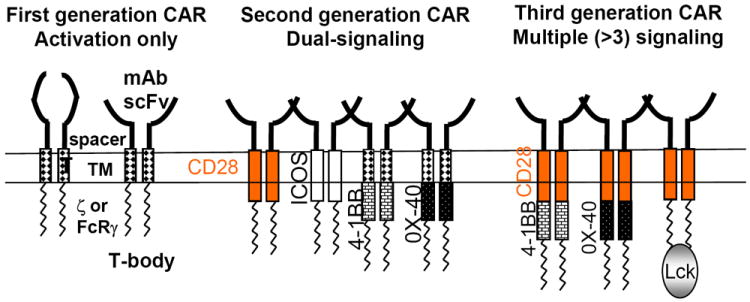
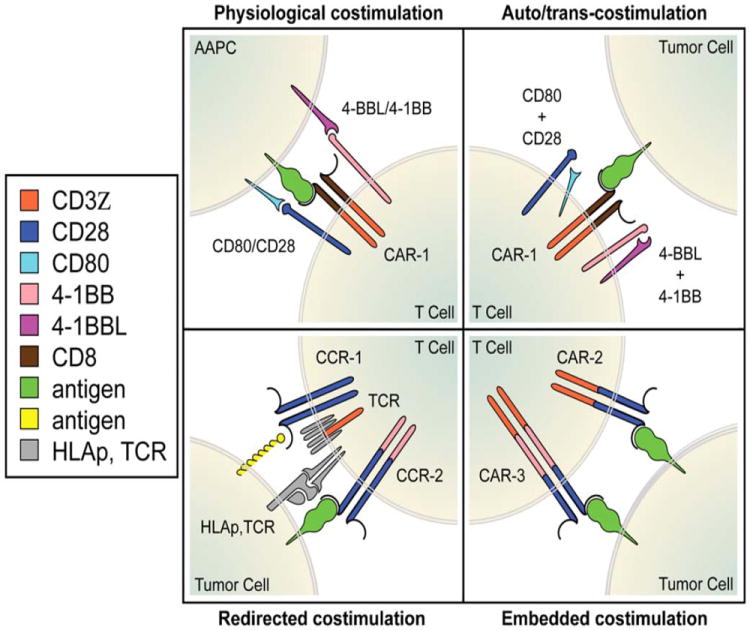
Chimeric antigen receptors (CAR) are recombinant receptors that provide both antigen-binding and T-cell-activating functions. A multitude of CARs has been reported over the past decade, targeting an array of cell surface tumor antigens. Their biologic functions have dramatically changed following the introduction of tripartite receptors comprising a costimulatory domain, termed second-generation CARs. These have recently shown clinical benefit in patients treated with CD19-targeted autologous T cells. CARs may be combined with costimulatory ligands, chimeric costimulatory receptors, or cytokines to further enhance T-cell potency, specificity, and safety. CARs represent a new class of drugs with exciting potential for cancer immunotherapy.
CARs are a new class of drugs with great potential for cancer immunotherapy. Upon their expression in T lymphocytes, CARs direct potent, targeted immune responses that have recently shown encouraging clinical outcomes in a subset of patients with B-cell malignancies. This review focuses on the design of CARs, including the requirements for optimal antigen recognition and different modalities to provide costimulatory support to targeted T cells, which include the use of second- and third generation CARs, costimulatory ligands, chimeric costimulatory receptors, and cytokines.
嵌合抗原受体(CAR)是一种提供抗原结合和 T 细胞激活功能的重组受体。在过去的十年中,已经报道了多种针对一系列细胞表面肿瘤抗原的 CAR。在引入包含共刺激结构域的三部分受体(称为第二代 CAR)后,其生物学功能发生了显著变化。最近,在接受 CD19 靶向自体 T 细胞治疗的患者中,这些 CAR 显示出了临床获益。CAR 可以与共刺激配体、嵌合共刺激受体或细胞因子结合使用,以进一步增强 T 细胞的效力、特异性和安全性。CAR 代表了一类具有令人兴奋的癌症免疫治疗潜力的新药。
CAR 是一类具有很大潜力的癌症免疫治疗新药。CAR 在 T 淋巴细胞中表达后,可直接靶向肿瘤细胞,引发强烈的免疫反应,最近在一部分 B 细胞恶性肿瘤患者中显示出令人鼓舞的临床结果。这篇综述重点介绍了 CAR 的设计,包括对最佳抗原识别的要求以及为靶向 T 细胞提供共刺激支持的不同方式,包括使用第二代和第三代 CAR、共刺激配体、嵌合共刺激受体和细胞因子。