School of Biological and Biomedical Sciences, Durham University, Durham, County Durham, United Kingdom.
PLoS One. 2013;8(3):e59811. doi: 10.1371/journal.pone.0059811. Epub 2013 Mar 26.
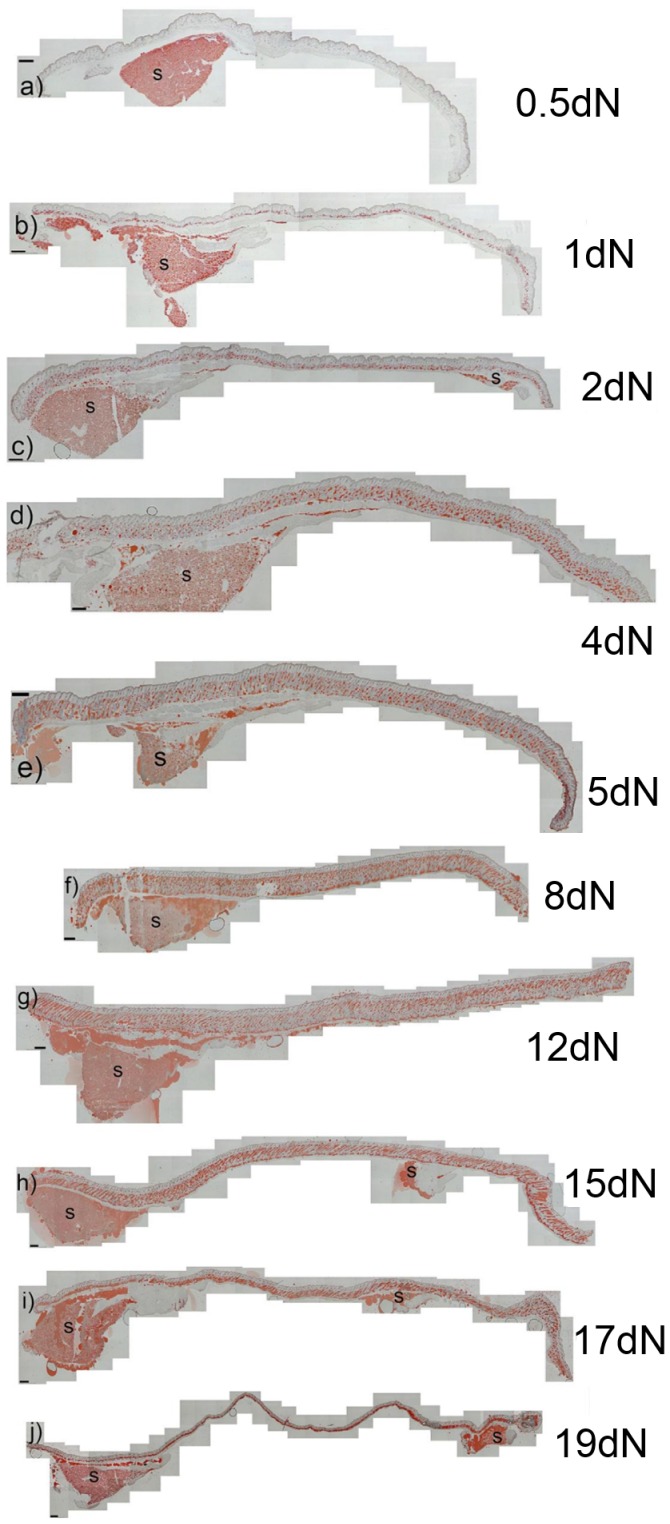
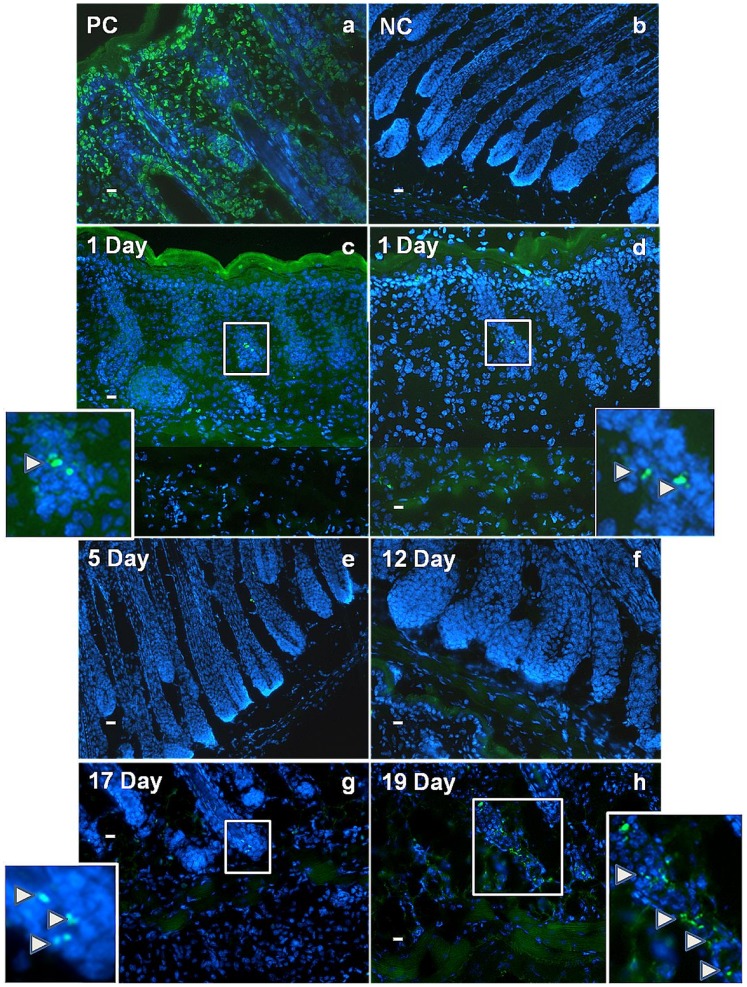
The laboratory mouse is a key animal model for studies of adipose biology, metabolism and disease, yet the developmental changes that occur in tissues and cells that become the adipose layer in mouse skin have received little attention. Moreover, the terminology around this adipose body is often confusing, as frequently no distinction is made between adipose tissue within the skin, and so called subcutaneous fat. Here adipocyte development in mouse dorsal skin was investigated from before birth to the end of the first hair follicle growth cycle. Using Oil Red O staining, immunohistochemistry, quantitative RT-PCR and TUNEL staining we confirmed previous observations of a close spatio-temporal link between hair follicle development and the process of adipogenesis. However, unlike previous studies, we observed that the skin adipose layer was created from cells within the lower dermis. By day 16 of embryonic development (e16) the lower dermis was demarcated from the upper dermal layer, and commitment to adipogenesis in the lower dermis was signalled by expression of FABP4, a marker of adipocyte differentiation. In mature mice the skin adipose layer is separated from underlying subcutaneous adipose tissue by the panniculus carnosus. We observed that the skin adipose tissue did not combine or intermix with subcutaneous adipose tissue at any developmental time point. By transplanting skin isolated from e14.5 mice (prior to the start of adipogenesis), under the kidney capsule of adult mice, we showed that skin adipose tissue develops independently and without influence from subcutaneous depots. This study has reinforced the developmental link between hair follicles and skin adipocyte biology. We argue that because skin adipocytes develop from cells within the dermis and independently from subcutaneous adipose tissue, that it is accurately termed dermal adipose tissue and that, in laboratory mice at least, it represents a separate adipose depot.
实验室小鼠是研究脂肪生物学、代谢和疾病的重要动物模型,但皮肤脂肪层中组织和细胞的发育变化却很少受到关注。此外,关于这种脂肪体的术语通常令人困惑,因为通常没有区分皮肤内的脂肪组织和所谓的皮下脂肪。本研究从出生前到第一次毛囊生长周期结束,研究了小鼠背部皮肤中的脂肪细胞发育。通过油红 O 染色、免疫组织化学、定量 RT-PCR 和 TUNEL 染色,我们证实了毛囊发育与脂肪生成过程之间存在紧密的时空联系的先前观察结果。然而,与先前的研究不同,我们观察到皮肤脂肪层是由真皮下层的细胞形成的。到胚胎发育第 16 天(e16),真皮下层与上层真皮层分离,而下层真皮层中脂肪生成的启动由 FABP4 的表达所标志,FABP4 是脂肪细胞分化的标志物。在成熟的小鼠中,皮肤脂肪层与下面的皮下脂肪组织由肉膜脂肪组织隔开。我们观察到在任何发育时间点,皮肤脂肪组织都不会与皮下脂肪组织结合或混合。通过将来自 e14.5 小鼠(脂肪生成开始之前)的皮肤移植到成年小鼠的肾脏包膜下,我们发现皮肤脂肪组织独立发育,不受皮下脂肪库的影响。这项研究加强了毛囊和皮肤脂肪细胞生物学之间的发育联系。我们认为,由于皮肤脂肪细胞来源于真皮层内的细胞,并且与皮下脂肪组织独立发育,因此它被准确地称为真皮脂肪组织,而且至少在实验室小鼠中,它代表了一个单独的脂肪库。