Systemic Physiological and Ecotoxicological Research, Department of Biology, University of Antwerp, Antwerp, Belgium.
PLoS One. 2013;8(3):e60030. doi: 10.1371/journal.pone.0060030. Epub 2013 Mar 21.
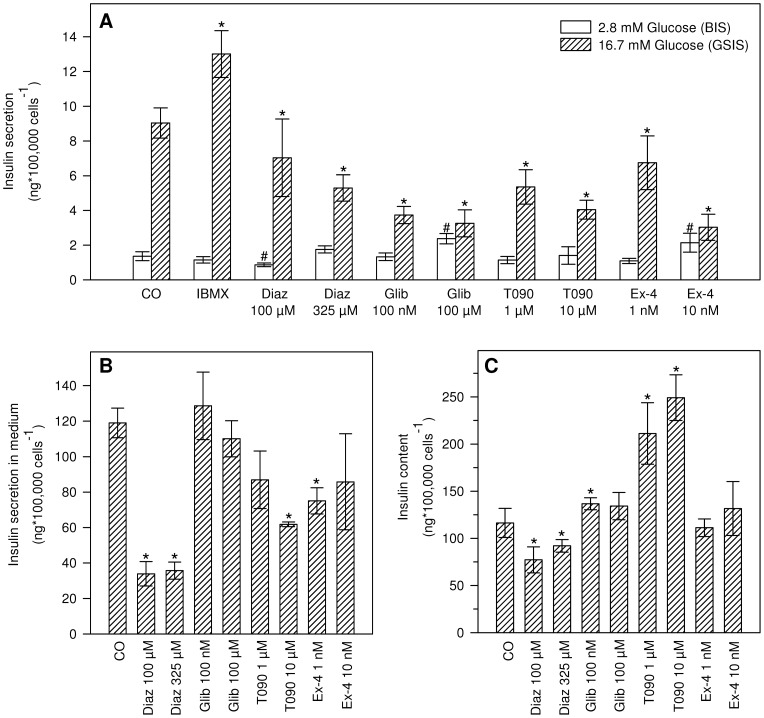
Environmental pollutants have recently emerged as potential risk factors for metabolic diseases, urging systematic investigation of pollutant effects on metabolic disease processes. To enable risk assessment of these so-called metabolic disruptors the use of stable, robust and well-defined cell based screening systems has recently been encouraged. Since beta-cell (dys)functionality is central in diabetes pathophysiology, the need to develop beta-cell based pollutant screening systems is evident. In this context, the present research evaluated the strengths and weaknesses of the INS-1 832/13 pancreatic beta-cell line as diabetogenic pollutant screening system with a focus on beta-cell function. After optimization of exposure conditions, positive (exendin-4, glibenclamide) and negative (diazoxide) control compounds for acute insulin secretion responses were tested and those with the most profound effects were selected to allow potency estimations and ranking of pollutants. This was followed by a first explorative screening of acute bisphenol A and bis(2-ethylhexyl)phthalate effects. The same approach was applied for chronic exposures, focusing primarily on evaluation of acknowledged chronic stimulators (diazoxide, T0901317, exendin-4) or inhibitors (glibenclamide) of insulin secretion responses to select the most responsive ones for use as control compounds in a chronic pollutant testing framework. Our results showed that INS-1 832/13 cells responded conform previous observations regarding acute effects of control compounds on insulin secretion, while bisphenol A and bis(2-ethylhexyl)phthalate had limited acute effects. Furthermore, chronic exposure to known beta-cell reactive compounds resulted in deviating insulin secretion and insulin content profiles compared to previous reports. In conclusion, this INS-1 subclone appears to lack certain characteristics needed to respond appropriately to acute pollutant exposure or long term exposure to known beta-cell reactive compounds and thus seems to be, in our setting, inadequate as a diabetogenic pollutant screening system.
环境污染物最近成为代谢性疾病的潜在危险因素,因此迫切需要系统研究污染物对代谢性疾病进程的影响。为了能够对这些所谓的代谢干扰物进行风险评估,最近鼓励使用稳定、稳健且定义明确的基于细胞的筛选系统。由于β细胞(功能)障碍是糖尿病病理生理学的核心,因此显然需要开发基于β细胞的污染物筛选系统。在这种情况下,本研究评估了 INS-1 832/13 胰腺β细胞系作为致糖尿病污染物筛选系统的优缺点,重点是β细胞功能。在优化暴露条件后,测试了急性胰岛素分泌反应的阳性(exendin-4、glibenclamide)和阴性(diazoxide)对照化合物,并选择了作用最明显的化合物,以允许对污染物进行效价估计和排序。随后,对急性双酚 A 和双(2-乙基己基)邻苯二甲酸酯的作用进行了首次探索性筛选。同样的方法也应用于慢性暴露,主要侧重于评估公认的慢性刺激剂(diazoxide、T0901317、exendin-4)或抑制剂(glibenclamide)对胰岛素分泌反应的影响,以选择最敏感的化合物作为慢性污染物测试框架中的对照化合物。我们的结果表明,INS-1 832/13 细胞对控制化合物对胰岛素分泌的急性作用的反应符合以前的观察结果,而双酚 A 和双(2-乙基己基)邻苯二甲酸酯的急性作用有限。此外,与以前的报道相比,已知对β细胞有反应的化合物的慢性暴露导致胰岛素分泌和胰岛素含量谱发生偏离。总之,这种 INS-1 亚克隆似乎缺乏对急性污染物暴露或对已知对β细胞有反应的化合物的长期暴露做出适当反应所需的某些特征,因此在我们的设定中,它似乎不适合作为致糖尿病污染物筛选系统。