Biotechnology and Bioengineering, Sandia National Laboratories, Livermore, CA, USA.
RNA Biol. 2013 Apr;10(4):502-15. doi: 10.4161/rna.24284. Epub 2013 Apr 1.
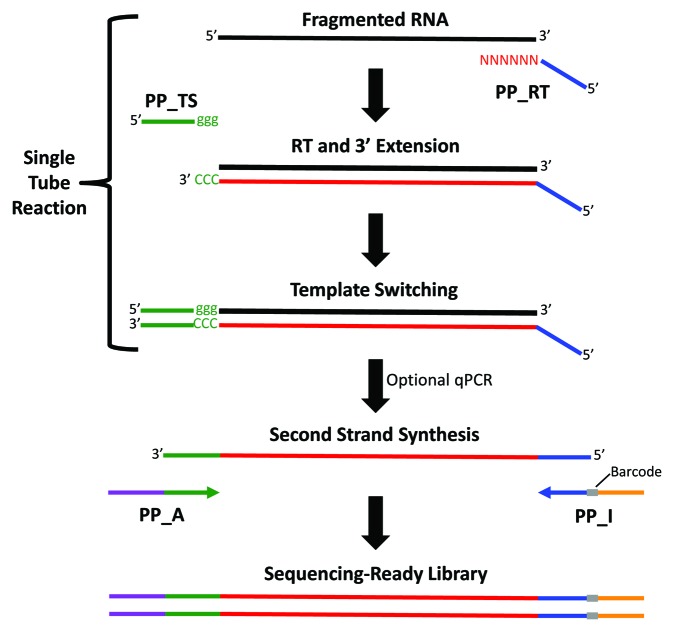
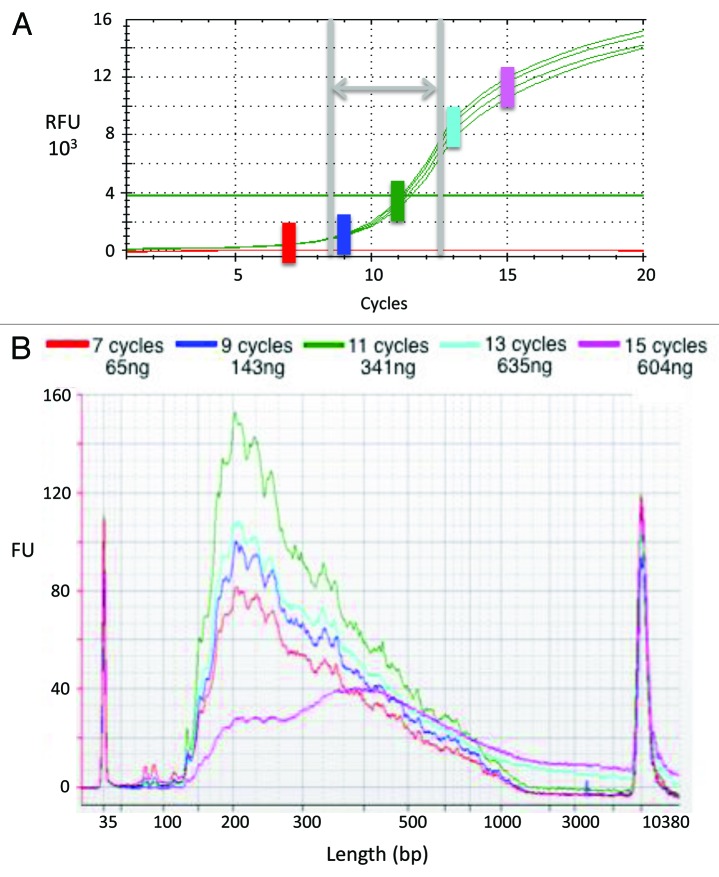
Use of second generation sequencing (SGS) technologies for transcriptional profiling (RNA-Seq) has revolutionized transcriptomics, enabling measurement of RNA abundances with unprecedented specificity and sensitivity and the discovery of novel RNA species. Preparation of RNA-Seq libraries requires conversion of the RNA starting material into cDNA flanked by platform-specific adaptor sequences. Each of the published methods and commercial kits currently available for RNA-Seq library preparation suffers from at least one major drawback, including long processing times, large starting material requirements, uneven coverage, loss of strand information and high cost. We report the development of a new RNA-Seq library preparation technique that produces representative, strand-specific RNA-Seq libraries from small amounts of starting material in a fast, simple and cost-effective manner. Additionally, we have developed a new quantitative PCR-based assay for precisely determining the number of PCR cycles to perform for optimal enrichment of the final library, a key step in all SGS library preparation workflows.
第二代测序(SGS)技术在转录组学中的应用(RNA-Seq)彻底改变了转录组学,使得 RNA 丰度的测量具有前所未有的特异性和灵敏度,并发现了新的 RNA 种类。RNA-Seq 文库的制备需要将 RNA 起始材料转化为 cDNA,两侧是特定于平台的接头序列。目前可用于 RNA-Seq 文库制备的已发表方法和商业试剂盒都至少存在一个主要缺点,包括处理时间长、起始材料要求高、覆盖不均匀、丧失链信息和成本高。我们报告了一种新的 RNA-Seq 文库制备技术的开发,该技术可以快速、简单、经济有效地从小量起始材料中产生代表性的、链特异性的 RNA-Seq 文库。此外,我们还开发了一种新的基于定量 PCR 的检测方法,可精确确定要进行的 PCR 循环数,以最佳富集最终文库,这是所有 SGS 文库制备工作流程中的关键步骤。