Tashiro Mutsumi, Ishii Takayoshi, Koya Jun-ichi, Okada Ryosuke, Kurosawa Yuji, Arai Keisuke, Abe Satoshi, Ohashi Yoshiaki, Shimada Hirofumi, Yusa Ken, Kanai Tatsuaki, Yamada Satoru, Kawamura Hidemasa, Ebara Takeshi, Ohno Tatsuya, Nakano Takashi
Gunma University Heavy Ion Medical Center, 3-39-22 Showa-machi, Maebashi, Gunma 371-8511, Japan.
Radiol Phys Technol. 2013 Jul;6(2):356-66. doi: 10.1007/s12194-013-0208-3. Epub 2013 Apr 9.
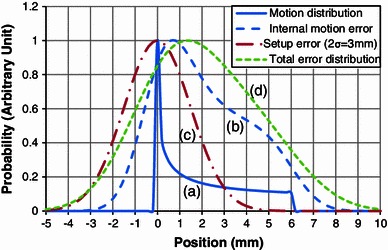
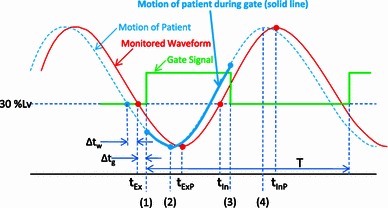
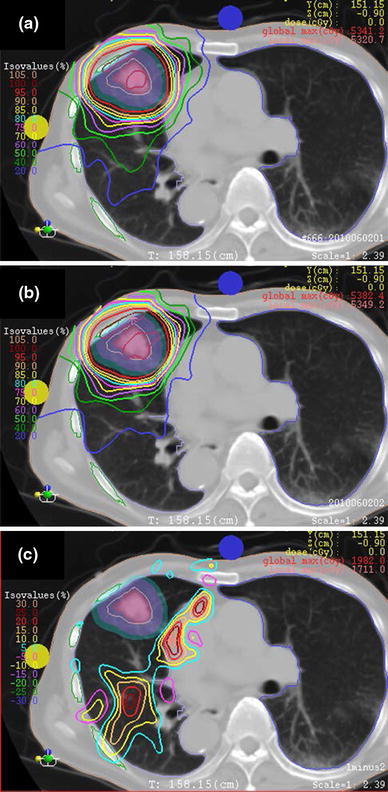
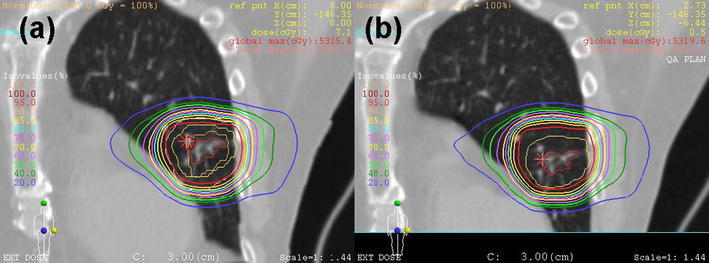
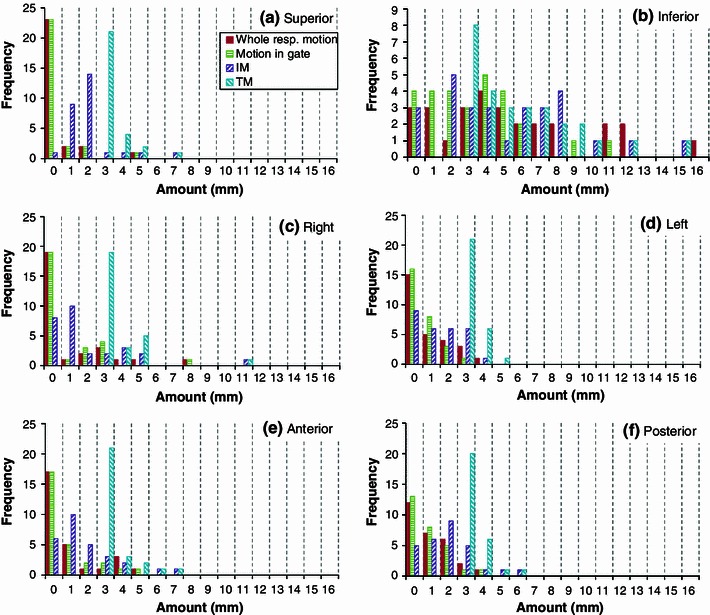
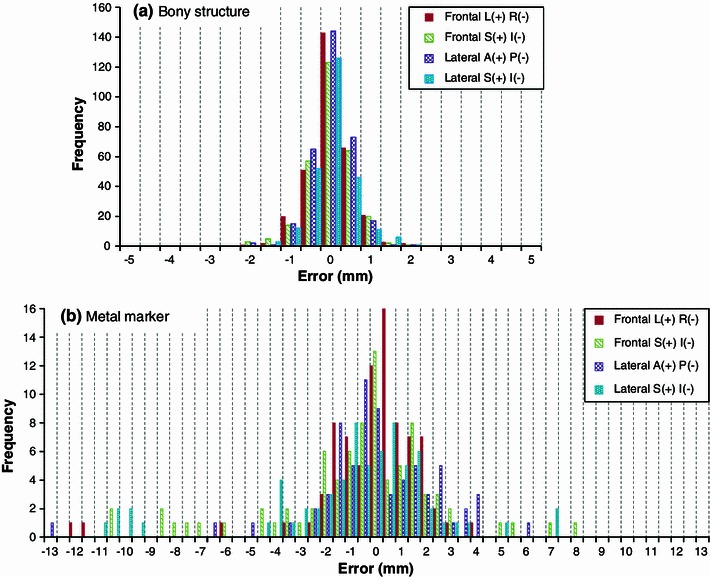
We propose a strategy of individualized image acquisitions and treatment planning for respiratory-gated carbon-ion therapy. We implemented it in clinical treatments for diseases of mobile organs such as lung cancers at the Gunma University Heavy Ion Medical Center in June 2010. Gated computed tomography (CT) scans were used for treatment planning, and four-dimensional (4D) CT scans were used to evaluate motion errors within the gating window to help define the internal margins (IMs) and planning target volume for each patient. The smearing technique or internal gross tumor volume (IGTV = GTV + IM), where the stopping power ratio was replaced with the tumor value, was used for range compensation of moving targets. Dose distributions were obtained using the gated CT images for the treatment plans. The influence of respiratory motion on the dose distribution was verified with the planned beam settings using 4D CT images at some phases within the gating window before the adoption of the plan. A total of 14 lung cancer patients were treated in the first year. The planned margins with the proposed method were verified with clinical X-ray set-up images by deriving setup and internal motion errors. The planned margins were considered to be reasonable compared with the errors, except for large errors observed in some cases.
我们提出了一种用于呼吸门控碳离子治疗的个性化图像采集和治疗计划策略。2010年6月,我们在群马大学重离子医学中心将其应用于肺癌等活动器官疾病的临床治疗中。门控计算机断层扫描(CT)用于治疗计划,四维(4D)CT用于评估门控窗口内的运动误差,以帮助确定每位患者的内部边界(IM)和计划靶体积。涂抹技术或内部大体肿瘤体积(IGTV = GTV + IM,其中阻止本领比被肿瘤值取代)用于移动靶区的射程补偿。使用门控CT图像获取治疗计划的剂量分布。在采用计划之前,使用门控窗口内某些相位的4D CT图像,通过计划的射束设置验证呼吸运动对剂量分布的影响。第一年共治疗了14例肺癌患者。通过推导摆位和内部运动误差,用临床X射线摆位图像验证了所提方法的计划边界。除了在某些情况下观察到的较大误差外,与误差相比,计划边界被认为是合理的。