• 文献检索
  • 文档翻译
  • 深度研究
  • 学术资讯
  • Suppr Zotero 插件Zotero 插件
  • 邀请有礼
  • 套餐&价格
  • 历史记录
应用&插件
Suppr Zotero 插件Zotero 插件浏览器插件Mac 客户端Windows 客户端微信小程序
定价
高级版会员购买积分包购买API积分包
服务
文献检索文档翻译深度研究API 文档MCP 服务
关于我们
关于 Suppr公司介绍联系我们用户协议隐私条款
关注我们

Suppr 超能文献

核心技术专利:CN118964589B侵权必究
粤ICP备2023148730 号-1Suppr @ 2026

文献检索

告别复杂PubMed语法,用中文像聊天一样搜索,搜遍4000万医学文献。AI智能推荐,让科研检索更轻松。

立即免费搜索

文件翻译

保留排版,准确专业,支持PDF/Word/PPT等文件格式,支持 12+语言互译。

免费翻译文档

深度研究

AI帮你快速写综述,25分钟生成高质量综述,智能提取关键信息,辅助科研写作。

立即免费体验

从制度逻辑视角理解发展中国家卫生部背景下的卫生管理信息系统实施情况

Understanding HMIS Implementation in a Developing Country Ministry of Health Context - an Institutional Logics Perspective.

作者信息

Asangansi Ime

机构信息

Department of Informatics, University of Oslo, Norway.

出版信息

Online J Public Health Inform. 2012;4(3). doi: 10.5210/ojphi.v4i3.4302. Epub 2012 Dec 19.

DOI:10.5210/ojphi.v4i3.4302
PMID:23569646
原文链接:https://pmc.ncbi.nlm.nih.gov/articles/PMC3615828/
Abstract

Globally, health management information systems (HMIS) have been hailed as important tools for health reform (1). However, their implementation has become a major challenge for researchers and practitioners because of the significant proportion of failure of implementation efforts (2; 3). Researchers have attributed this significant failure of HMIS implementation, in part, to the complexity of meeting with and satisfying multiple (poorly understood) logics in the implementation process. This paper focuses on exploring the multiple logics, including how they may conflict and affect the HMIS implementation process. Particularly, I draw on an institutional logics perspective to analyze empirical findings from an action research project, which involved HMIS implementation in a state government Ministry of Health in (Northern) Nigeria. The analysis highlights the important HMIS institutional logics, where they conflict and how they are resolved. I argue for an expanded understanding of HMIS implementation that recognizes various institutional logics that participants bring to the implementation process, and how these are inscribed in the decision making process in ways that may be conflicting, and increasing the risk of failure. Furthermore, I propose that the resolution of conflicting logics can be conceptualized as involving deinstitutionalization, changeover resolution or dialectical resolution mechanisms. I conclude by suggesting that HMIS implementation can be improved by implementation strategies that are made based on an understanding of these conflicting logics.

摘要

在全球范围内,健康管理信息系统(HMIS)被誉为卫生改革的重要工具(1)。然而,由于实施工作失败的比例很高,其实施已成为研究人员和从业者面临的一项重大挑战(2;3)。研究人员将HMIS实施的重大失败部分归因于在实施过程中满足和迎合多种(理解不足)逻辑的复杂性。本文着重探讨这些多种逻辑,包括它们可能如何冲突以及如何影响HMIS的实施过程。具体而言,我借鉴制度逻辑的视角来分析一个行动研究项目的实证结果,该项目涉及在尼日利亚北部一个州政府卫生部实施HMIS。分析突出了重要的HMIS制度逻辑、它们在何处冲突以及如何得到解决。我主张对HMIS实施有更广泛的理解,即认识到参与者带入实施过程的各种制度逻辑,以及这些逻辑如何以可能相互冲突的方式体现在决策过程中,从而增加失败的风险。此外,我提出冲突逻辑的解决可以概念化为涉及去制度化、转换解决或辩证解决机制。最后,我建议通过基于对这些冲突逻辑的理解制定的实施策略来改进HMIS的实施。
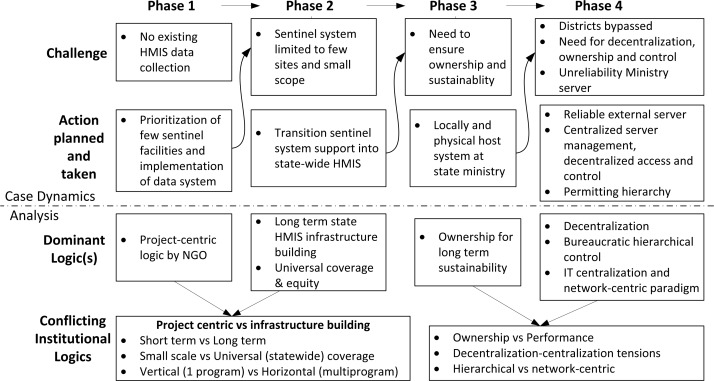
https://cdn.ncbi.nlm.nih.gov/pmc/blobs/da58/3615828/16d04c228cb6/ojphi-04-26f3.jpg
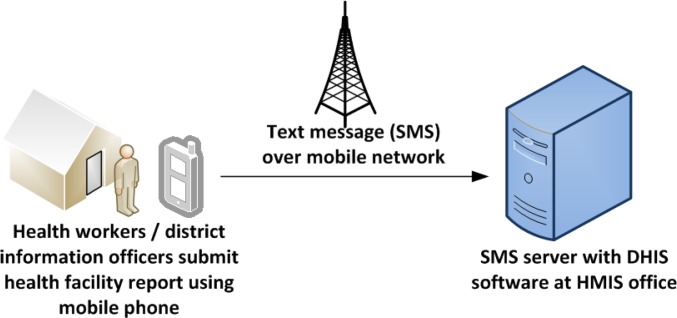
https://cdn.ncbi.nlm.nih.gov/pmc/blobs/da58/3615828/994da9e89038/ojphi-04-26f1.jpg
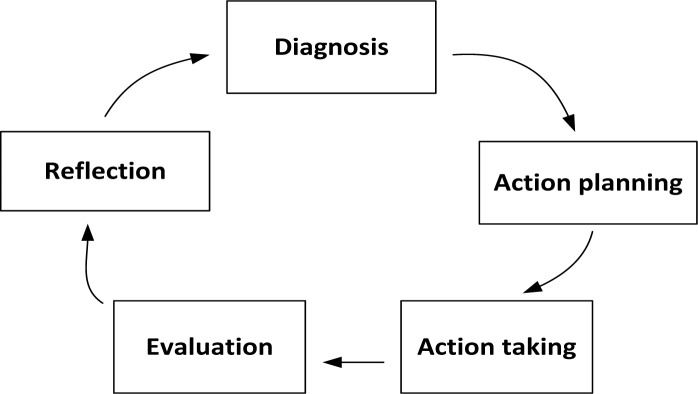
https://cdn.ncbi.nlm.nih.gov/pmc/blobs/da58/3615828/ac5eac70c628/ojphi-04-26f2.jpg
https://cdn.ncbi.nlm.nih.gov/pmc/blobs/da58/3615828/16d04c228cb6/ojphi-04-26f3.jpg
https://cdn.ncbi.nlm.nih.gov/pmc/blobs/da58/3615828/994da9e89038/ojphi-04-26f1.jpg
https://cdn.ncbi.nlm.nih.gov/pmc/blobs/da58/3615828/ac5eac70c628/ojphi-04-26f2.jpg
https://cdn.ncbi.nlm.nih.gov/pmc/blobs/da58/3615828/16d04c228cb6/ojphi-04-26f3.jpg

相似文献

1
Understanding HMIS Implementation in a Developing Country Ministry of Health Context - an Institutional Logics Perspective.从制度逻辑视角理解发展中国家卫生部背景下的卫生管理信息系统实施情况
Online J Public Health Inform. 2012;4(3). doi: 10.5210/ojphi.v4i3.4302. Epub 2012 Dec 19.
2
Developing an HMIS Architecture Framework to Support a National Health Care eHealth Strategy Reform: A Case Study from Morocco.
Health Syst Reform. 2017 Jan 2;3(1):56-67. doi: 10.1080/23288604.2017.1265041.
3
An Institutional Perspective on Accountable Care Organizations.对责任医疗组织的机构视角分析
Med Care Res Rev. 2016 Dec;73(6):685-693. doi: 10.1177/1077558716641832. Epub 2016 Mar 30.
4
Examining policy intentions and actual implementation practices: How organizational factors influence health management information systems in Uttar Pradesh, India.审视政策意图和实际执行情况:组织因素如何影响印度北方邦的健康管理信息系统。
Soc Sci Med. 2021 Oct;286:114291. doi: 10.1016/j.socscimed.2021.114291. Epub 2021 Aug 19.
5
Information systems for mental health in six low and middle income countries: cross country situation analysis.六个低收入和中等收入国家的精神卫生信息系统:跨国情况分析
Int J Ment Health Syst. 2016 Sep 26;10:60. doi: 10.1186/s13033-016-0094-2. eCollection 2016.
6
HMIS and decision-making in Zambia: re-thinking information solutions for district health management in decentralized health systems.赞比亚的卫生管理信息系统与决策:重新思考分权卫生系统中地区卫生管理的信息解决方案
Health Policy Plan. 2006 Jan;21(1):40-52. doi: 10.1093/heapol/czj003. Epub 2005 Nov 30.
7
Perspectives and Challenges of HMIS Officials in the Implementation of Health Management Information System (HMIS) with Reference to Maternal Health Services in Assam.以阿萨姆邦孕产妇保健服务为例,探讨卫生管理信息系统(HMIS)官员在实施卫生管理信息系统过程中面临的前景与挑战。
J Clin Diagn Res. 2016 Jun;10(6):LC07-9. doi: 10.7860/JCDR/2016/16921.7955. Epub 2016 Jun 1.
8
Understanding the evolution of competing institutional logics in the marketization of care: A stage model analysis of Australia's National Disability Insurance Scheme.理解竞争制度逻辑在医疗市场化中的演变:澳大利亚国家残疾保险计划的阶段模型分析。
Health Policy. 2024 Nov;149:105173. doi: 10.1016/j.healthpol.2024.105173. Epub 2024 Sep 29.
9
The Interplay of Conflicting and Complementing Institutional Logics in Sustainability Practices.可持续发展实践中相互冲突与互补的制度逻辑之间的相互作用
Manag Int Rev. 2023;63(3):469-506. doi: 10.1007/s11575-023-00503-7. Epub 2023 Mar 6.
10
'What matters to you?' Normative integration of an intervention to promote participation of older patients with multi-morbidity - a qualitative case study.“对你来说什么重要?”促进患有多种疾病的老年患者参与的干预措施的规范整合——一项定性案例研究。
BMC Health Serv Res. 2021 Feb 4;21(1):117. doi: 10.1186/s12913-021-06106-y.

引用本文的文献

1
Health Information System in Developing Countries: A Review on the Challenges and Causes of Success and Failure.发展中国家的卫生信息系统:关于成败挑战及原因的综述
Med J Islam Repub Iran. 2022 Sep 26;36:111. doi: 10.47176/mjiri.36.111. eCollection 2022.
2
Strengthening facility-based immunization service delivery in local government areas at high risk for polio in Northern Nigeria, 2014-2015.尼日利亚北部高危地区加强地方政府机构脊髓灰质炎疫苗接种服务,2014-2015 年。
Pan Afr Med J. 2021 Nov 12;40(Suppl 1):6. doi: 10.11604/pamj.supp.2021.40.1.25865. eCollection 2021.
3
Pilot implementation of a routine immunization module of the district health information system version 2 in Kano State, Nigeria, 2014 - 2015.

本文引用的文献

1
Moving towards universal health coverage: health insurance reforms in nine developing countries in Africa and Asia.迈向全民健康覆盖:非洲和亚洲九个发展中国家的医疗保险改革。
Lancet. 2012 Sep 8;380(9845):933-43. doi: 10.1016/S0140-6736(12)61147-7.
2
Decentralization and health care prioritization process in Tanzania: from national rhetoric to local reality.坦桑尼亚的权力下放与医疗保健重点排序过程:从国家言论到地方现实。
Int J Health Plann Manage. 2011 Apr-Jun;26(2):e102-120. doi: 10.1002/hpm.1048. Epub 2010 Jul 5.
3
PRISM framework: a paradigm shift for designing, strengthening and evaluating routine health information systems.
尼日利亚卡诺州 2014-2015 年实施地区卫生信息系统第 2 版常规免疫模块的试点。
Pan Afr Med J. 2021 Nov 12;40(Suppl 1):5. doi: 10.11604/pamj.supp.2021.40.1.24879. eCollection 2021.
4
Implementation Status of Health Management Information System in Hospitals of South West Shoa Zone, Oromia, Central Ethiopia.埃塞俄比亚中部奥罗米亚州绍阿西区医院健康管理信息系统的实施状况
Clinicoecon Outcomes Res. 2021 Jan 6;13:1-8. doi: 10.2147/CEOR.S288998. eCollection 2021.
5
A Qualitative Study to Examine Approaches used to Manage Data about Health Facilities and their Challenges: A Case of Uganda.一项关于审查用于管理卫生设施数据的方法及其挑战的定性研究:以乌干达为例
AMIA Annu Symp Proc. 2020 Mar 4;2019:1157-1166. eCollection 2019.
6
Expanding Research Capacity in Sub-Saharan Africa Through Informatics, Bioinformatics, and Data Science Training Programs in Mali.通过在马里开展信息学、生物信息学和数据科学培训项目来扩大撒哈拉以南非洲地区的研究能力。
Front Genet. 2019 Apr 12;10:331. doi: 10.3389/fgene.2019.00331. eCollection 2019.
7
Exploring the Functioning of Decision Space: A Review of the Available Health Systems Literature.探索决策空间的功能:对现有卫生系统文献的综述。
Int J Health Policy Manag. 2017 Jul 1;6(7):365-376. doi: 10.15171/ijhpm.2017.26.
8
Development of the National Health Information Systems in Botswana: Pitfalls, prospects and lessons.博茨瓦纳国家卫生信息系统的发展:陷阱、前景与教训
Online J Public Health Inform. 2015 Jul 1;7(2):e210. doi: 10.5210/ojphi.v7i2.5630. eCollection 2015.
9
Development of a master health facility list in Nigeria.尼日利亚主要医疗机构清单的制定。
Online J Public Health Inform. 2014 Oct 16;6(2):e184. doi: 10.5210/ojphi.v6i2.5287. eCollection 2014.
PRISM框架:用于设计、强化和评估常规健康信息系统的范式转变。
Health Policy Plan. 2009 May;24(3):217-28. doi: 10.1093/heapol/czp010. Epub 2009 Mar 20.
4
Building a sustainable health system.构建可持续的卫生系统。
Yearb Med Inform. 2007:11-8.
5
HMIS and decision-making in Zambia: re-thinking information solutions for district health management in decentralized health systems.赞比亚的卫生管理信息系统与决策:重新思考分权卫生系统中地区卫生管理的信息解决方案
Health Policy Plan. 2006 Jan;21(1):40-52. doi: 10.1093/heapol/czj003. Epub 2005 Nov 30.
6
Health information systems: the foundations of public health.健康信息系统:公共卫生的基础。
Bull World Health Organ. 2005 Aug;83(8):578-83. Epub 2005 Sep 22.
7
Health information systems: failure, success and improvisation.健康信息系统:失败、成功与改进
Int J Med Inform. 2006 Feb;75(2):125-37. doi: 10.1016/j.ijmedinf.2005.07.024. Epub 2005 Aug 19.
8
Local public health agency capacity and its relationship to public health system performance.地方公共卫生机构的能力及其与公共卫生系统绩效的关系。
J Public Health Manag Pract. 2004 May-Jun;10(3):204-15. doi: 10.1097/00124784-200405000-00004.
9
International NGOs and primary health care in Mozambique: the need for a new model of collaboration.国际非政府组织与莫桑比克的初级卫生保健:新型合作模式的必要性。
Soc Sci Med. 2003 Feb;56(4):725-38. doi: 10.1016/s0277-9536(02)00068-0.
10
Decentralization of health systems in Ghana, Zambia, Uganda and the Philippines: a comparative analysis of decision space.加纳、赞比亚、乌干达和菲律宾卫生系统的权力下放:决策空间的比较分析
Health Policy Plan. 2002 Mar;17(1):14-31. doi: 10.1093/heapol/17.1.14.